Opener Installation for Lake in the Hills's Mid-90s Housing Stock
Openers for Lake in the Hills homes built mostly in the mid-1990s: what's on the door now, what it costs to swap, and what our truck carries out from Vernon Hills.
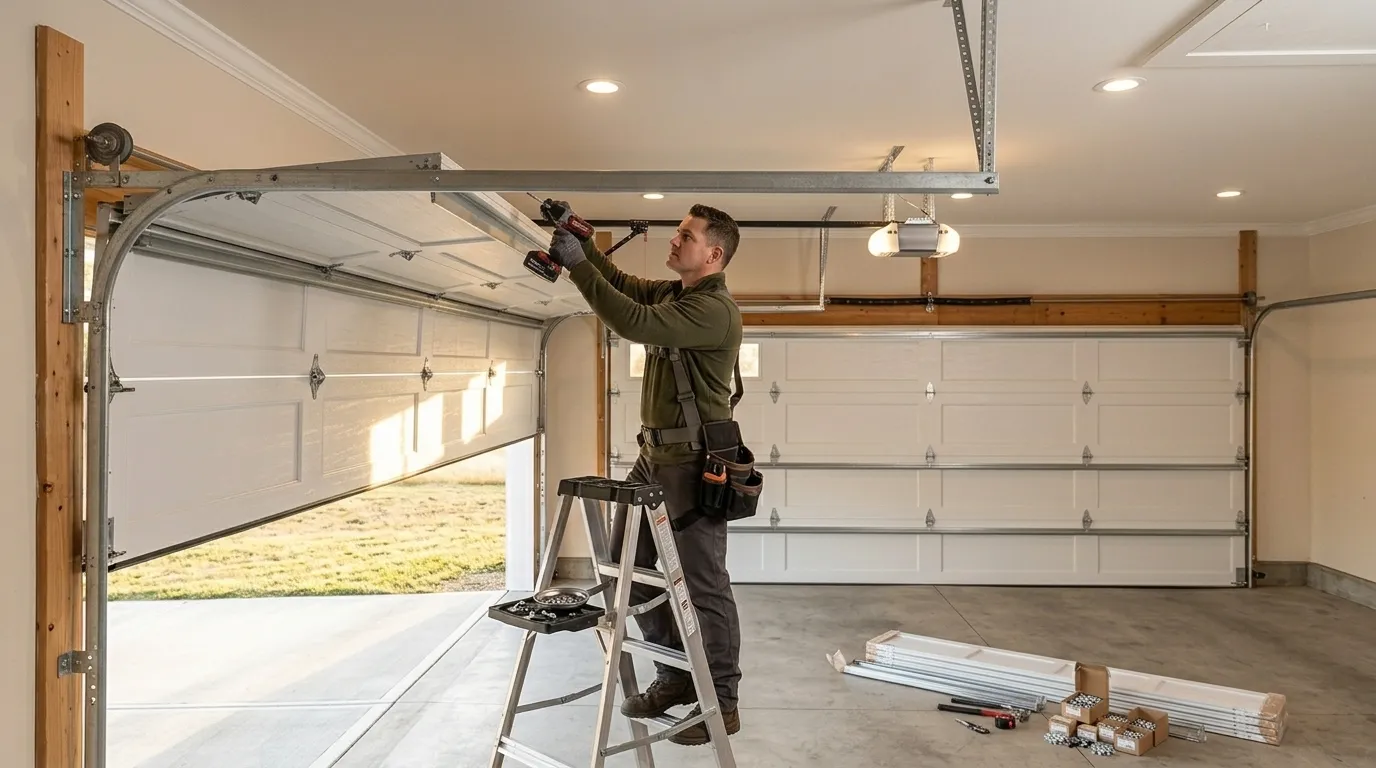
We run this job out of our Vernon Hills shop, about 18 miles from Lake in the Hills, so we book it as a scheduled appointment rather than a same-day walk-up. Most opener swaps here run in the neighborhood of two to three hours once the truck is on site - pull the old unit, mount the new rail and head, run the wiring to the wall station, pair the remotes, and test the travel limits and force settings. Homes in this area went up mostly around 1995, which means we're usually replacing a single builder-installed chain-drive unit, not troubleshooting a mess of add-on hardware from multiple eras. That keeps the job predictable. What adds time isn't the town, it's the door: a heavier insulated steel door needs a stronger motor and sometimes a different mounting bracket than the light single-layer door it's replacing, and we account for that before we ever load the truck. We don't offer emergency same-hour service in Lake in the Hills - if your opener dies on a Saturday night and the door won't open, we'll get you the next available slot, and that's the honest limitation of covering a town this far from base.
What You Pay
We're not going to put a number on this page that we can't back up region-wide, so instead here's what actually moves the price: horsepower and drive type (chain, belt, or screw), whether you want battery backup for power outages, and whether the existing wall wiring and header clearance work as-is or need modification. Lake in the Hills households run a median income close to $113,491 - nearly identical to the wider Vernon Hills service area's $113,125 - so we're not pricing this town differently than the rest of the territory we cover. What does vary house to house is the door itself. A standard 1995-era single-layer steel door on a half-horsepower chain unit is a straightforward swap. A heavier insulated door added later, or a wider double door, needs a unit rated for more weight, and that's a different quote than the builder-grade original.
Stocked Parts
Openers installed when a house went up in the mid-90s are long past the end of their service life - most chain and screw-drive units from that period simply aren't sold anymore, and neither are their exact rail sections or logic boards. When we replace one, we're not trying to match old hardware, we're putting in a current unit with a rail length and mounting pattern that fits the header height common to houses of that era. We bring a working stock of belt-drive and chain-drive openers across a couple of horsepower ratings, plus the wall stations, safety sensor pairs, and remotes that go with them, so a straightforward swap doesn't turn into a second trip. What we don't stock is every legacy bracket for doors that have been modified more than once - if your track has been rebuilt or re-hung off-spec over the years, we may need to source a part before we can finish, and we'll tell you that up front rather than guess.
What Causes It Around Here
This area sits in a cold, moderate winter climate band, and that matters more for openers than people expect. Cold doesn't just stiffen the door's springs and rollers - it also slows the opener's drive gear grease and can throw off the calibration on photo-eye safety sensors when temperatures swing hard between a warm garage and a freezing driveway. On a unit installed when a Lake in the Hills house was built around 1995, that gear is now nearing or past 25-30 years of seasonal freeze-thaw cycling, and the plastic drive gear inside the housing is a common failure point at that age regardless of brand. We also see capacitor failure in older motors during the first hard cold snap of the season, since a weak capacitor that limped through summer often can't push the motor's start-up load once the garage temperature drops.
What the Fix Involves
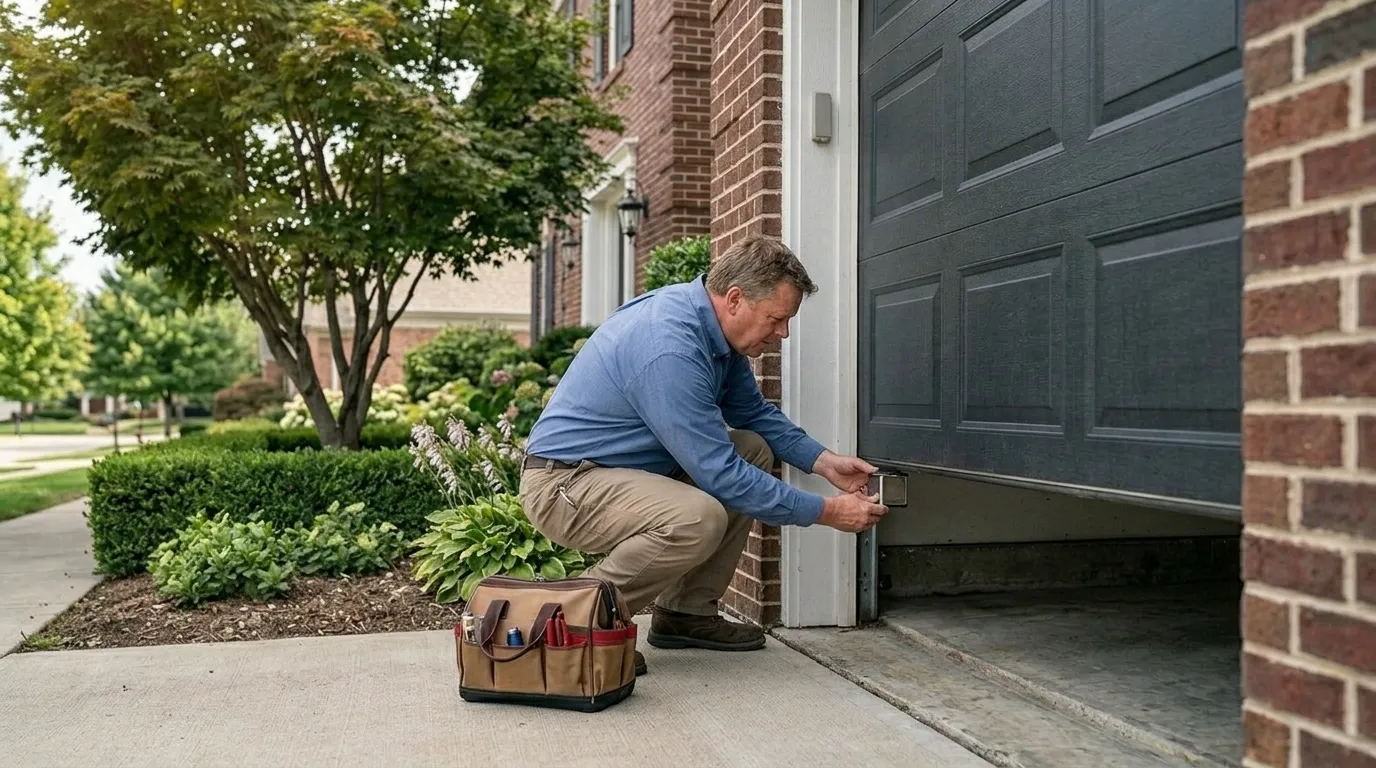
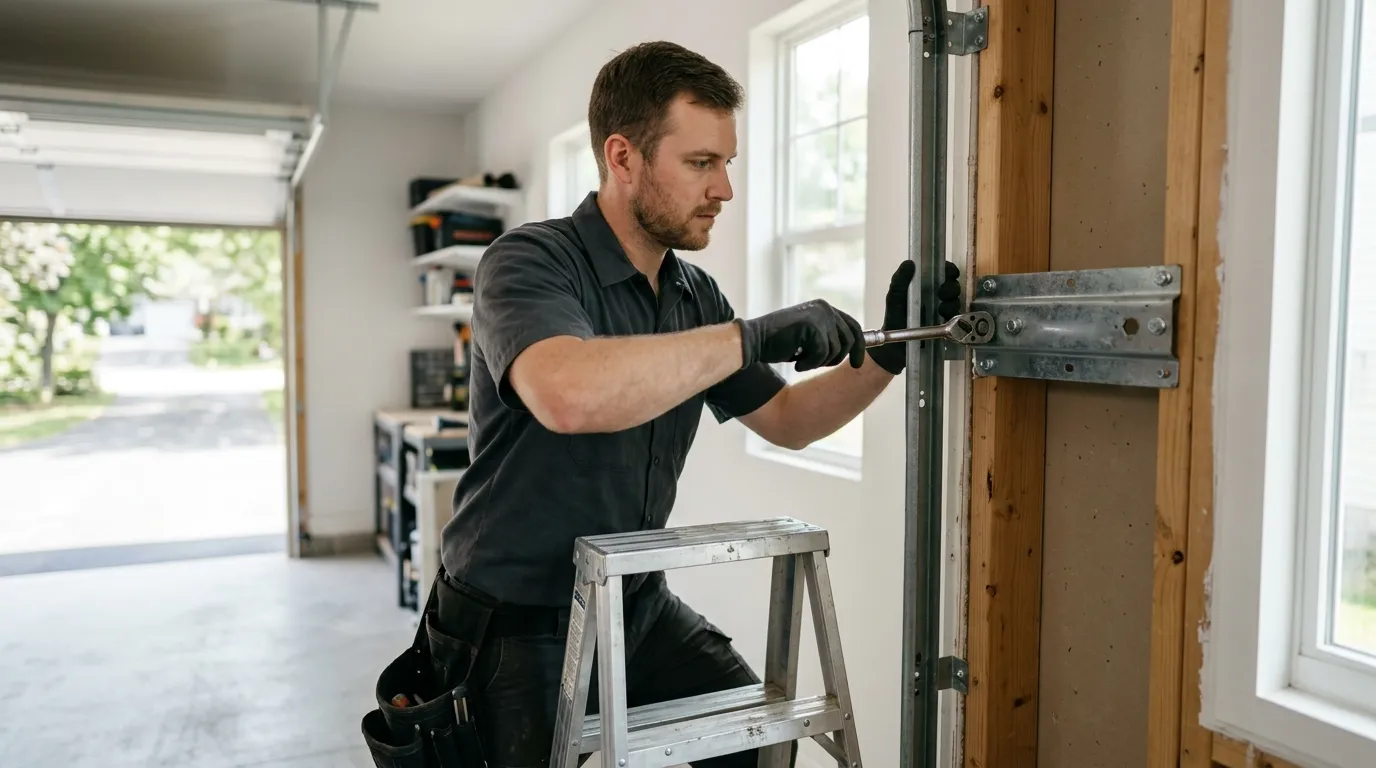
Installing a new opener means more than bolting a motor to the ceiling. We pull the old unit and rail, check the header for a solid mounting point, and run new wiring to the wall control if the old wiring is brittle or undersized for the new unit's low-voltage circuit. Safety sensors get remounted at the correct height and aimed so the door won't close on an obstruction. We set the up and down travel limits so the door seats fully without over-tightening the drive belt or chain, then set the force sensitivity so the unit reverses instead of straining against resistance. Last is programming - remotes, keypad if you have one, and any smart-home or vehicle integration you want paired. On a straightforward single-door swap with existing wiring in usable shape, that's the whole job. If the wiring or header framing needs rework, we flag it before we start, not after we've billed for it.
How it works
From “it’s stuck” to “it’s fixed”
1
Tell us what’s wrong
Describe the symptom - won’t open, loud bang, opener runs but the door won’t move.
2
On-site diagnosis
A technician tests the door under power and by hand and finds what actually failed.
3
Clear, up-front plan
You get the fix that’s needed and what drives the cost - before any work starts.
4
Repaired & tested
The repair is done, the door is set true and tested, and the work area left clean.
Serving Vernon Hills, IL - tell us what your door’s doing and we’ll take it from there.
Straight answers about garage door repair in Vernon Hills. Still unsure? Ask us directly.
Do you offer same-day opener installation in Lake in the Hills?
We travel from our Vernon Hills shop, about 18 miles away, so Lake in the Hills jobs are scheduled appointments rather than same-day emergency calls. If your opener fails and the door is stuck, we'll book you the next available slot rather than promise a response time we can't guarantee this far out.
Will a new opener fit my original 1990s garage door hardware?
In most cases yes. Houses in this area were mostly built around 1995, and the rail length and mounting pattern on current openers are designed to work with standard header clearances from that era. If your door or track has been modified since, we check that before we quote the job.
Why does my opener struggle more in winter?
This area sits in a cold, moderate climate band, and cold slows drive-gear grease and can throw off photo-eye sensor alignment. On a unit already 25 to 30 years old, that's often what finally pushes a weak motor or drive gear into failure once temperatures drop hard.