Broken Garage Door Spring? Vernon Hills Spring Repair
Broken torsion or extension spring on your Vernon Hills garage door? See why this area's 1980s-90s housing stock and cold winters wear springs fast, and what a repair call covers.
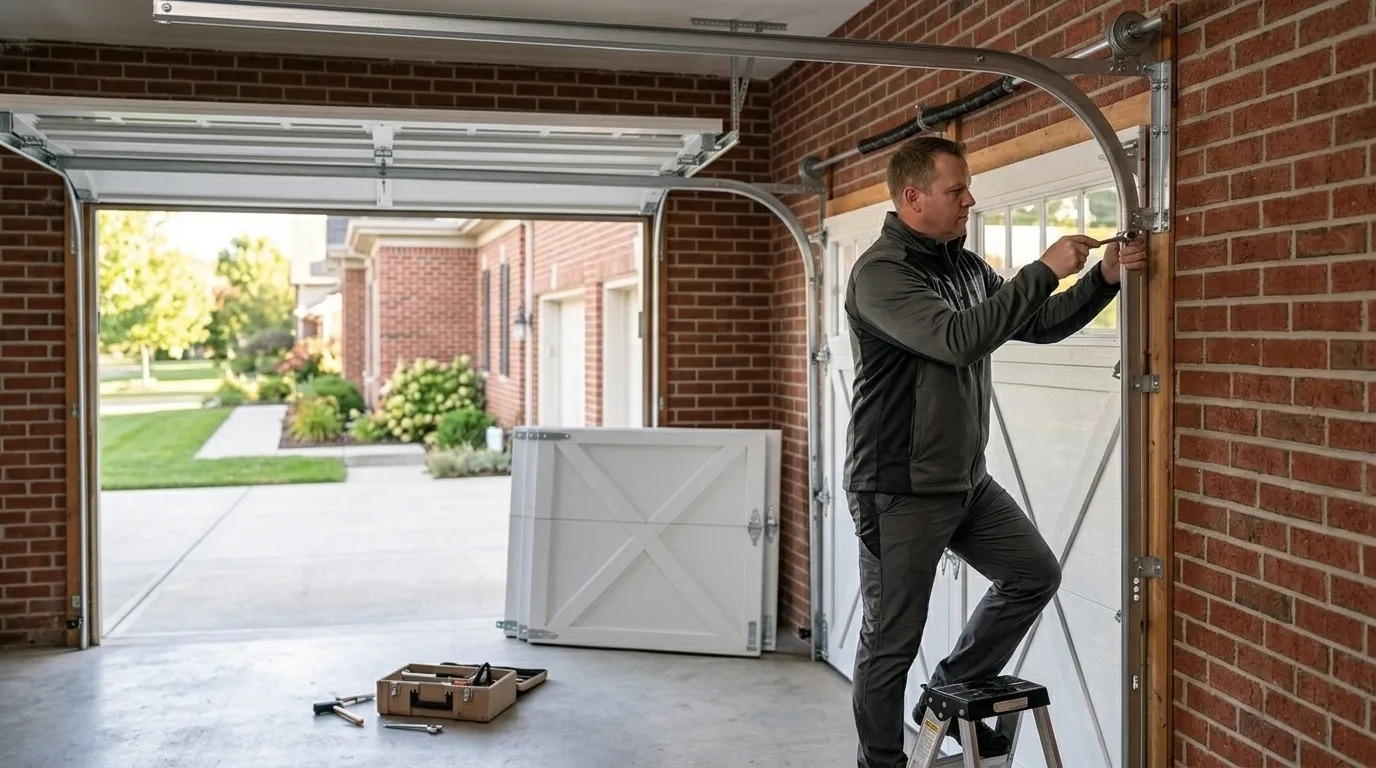
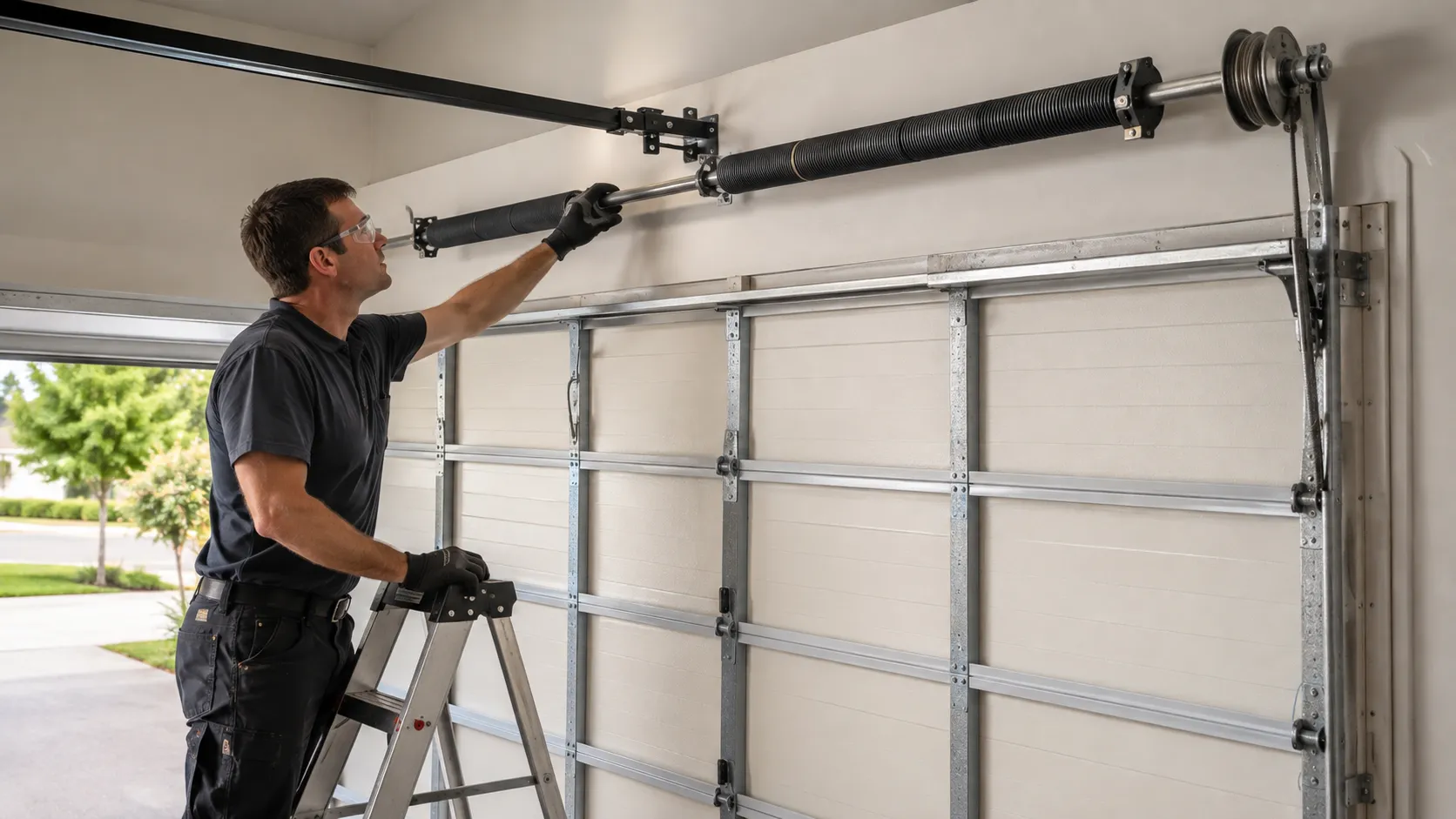
The most common sign is a door that won't budge, or one that shoots up too fast when you pull the release cord. If you hear a bang like a gunshot from the garage - usually early morning when the metal is coldest - that's a torsion spring letting go. You'll also see it as an opener that strains, groans, or trips its own safety reverse over and over because it's trying to lift a door with no spring assist behind it.
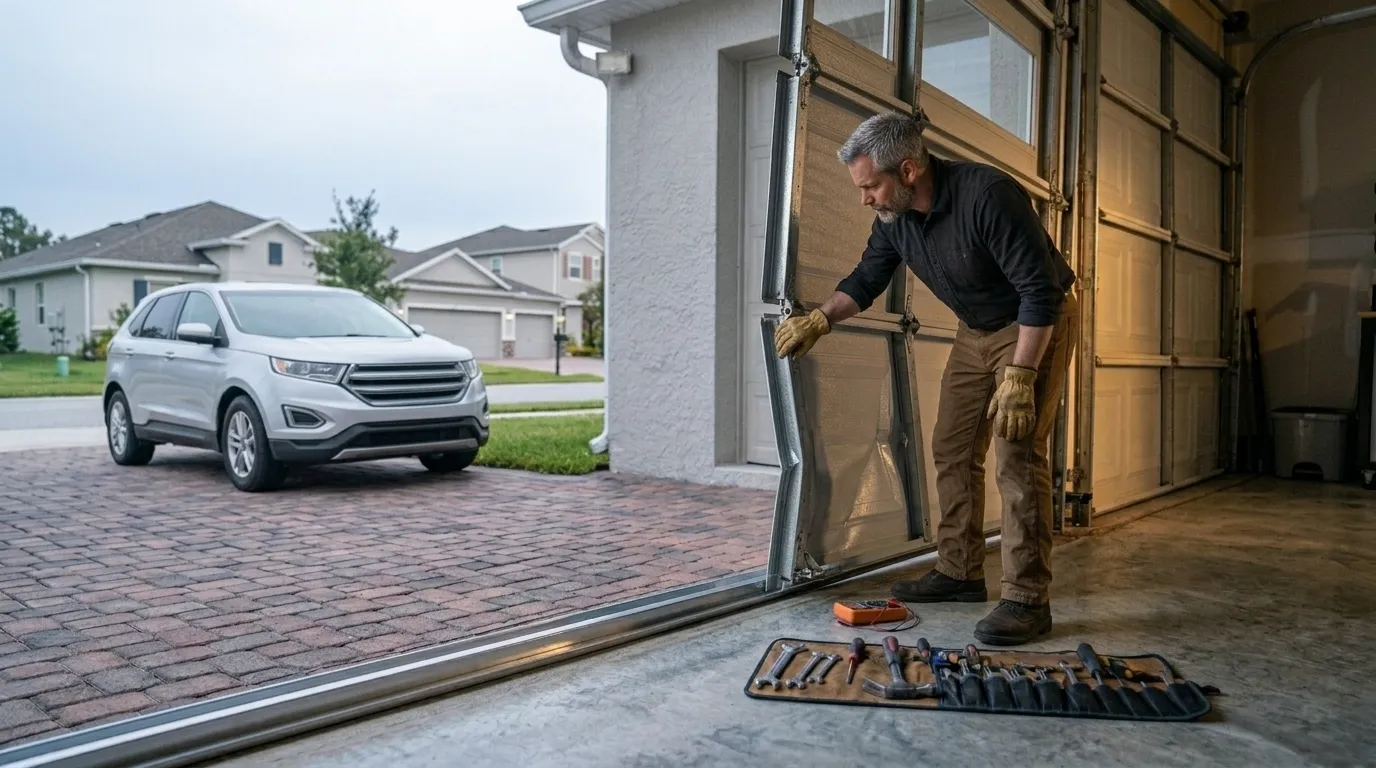
On double doors with two torsion springs, one spring can break while the other holds, so the door might still open but crooked, tilting to one side as it travels. That uneven pull puts extra load on the remaining spring and on the tracks, which is why a single broken spring rarely stays a single problem for long if the door keeps getting used.
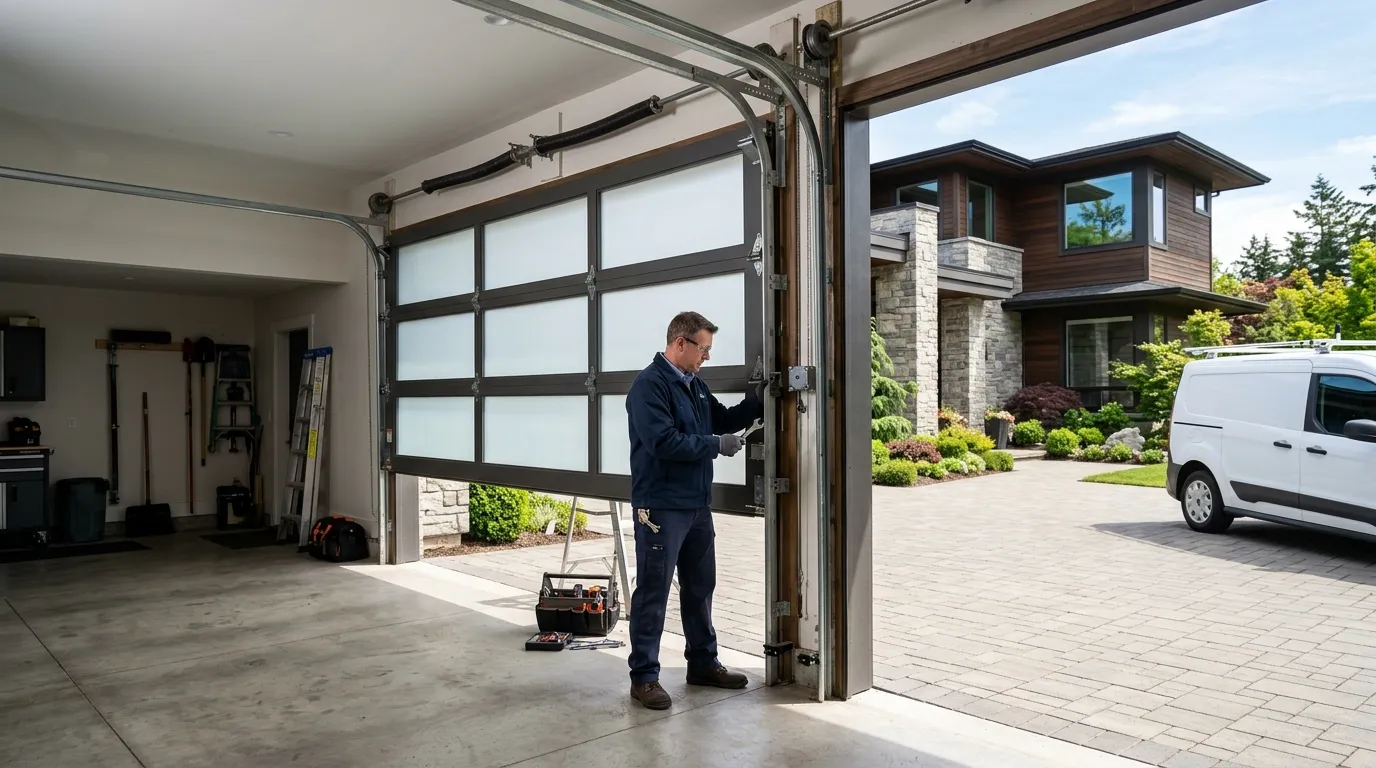
Extension springs, the ones that run along the horizontal tracks instead of over the header, show wear differently - they stretch, sag, or a coil separates, and the door drops partway then hangs. Either type, once it's gone, the door is heavier than a person should lift alone. Across the households we see in this service area, spring failure is the single most common reason for an emergency call, more than openers, cables, or tracks combined.
What Can Go Wrong
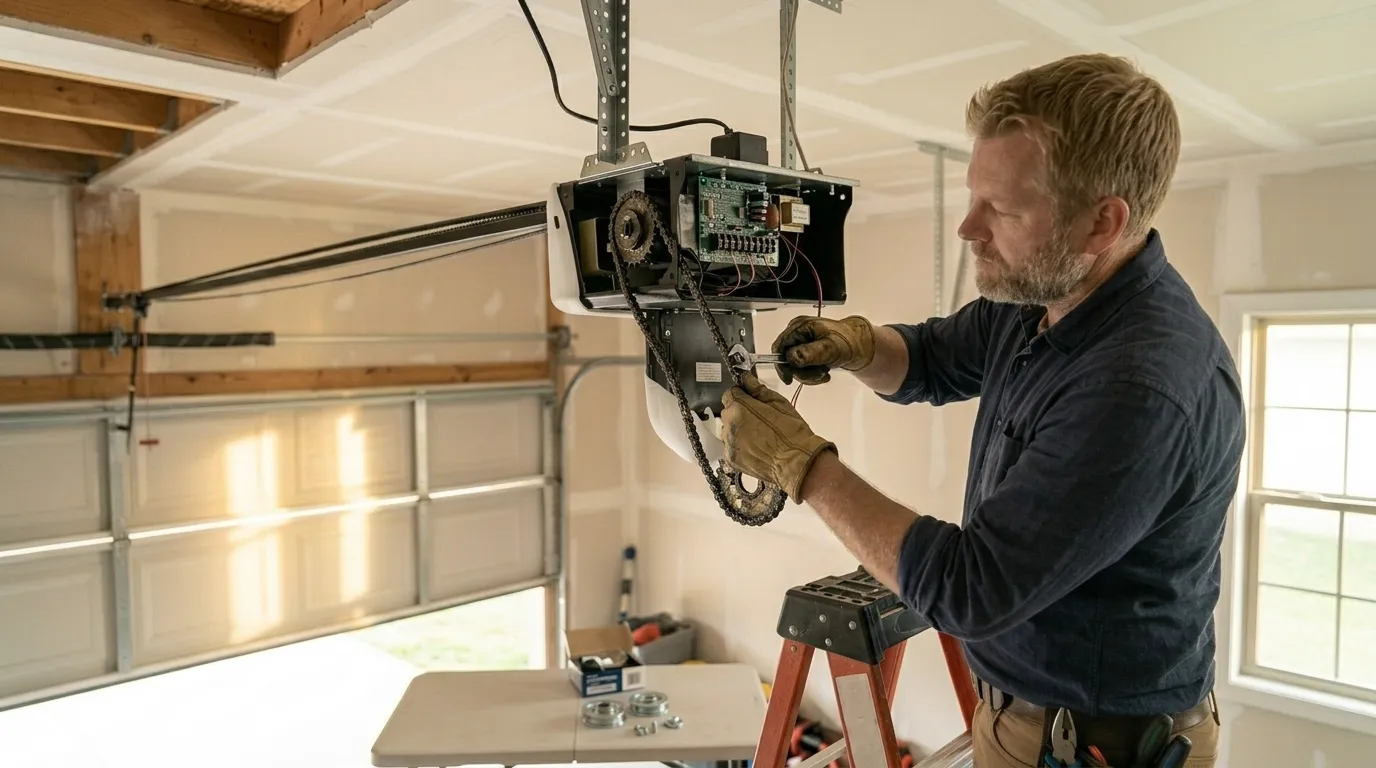
A broken spring by itself is a contained repair. Left running on a broken spring, it usually isn't. The opener carries the full weight of the door instead of the spring doing that work, and openers aren't built for that load - the drive gear, the trolley, or the motor winding can burn out inside a handful of cycles.
Cables are the other casualty. They work in tension with the spring, and once that tension is gone, a cable can jump the drum or fray where it wraps. A frayed cable under a door that's no longer spring-balanced is a real hazard, not a maintenance footnote.
On older torsion setups, especially the side-mounted single-spring systems common on houses from the earlier end of Vernon Hills's building stock, the center bracket and shaft bearing take extra stress once the spring's tension is uneven or gone. We've seen a bearing seize from a spring left broken through a few weeks of daily openings.
One honest limit: if a spring has been broken long enough that the opener motor has already failed, or the shaft is bent, that's no longer a spring-only job - it's a spring-and-opener or spring-and-shaft job, and we'll tell you that on the phone before we come out, not after.
What Causes It Around Here
Torsion and extension springs are rated for a set number of open-close cycles, typically somewhere around 10,000, and then they're expected to fail - it's a wear part, not a defect. What changes town to town is the age and mix of housing hanging on those springs. Housing in this service area was built between 1938 and 2009, with the heaviest concentration going up through the 1980s and 90s, and a lot of those original builder-installed springs are still in service decades later, well past any reasonable cycle count.
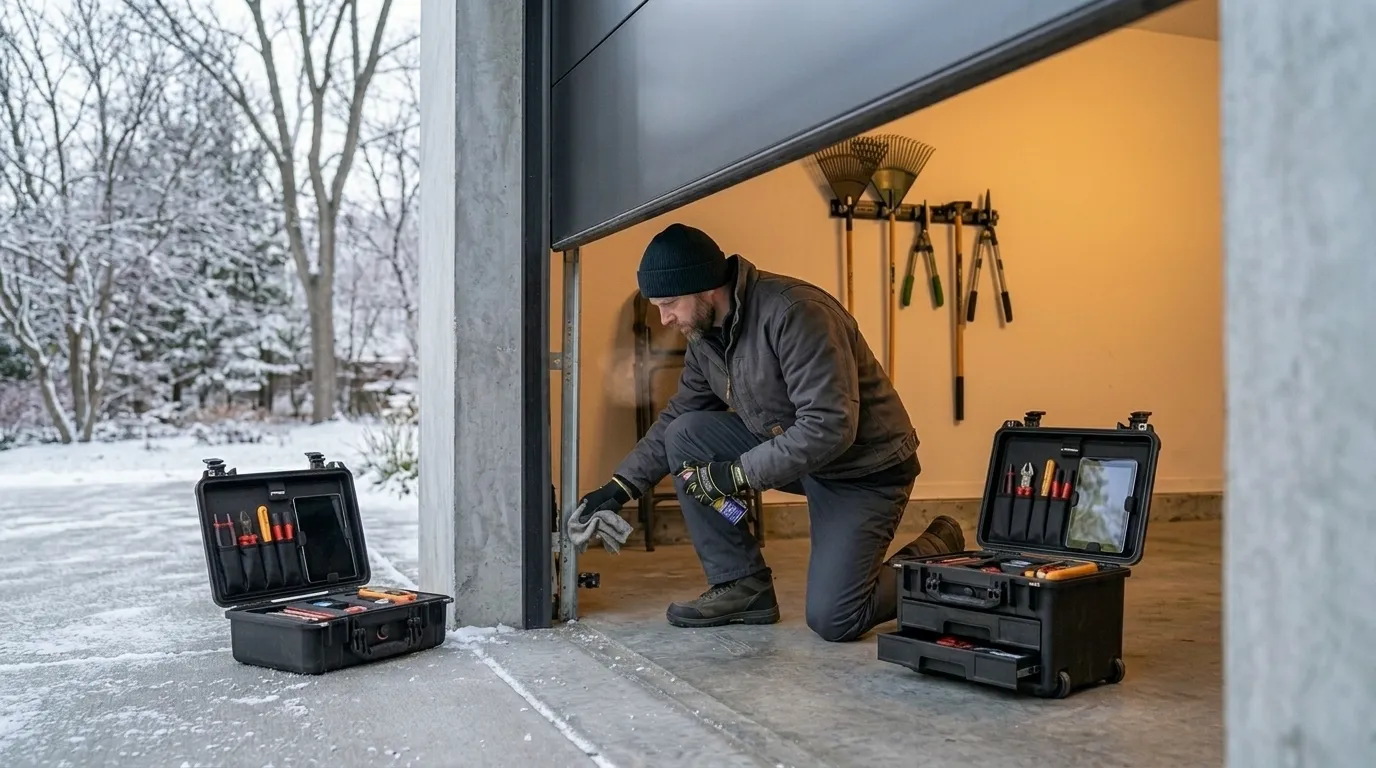
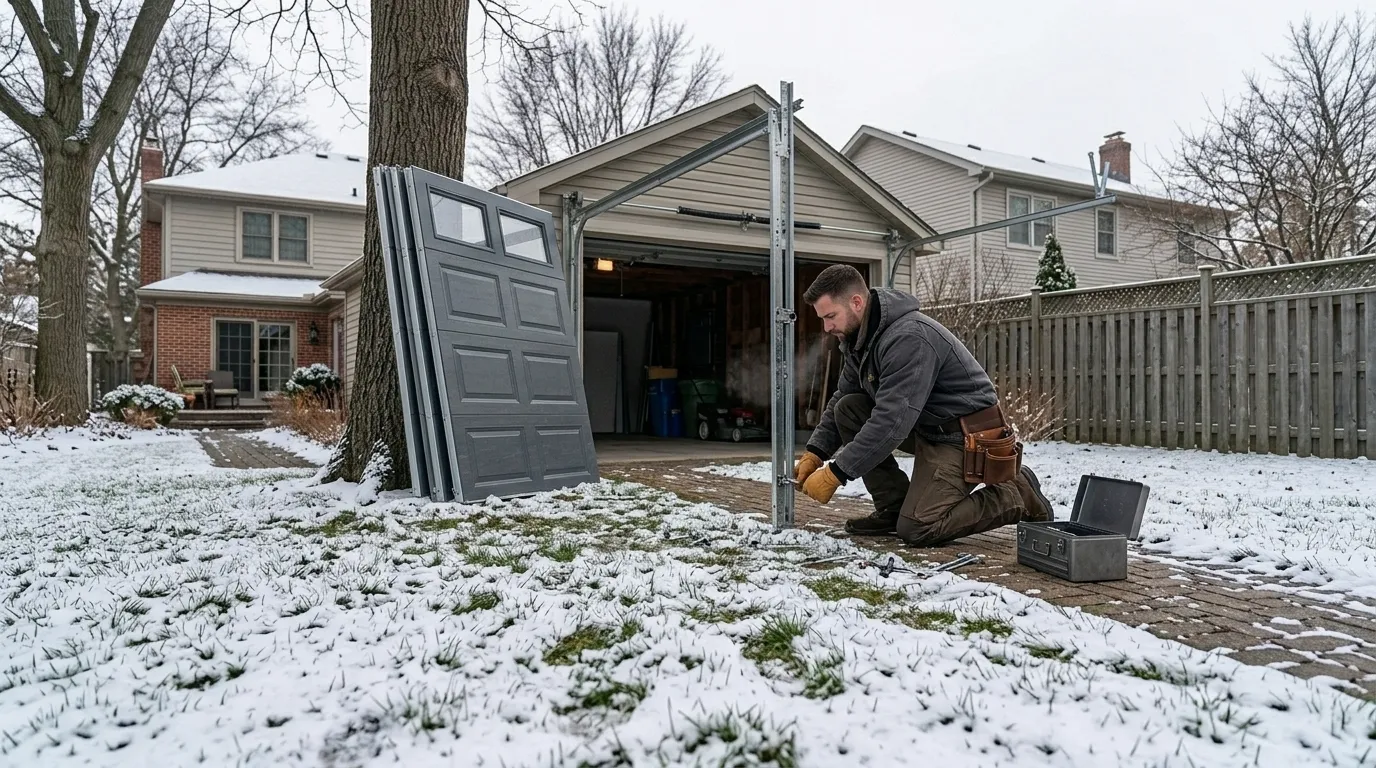
Cold is the other half of it. This area sits in a cold-moderate climate band, and steel spring wire loses flexibility as temperature drops. A spring that's been slowly fatiguing for years is far more likely to snap on a 10-degree morning than a mild one, because the metal is stiffer and the door itself is heavier to lift with condensation or a little ice at the bottom seal. That's why late fall and deep winter are when our spring calls spike hardest across the service area's 115,228 owner-occupied houses - it's the combination of old wire and cold snap, not one or the other.
What You Pay
Spring repair pricing depends on whether it's one spring or a pair, torsion or extension, and what wire size and length the door needs - a heavier insulated door needs a heavier-rated spring than a standard steel panel door, and swapping a mismatched spring for the correct one is common on older houses where a door's been replaced but the spring never was.
We don't post a flat number here because it isn't honest to do that before we've seen the door, the drum size, and the cycle life you're asking the new spring to handle. What we can tell you: if one spring on a double-torsion setup has broken, we generally recommend replacing both, since the second one is on the same age and cycle count and is close behind. That costs more up front than a single spring but saves a second service call a season or two later.
We quote the job on site or over the phone once we know the door type, and there's no charge to give you that number before you commit to the repair.
How it works
From “it’s stuck” to “it’s fixed”
1
Tell us what’s wrong
Describe the symptom - won’t open, loud bang, opener runs but the door won’t move.
2
On-site diagnosis
A technician tests the door under power and by hand and finds what actually failed.
3
Clear, up-front plan
You get the fix that’s needed and what drives the cost - before any work starts.
4
Repaired & tested
The repair is done, the door is set true and tested, and the work area left clean.
Serving Vernon Hills, IL - tell us what your door’s doing and we’ll take it from there.
Straight answers about garage door repair in Vernon Hills. Still unsure? Ask us directly.
Can I drive my car out if a garage door spring breaks while the door is up?
If the door is already up and stays up, you can usually get the car out, but don't run the opener or pull the door back down by hand once you notice a break - an unbalanced door can drop hard or come off track. Leave it up, block the opening if you can, and call for the repair.
Is it ever okay to replace just one spring instead of the pair?
On a single-spring door, yes, there's only one to replace. On a double-torsion door, we usually recommend both even if only one broke, since they're the same age and wear the same way - the second one is typically close to failing too, and replacing it later means paying for a second service call.
Why did my spring break in freezing weather when it never broke before?
Spring steel stiffens as it gets cold, and a spring that's been quietly fatiguing for years from ordinary daily use is far more likely to snap on a cold morning than a mild one. It's not the cold causing the wear - it's the cold triggering a failure that was already coming.
How long does a spring repair take?
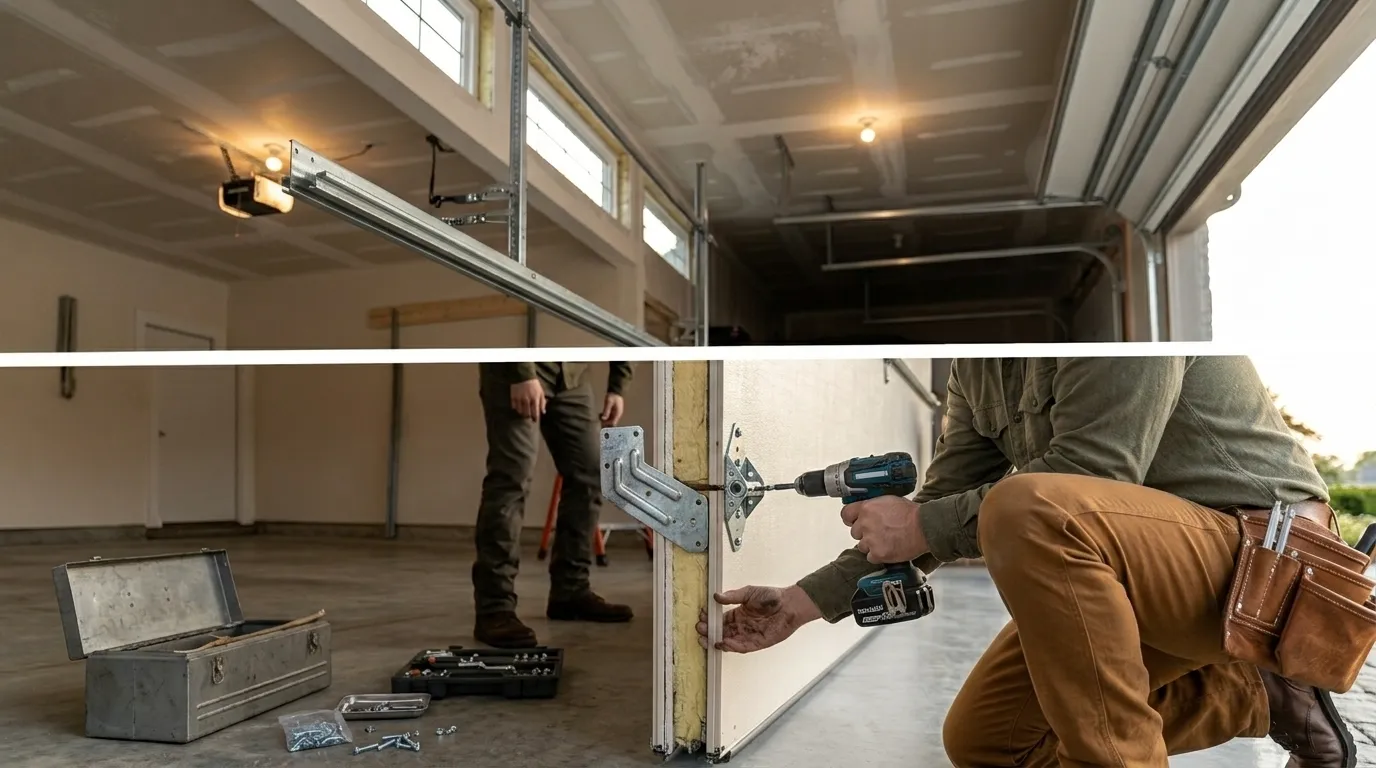
A straightforward torsion or extension spring swap is usually a same-visit repair once the tech is on site with the right spring size. If the drum, bearing, or opener also needs work because the door ran on a broken spring for a while, that adds time.