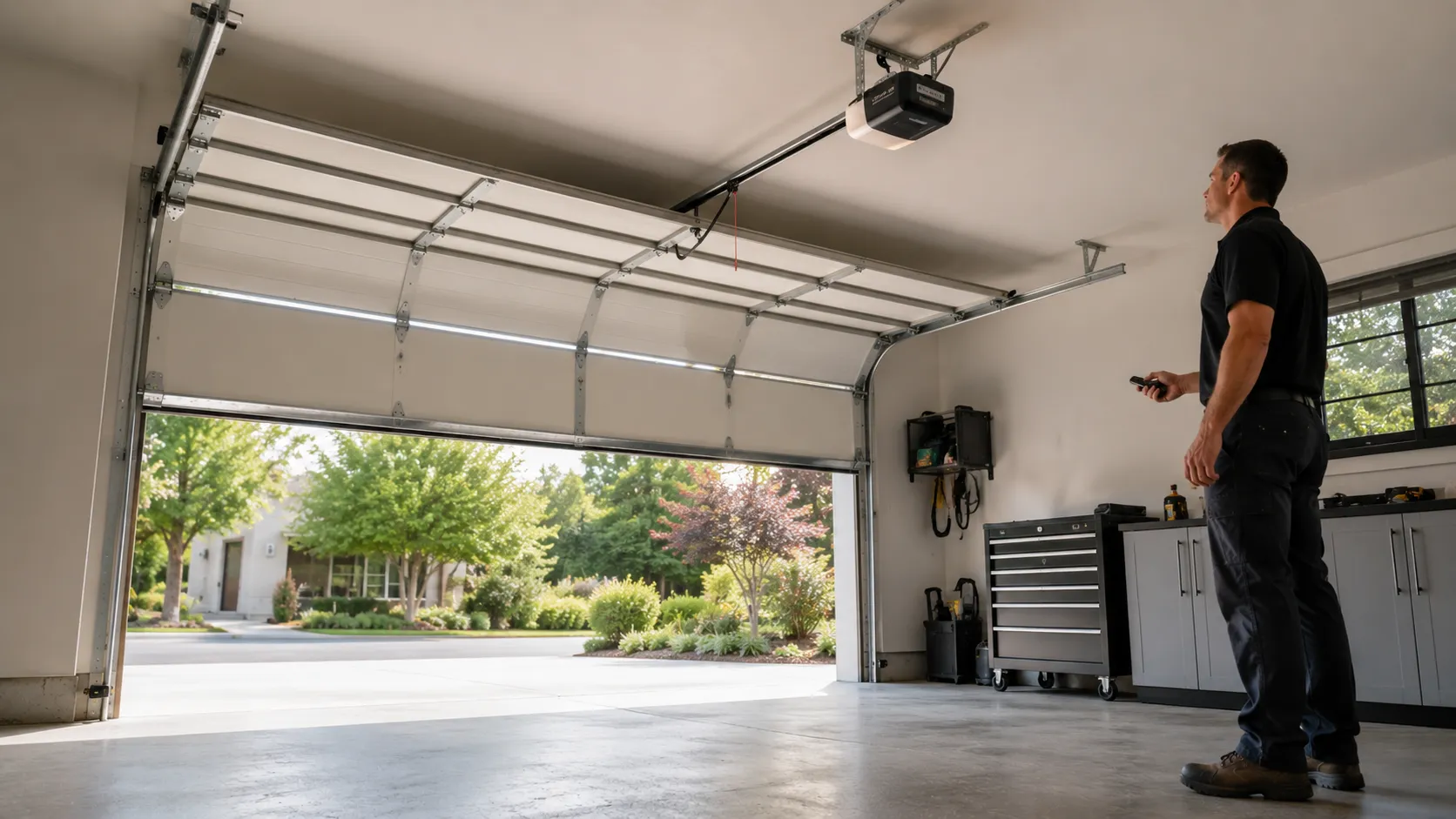
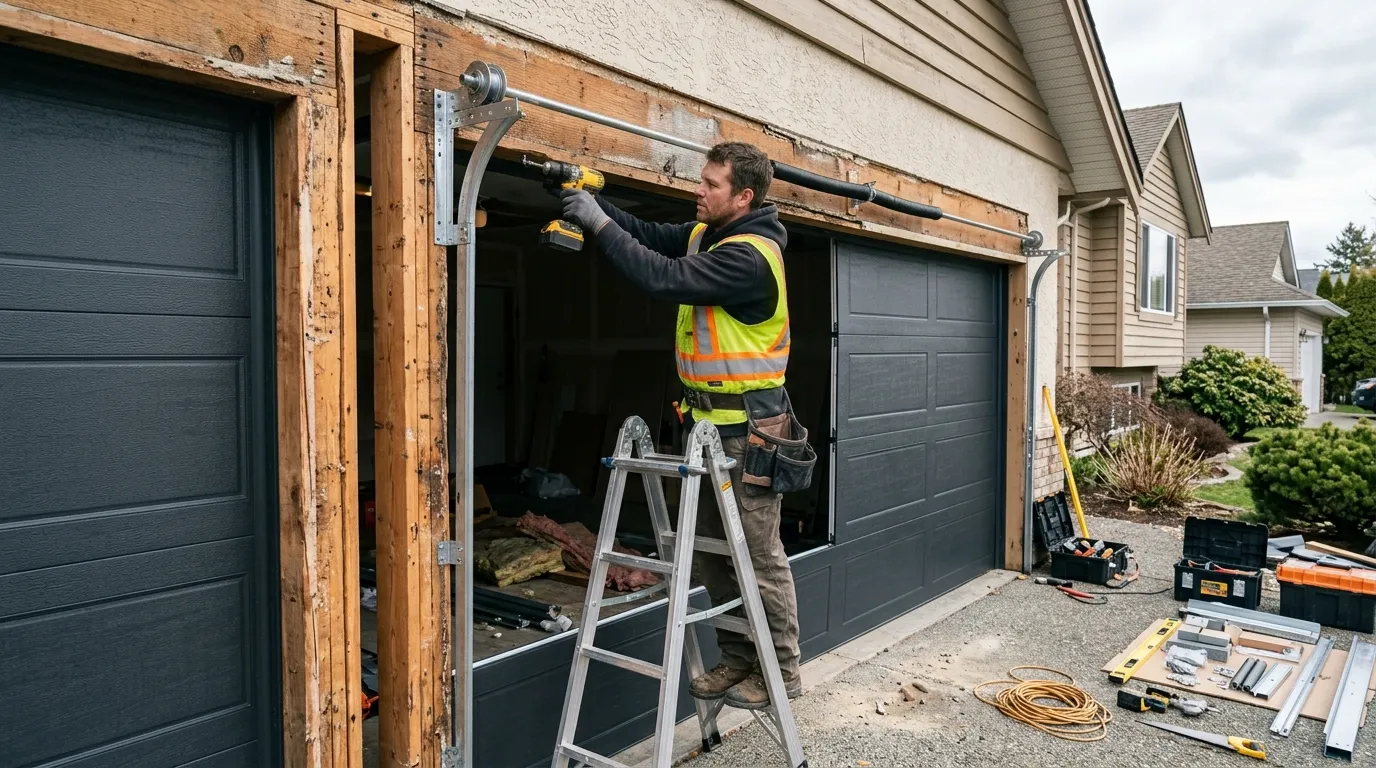
Libertyville's houses run older than the rest of our service area, built mostly around 1976. We drive the 4 miles from Vernon Hills with parts for that generation of hardware.
We run this call from our Vernon Hills shop, 4 miles down the road, so there's no separate branch or crew based in Libertyville itself. That's a short drive, and it means we can carry the right spring and track hardware with us instead of guessing and coming back a second time. Libertyville's housing stock skews older than the rest of the area we cover - median build year here is 1976, versus 1984 across the wider 65 neighborhoods we serve. That eight-year gap matters more than it sounds. It's often the line between a door built for a garage that was framed for it and a door and opener that were retrofitted later by a previous owner. When you call, tell us the age of the house if you know it - that alone helps us load the truck right before we leave Vernon Hills. We don't keep a local dispatch address in Libertyville, and we're not going to pretend otherwise. What we can do is show up with the parts your era of door actually needs, because we know what that era looks like here.
Stocked Parts
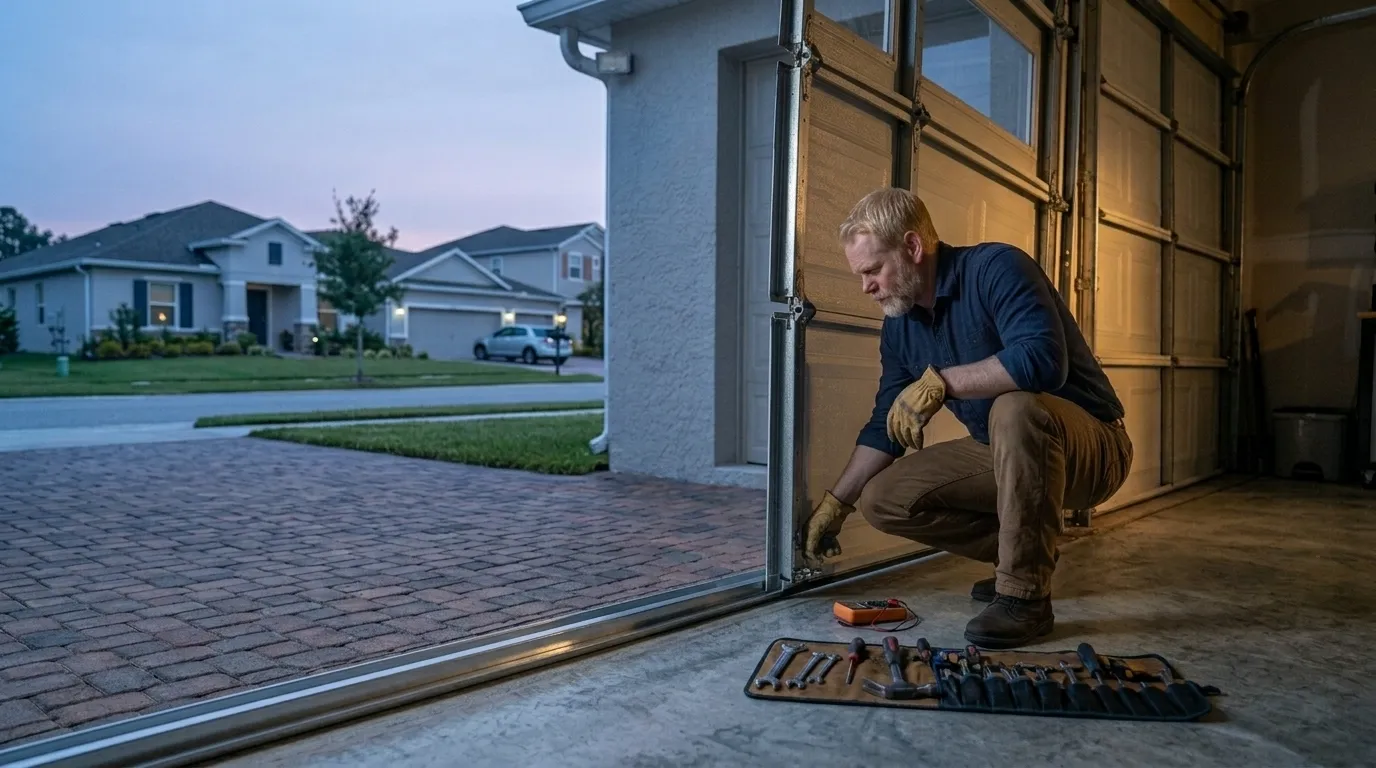
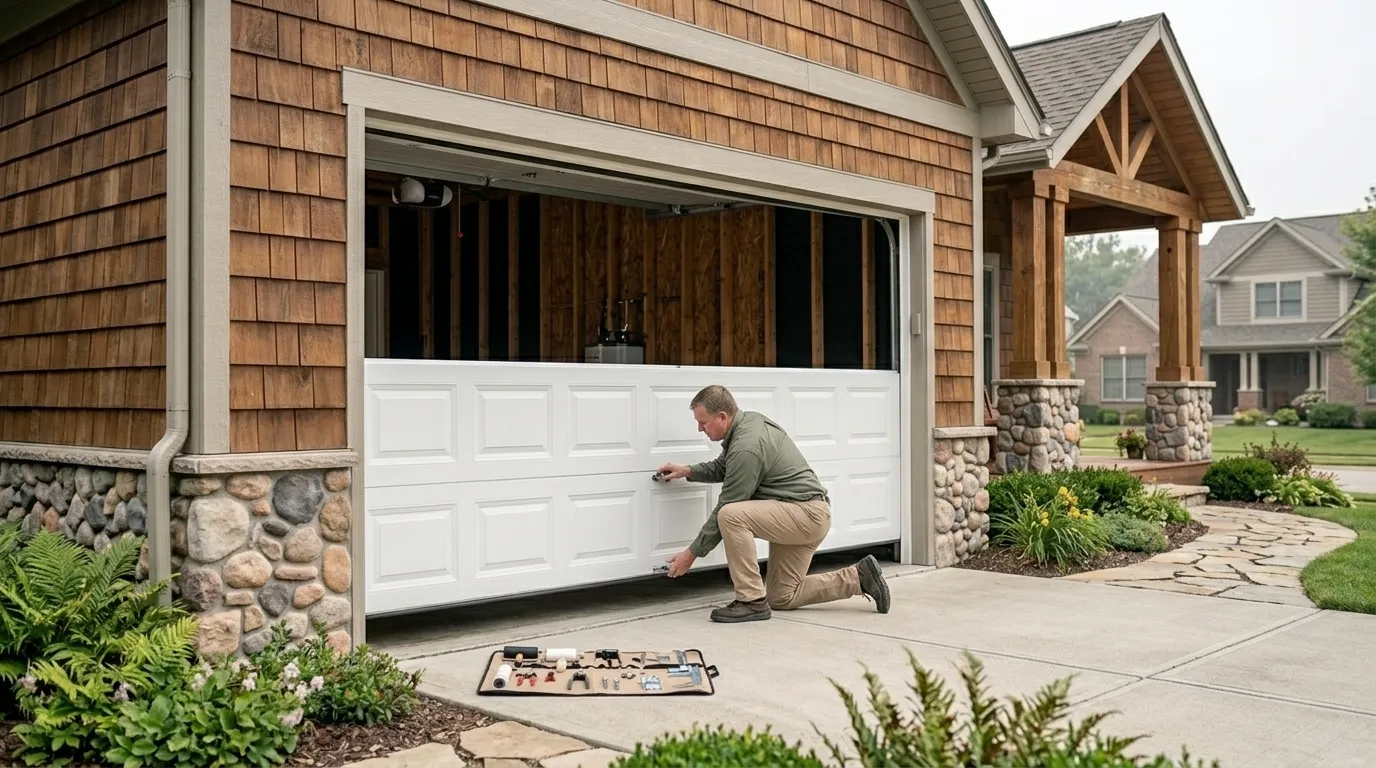
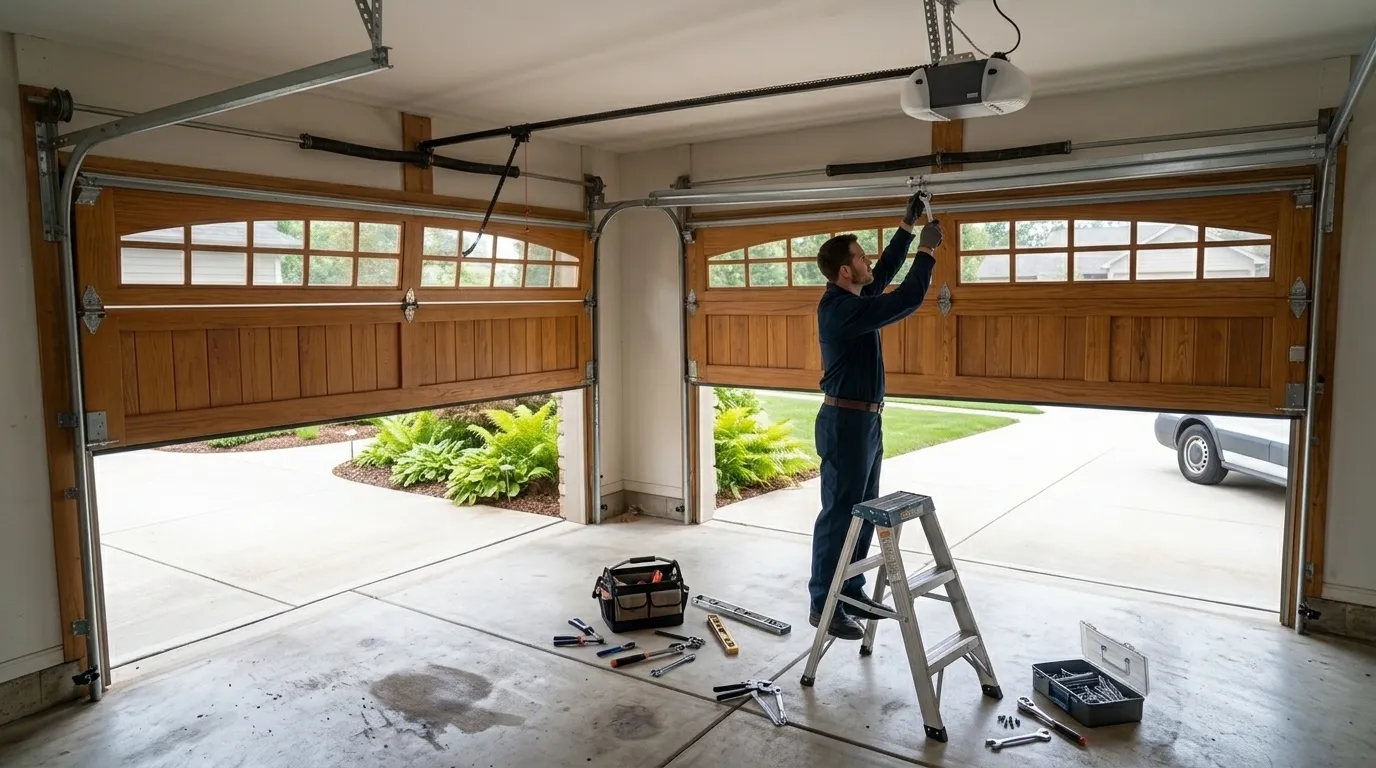
A 1976-era Libertyville garage is more likely to have gone through at least one door replacement already, sometimes two, and the opener is rarely original to the house. That mix - older frame, newer opener bolted on later - is what we stock for: torsion springs sized for heavier older steel doors, extension spring kits for the garages that never got upgraded to torsion, and both older and newer safety sensor brackets since we see both generations out here. We also carry rollers and hinges in the sizes common to doors from the late 1970s through the 1990s, since Libertyville's stock spans that range more than newer construction does. What we don't stock is every obsolete panel style - if your door is an original wood or steel panel design that hasn't been made in decades, we may need to order a match rather than pull one off the truck. That's a real limitation, and better to say now than at your driveway.
What Causes It Around Here
The service area sits in a cold, moderate climate band, and that cuts two ways for a door built in the 1970s. First, steel doors from that era are thinner-gauge than what's sold today, so they flex more in a hard freeze, and that flex works cables and rollers loose faster than it would on a newer door. Second, older torsion setups in this area often used lighter-duty springs than current code calls for, sized for a lighter original door - if a panel or a full door got swapped out since, the spring may now be under-sized for the weight it's lifting, which shortens its life. Libertyville's median household income, at $162,270, also means a fair number of these garages have been upgraded piecemeal over the years - a new opener here, a new panel there - rather than replaced as a full unit, and mismatched components are their own failure point. We see this pattern less in newer-built pockets of the service area and more here, where the base year is 1976.
What Can Go Wrong
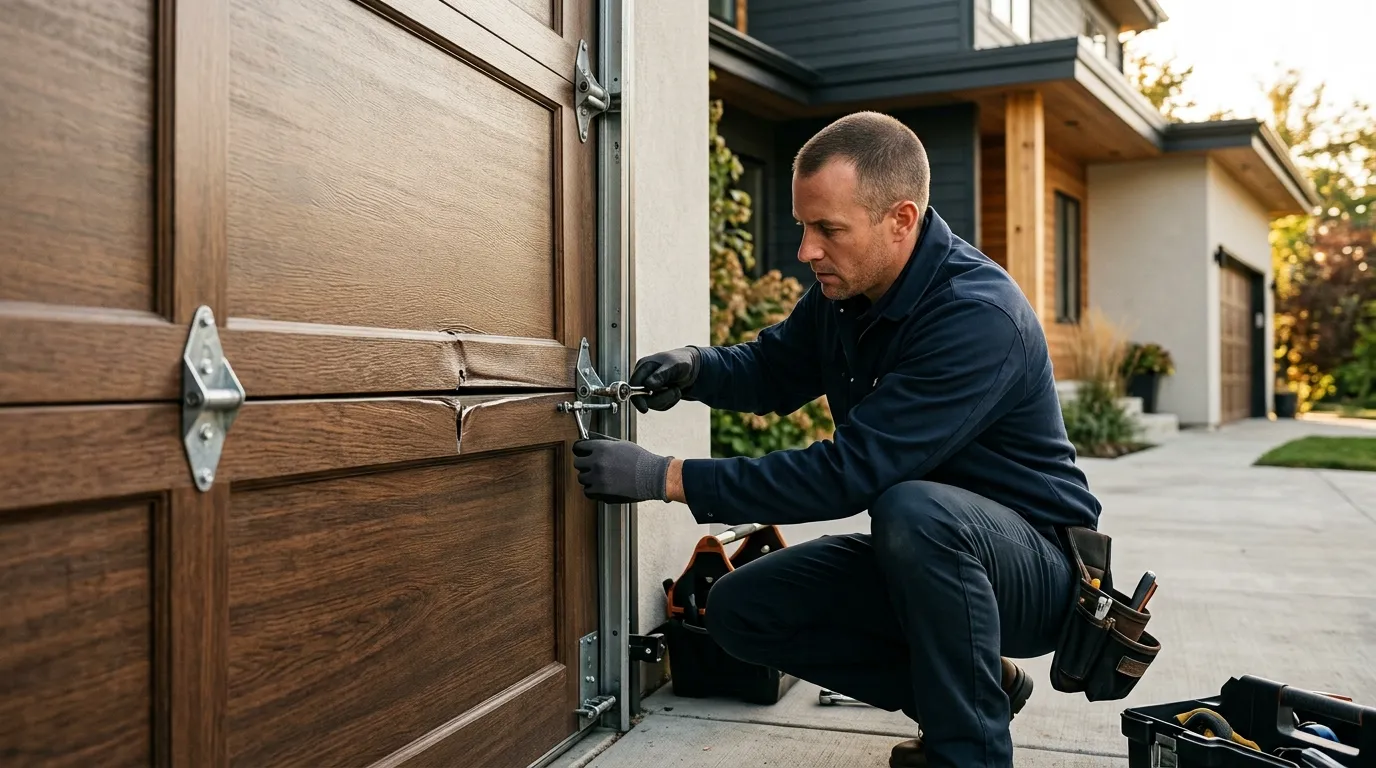
On a house from Libertyville's era, the most common call is a snapped torsion spring that was already undersized for a heavier replacement door installed sometime after the original build. Close behind is a cable that's frayed off a drum sized for the wrong spring tension - a symptom of the same mismatch. We also see bent track on older doors where the studs the track is lagged into have shifted slightly over 40-plus years, which is a house issue as much as a door issue, and worth mentioning honestly: sometimes the fix is re-anchoring the track, not replacing it. Opener trouble in this age bracket usually isn't the motor - it's a sensor pair from an earlier retrofit that's aimed wrong or wired to a board that doesn't match. None of this is unique to any one street in town; it's a function of a 7,573-household area built mostly around 1976, four miles from our shop, aging the way houses of that year do.
How it works
From “it’s stuck” to “it’s fixed”
1
Tell us what’s wrong
Describe the symptom - won’t open, loud bang, opener runs but the door won’t move.
2
On-site diagnosis
A technician tests the door under power and by hand and finds what actually failed.
3
Clear, up-front plan
You get the fix that’s needed and what drives the cost - before any work starts.
4
Repaired & tested
The repair is done, the door is set true and tested, and the work area left clean.
Serving Vernon Hills, IL - tell us what your door’s doing and we’ll take it from there.
Straight answers about garage door repair in Vernon Hills. Still unsure? Ask us directly.
Why does the age of my house matter for a garage door repair?
Libertyville's median build year is 1976, about eight years older than the broader area median of 1984. Doors and springs from that era were often sized for lighter original panels, so if the door's been swapped since, the spring or opener may not match the current load - which is a common source of premature failure here.
Do you have a branch in Libertyville?
No. We work out of Vernon Hills, about 4 miles away, and drive out for calls. We don't keep a separate depot or crew stationed in Libertyville, but the distance is short enough that it doesn't change what we can bring with us.
Can you match an old panel style if mine is discontinued?
Not always off the truck. Libertyville has enough older stock that we sometimes run into panel designs no longer manufactured. In that case we order a match rather than force a fit, which does mean a short wait rather than a same-visit swap.
Is a bent track always a door problem?
Not necessarily. On older houses in this area, we sometimes find the track has shifted because the studs it's anchored to have moved slightly over decades, not because the track itself failed. Re-anchoring can fix it without replacing hardware.