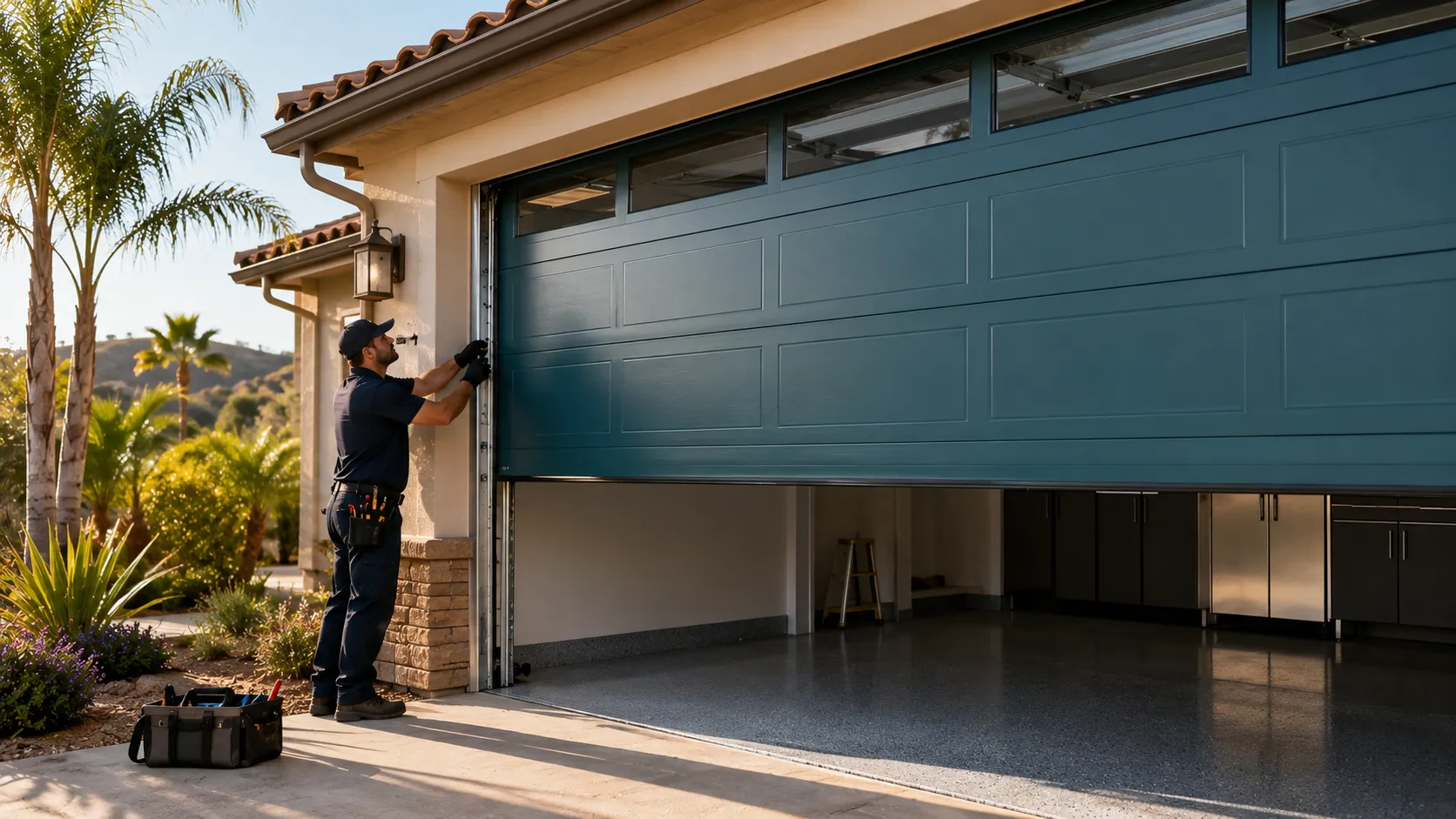
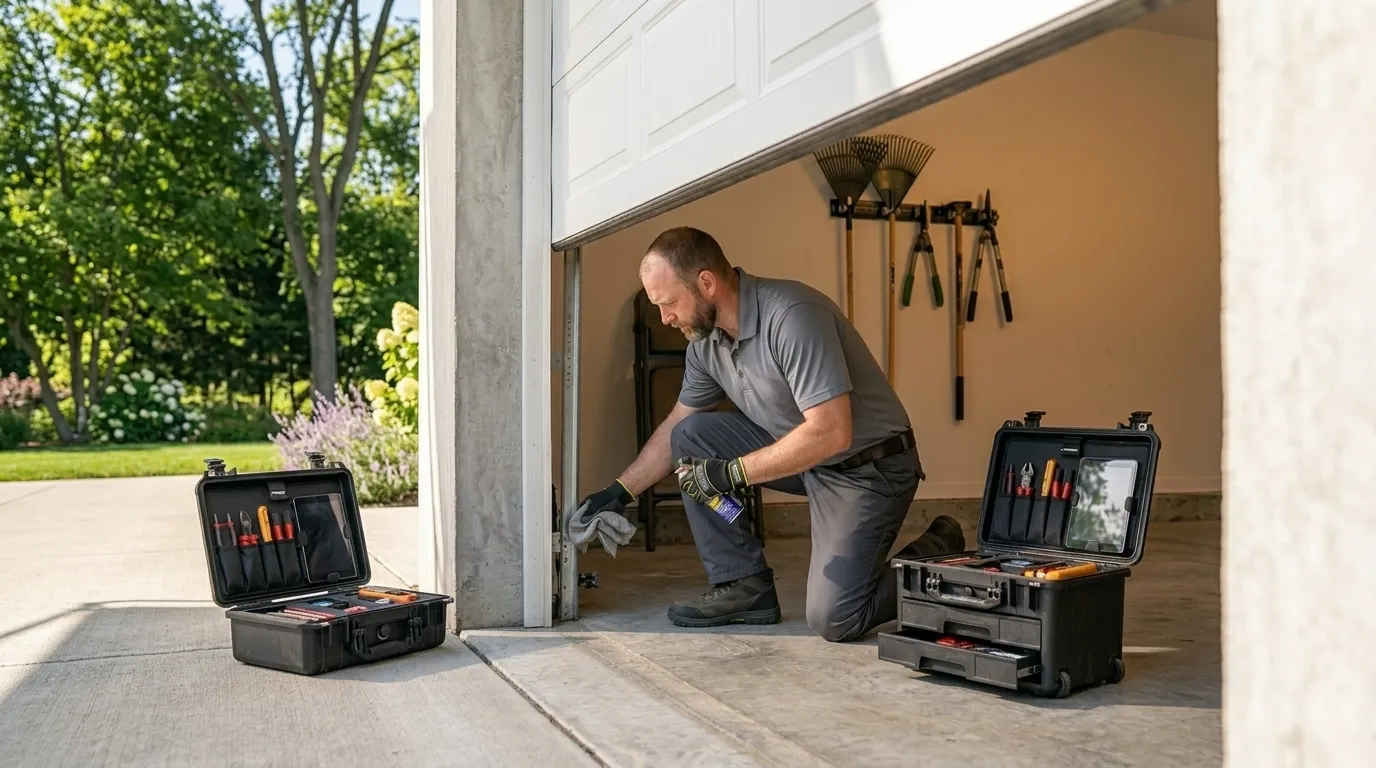
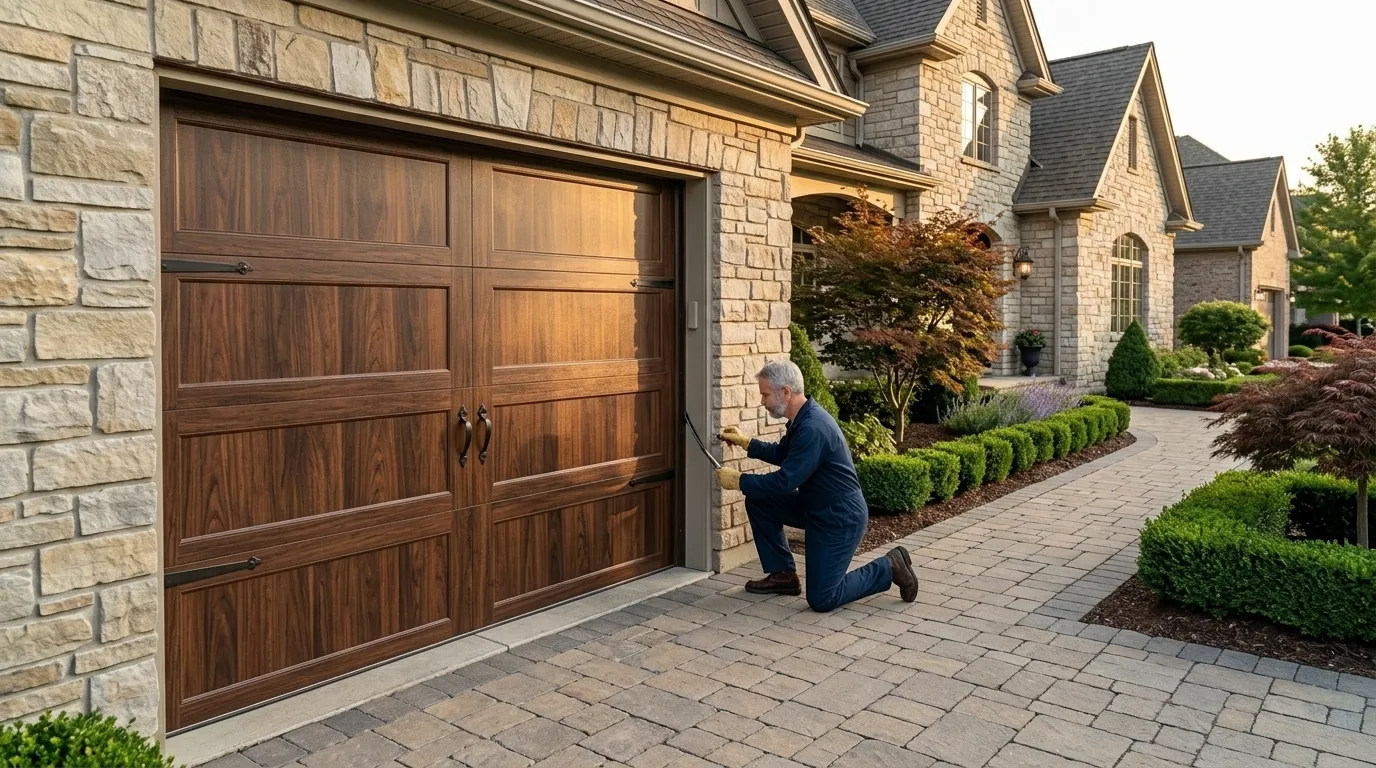
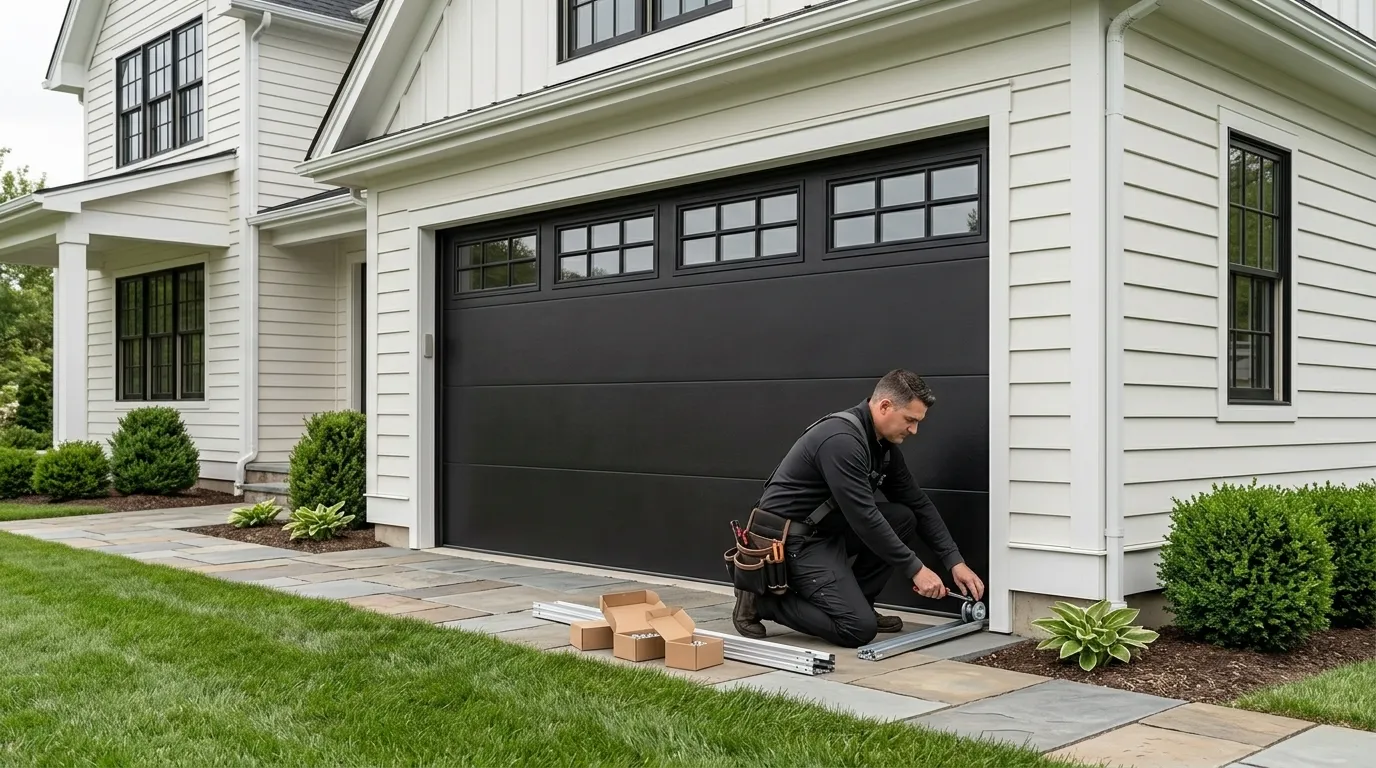
Cable snaps on Winnetka's pre-war garage doors trace back to original narrow-track hardware. We drive out from Vernon Hills to fix it and price it plainly.
Winnetka sits about 14 miles from our Vernon Hills shop, so when you call about a snapped or frayed cable, the first thing we ask is what year the house went up and whether the door still has its original track. A lot of Winnetka garage doors are original to homes built well before most of the houses we service elsewhere in the area, and that changes what we load on the truck before we leave.
We don't run a branch or a drop box in Winnetka - every job here is a dispatch from Vernon Hills, and we tell you that up front rather than pretend otherwise. Tell us the cable is broken, whether the door is stuck open or shut, and whether you hear a bang or just a slow sag. That's usually enough to know if we're bringing standard 1/8-inch aircraft cable or something sized for an older extension-spring setup.
We schedule around the drive, not around a same-day promise we can't back up from 14 miles out. If your door is a safety hazard - cable off the drum, door hanging on one side - say so when you call, and we move you up the list.
Time on the Job
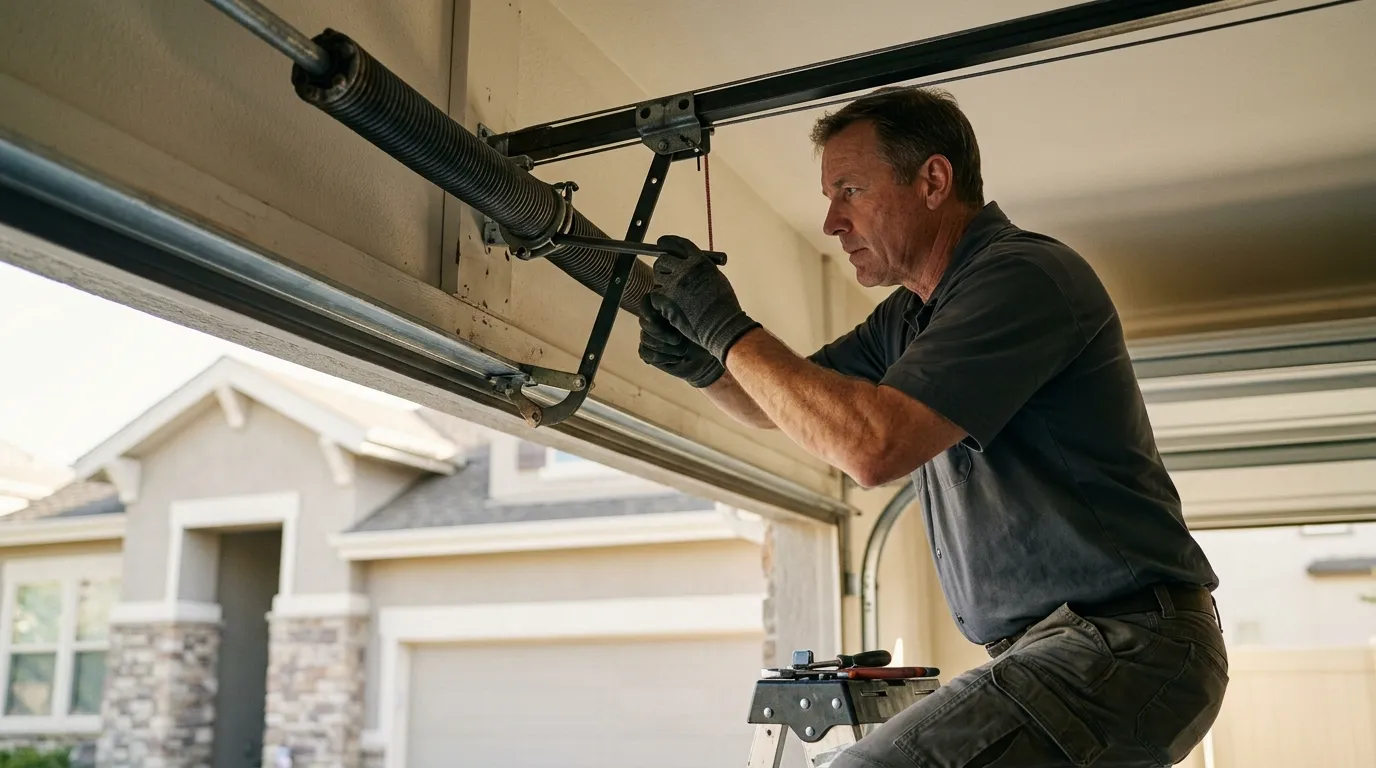
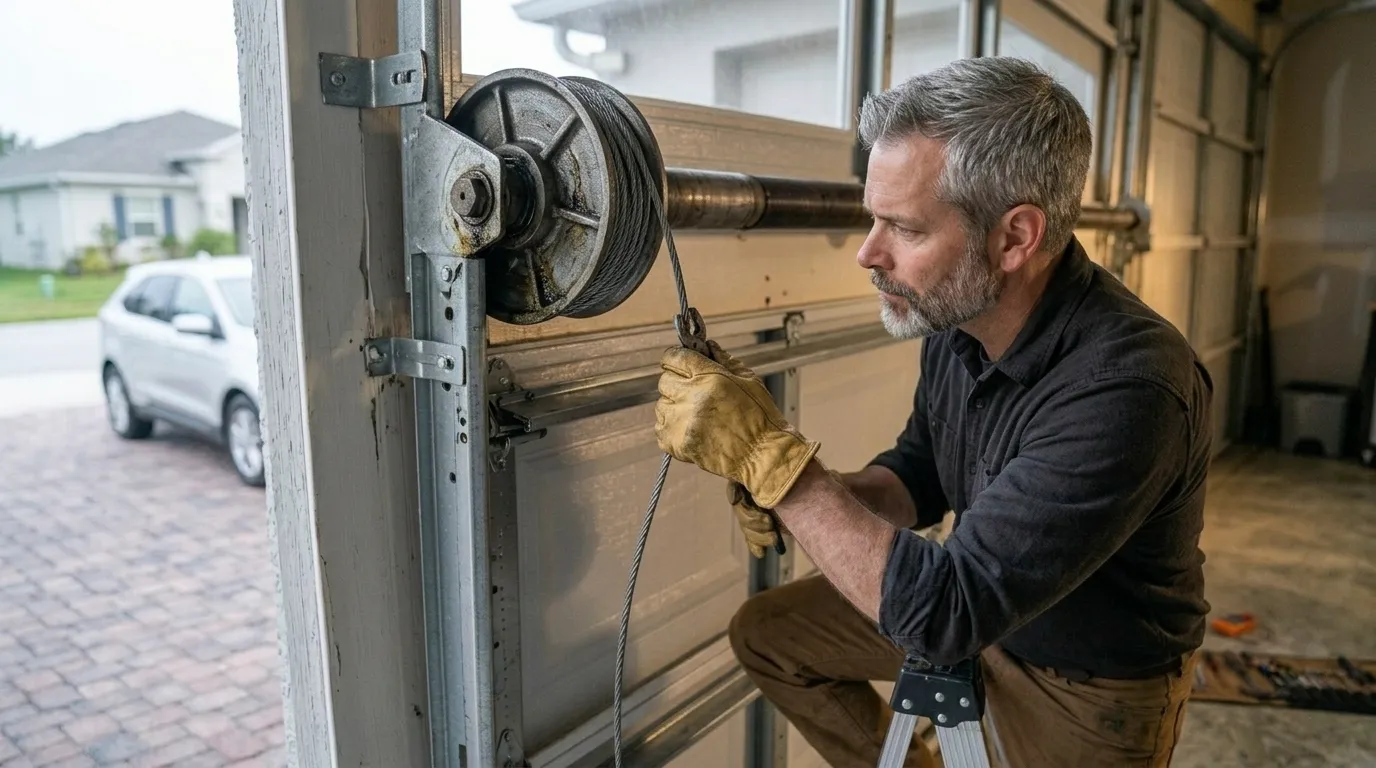
A single broken cable on a torsion-spring door, once we're on site, is usually a straightforward swap: wind down the spring, pull the old cable off the drum, run new cable, reset tension. That part of the job doesn't change much town to town.
What does change in Winnetka is what's underneath. With median year built around 1938 in this part of town, we're working on doors that in some cases still run the older extension-spring-and-pulley cable systems instead of torsion drums, which takes longer to diagnose and adds time for finding a cable length and pulley that actually matches what's there. Cold-climate freeze-thaw cycling doesn't help either - older track brackets that have shifted over decades tend to bind or twist a cable faster than newer double-track hardware does.
We won't quote a fixed number of minutes here because it depends on which system we find. What we can tell you is that older extension-cable jobs run longer than a modern torsion swap, and we build that into the estimate before we start, not after.
What the Fix Involves
Cable failure on a door built to 1938-era hardware standards is rarely just the cable. Frayed strands usually mean the cable was riding against a bent track, a loose pulley, or a drum that's worn from decades of use, so we check all three before we call the job done.
On extension-spring setups, common on the older end of Winnetka's housing stock, we replace both cables as a pair even if only one broke - uneven cable age on that kind of system is what causes the next failure. On torsion setups we check the drum and the cable groove for wear grooves that will chew through a new cable in a season or two.
One limitation worth saying plainly: if the track itself is bent or the drums are cracked, replacing cable alone is a temporary fix, and we'll tell you that instead of just swapping the part and moving on. We don't push a full door replacement when a repair holds - but we also don't sell you a cable-only fix on hardware that's going to strand you again in a month.
What You Pay
We don't post a flat cable-repair price because the extension-versus-torsion question above changes the parts list, and the age of the door changes labor time. What we can tell you is that Winnetka households we quote for skew toward a median income around $250,001, well above the roughly $113,125 median across our broader service area, and that doesn't change our pricing - the job costs what the parts and time cost, not what the neighborhood suggests.
We give you the number before we start work, broken into parts and labor, and we don't add a mileage surcharge on top of the estimate for the drive from Vernon Hills. If we find the track or drum is also compromised, we stop and tell you the added cost rather than assuming you want it fixed.
With roughly 4,268 households in Winnetka, we don't get a high volume of calls here compared to towns closer to the shop, so our pricing on older extension-cable systems is based on the parts and labor for that specific hardware, not a volume rate we run for townhome torsion doors elsewhere.
How it works
From “it’s stuck” to “it’s fixed”
1
Tell us what’s wrong
Describe the symptom - won’t open, loud bang, opener runs but the door won’t move.
2
On-site diagnosis
A technician tests the door under power and by hand and finds what actually failed.
3
Clear, up-front plan
You get the fix that’s needed and what drives the cost - before any work starts.
4
Repaired & tested
The repair is done, the door is set true and tested, and the work area left clean.
Serving Vernon Hills, IL - tell us what your door’s doing and we’ll take it from there.
Straight answers about garage door repair in Vernon Hills. Still unsure? Ask us directly.
Why does my Winnetka garage door still have an extension-spring cable system instead of torsion?
Because of when the house was built. With median year built around 1938 in parts of Winnetka, many original garage doors predate the torsion-drum systems that became standard later. Extension-spring-and-pulley setups use a different cable and pulley arrangement, and we bring parts for both when we don't know which we're facing.
Do you have a local branch in Winnetka?
No. We run out of Vernon Hills, about 14 miles away, and every Winnetka job is a dispatch from there. We don't advertise a same-day guarantee we can't hold to from that distance, but we do give you a clear time window when you call.
Will a broken cable damage anything else on an older door?
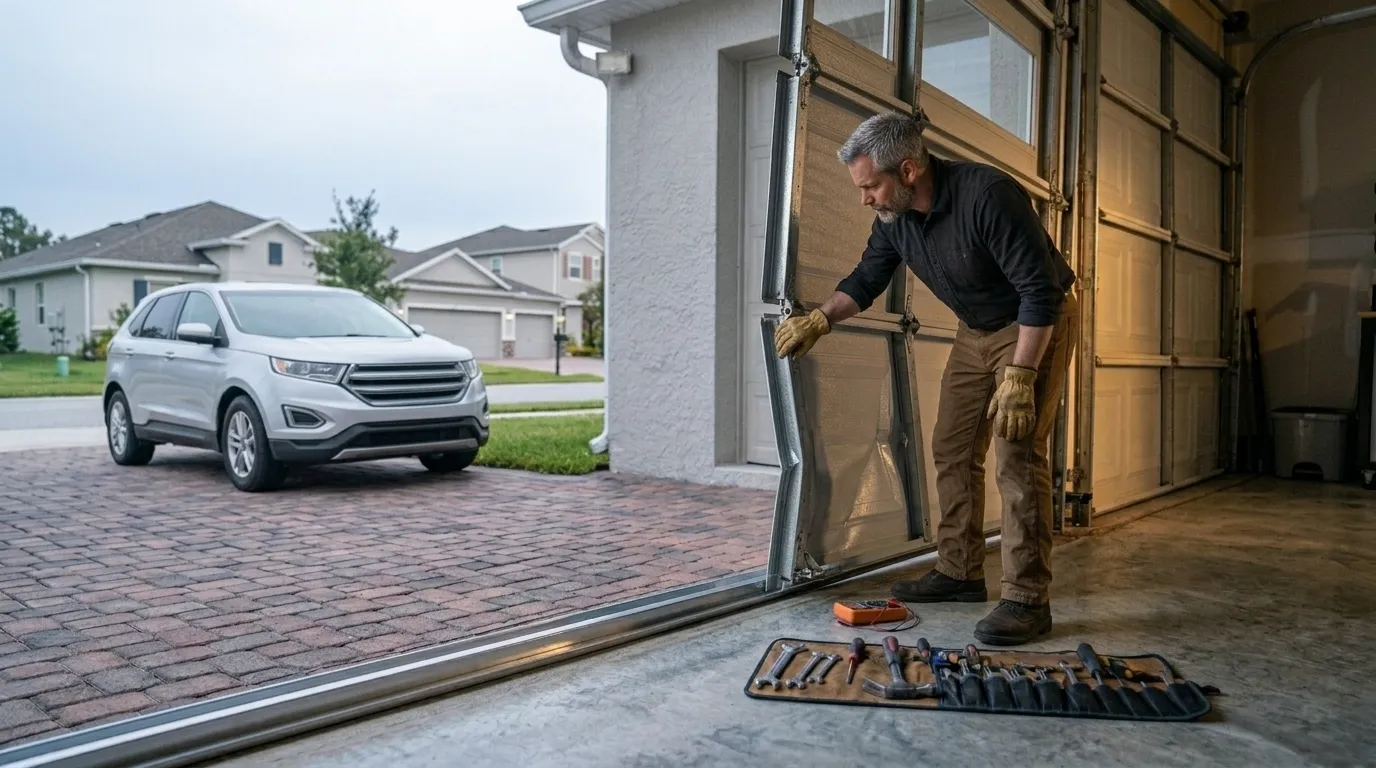
Possibly. A snapped cable on an older track can let the door drop unevenly, which stresses the opposite track and rollers. That's why we inspect the whole run, not just replace the cable, especially on doors old enough to have worn brackets or a cracked drum.
Is cable repair ever not worth doing?
Yes. If the track is badly bent or the drum is cracked on top of the cable failure, a cable-only fix won't hold. We'll tell you when that's the case instead of billing for a repair that fails again within weeks.