Lindenhurst sits about 13 miles from our shop in Vernon Hills, which is a factor in how we schedule maintenance calls out here - we batch them rather than run one truck back and forth for a single tune-up, so booking a week or two out is normal, not a sign we're too busy to care. The houses themselves cluster around a median build year of 1986, which puts a lot of openers and springs at or past the point where lubrication alone won't fix a noisy lift. Mid-80s installs commonly ran with standard-lift torsion springs and chain-drive openers that have since been through thirty-plus winters. In a cold-moderate climate band like this one, steel cable and spring steel contract in deep cold and expand again in spring thaw - that cycle is what actually wears out galvanized coating and stretches cable strand over the decades, more than any single storm does. We're not troubleshooting a brand-new subdivision here; we're maintaining doors that have already lived through a few decades of freeze-thaw cycling, and the maintenance plan reflects that.
How It Shows Up
On a house built in the mid-80s, the first sign is usually a grinding or popping sound on the way up, which points to rollers that have gone flat-sided from age rather than a clean roll. Second is an opener that hesitates or reverses partway - often a sign the travel limits have drifted on original hardware never adjusted since install. Third is visible surface rust on the bottom roller track or on cable near the drum, which in this climate band comes from repeated condensation as the garage cycles between outdoor cold and residual house warmth. None of this is dramatic. It's slow. A door that took two seconds longer to close last winter than it does now is the kind of thing owners in this area tend to notice only after we point it out on a service call.
How to Book
We run maintenance calls to Lindenhurst from our Vernon Hills location, so we ask that you book ahead rather than expect a same-day slot - the drive alone means we plan the day's route around a handful of stops on this side of the service area rather than one-off trips. You can request service through our Lindenhurst service area page, or check the maintenance overview on the Vernon Hills maintenance page if you want to see what a standard visit covers before you call. Have your door's approximate install year handy if you know it - for a house built in the 1986 range, that alone tells us which spring size and drive type to expect before the truck leaves the shop.
Doing It Yourself
There's a fair amount an owner can do between visits. Wipe down and lightly oil the rollers and hinges twice a year - a 30-weight motor oil or dedicated garage door lubricant, not WD-40, which evaporates fast and attracts grit. Check the auto-reverse safety feature by laying a 2x4 flat under the door and confirming it reverses on contact; this only takes a minute and it's the single most important safety check in the whole list. Look at the cables near the bottom bracket for fraying strands - if you see any, stop opening the door manually and call, because a frayed cable under torsion spring load is not a DIY repair. What we won't tell you to do yourself is touch the torsion spring itself. On a standard-lift setup like most of what's out here from the mid-80s, that spring holds enough stored tension to break a bone, and it's genuinely not worth the risk to save a service call.
What the Fix Involves
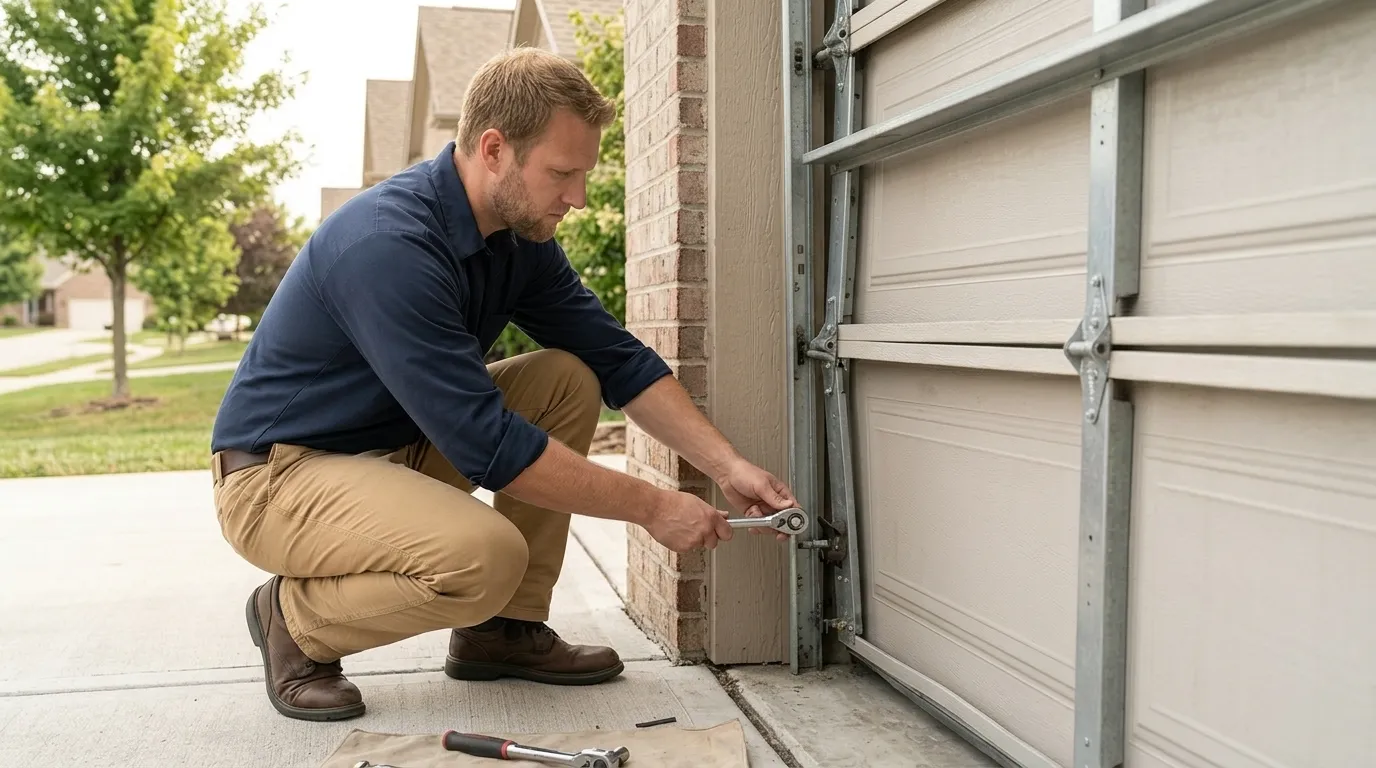
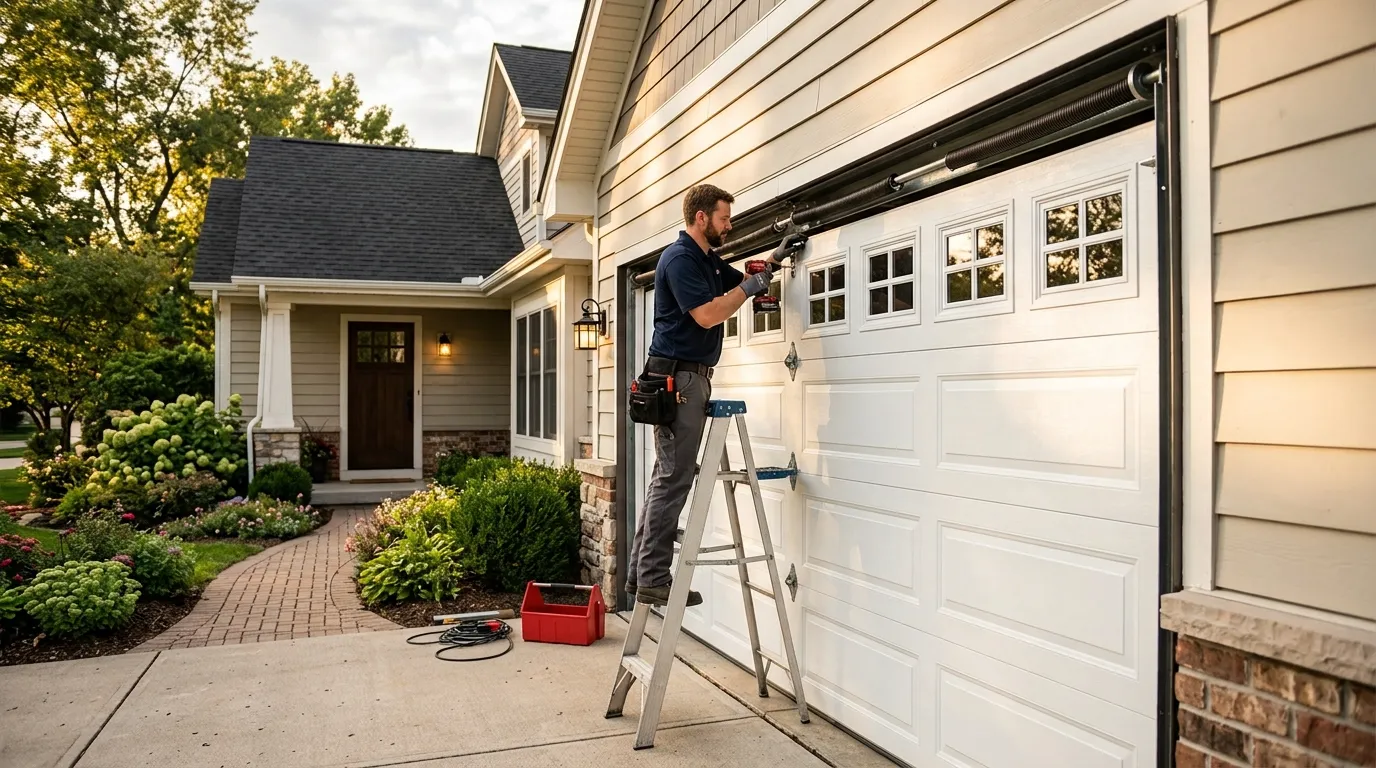
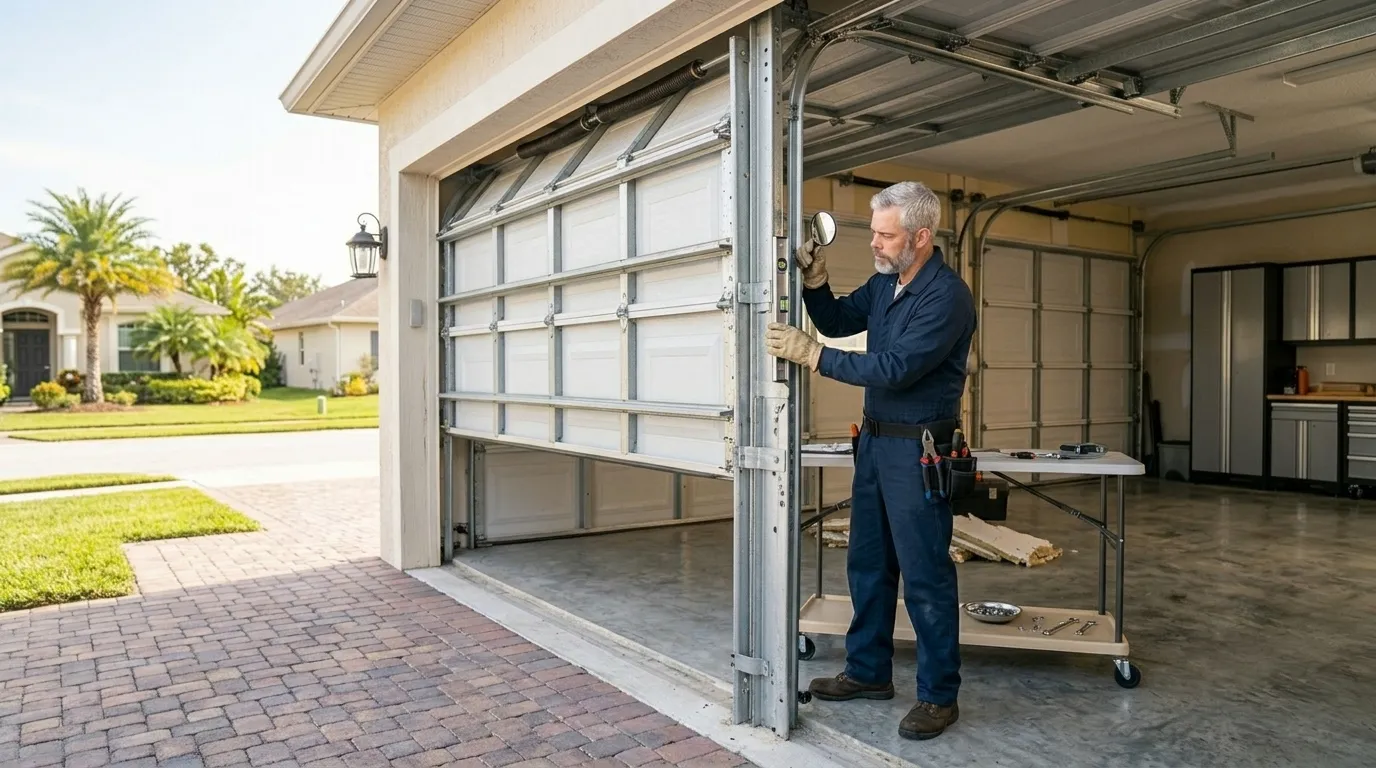
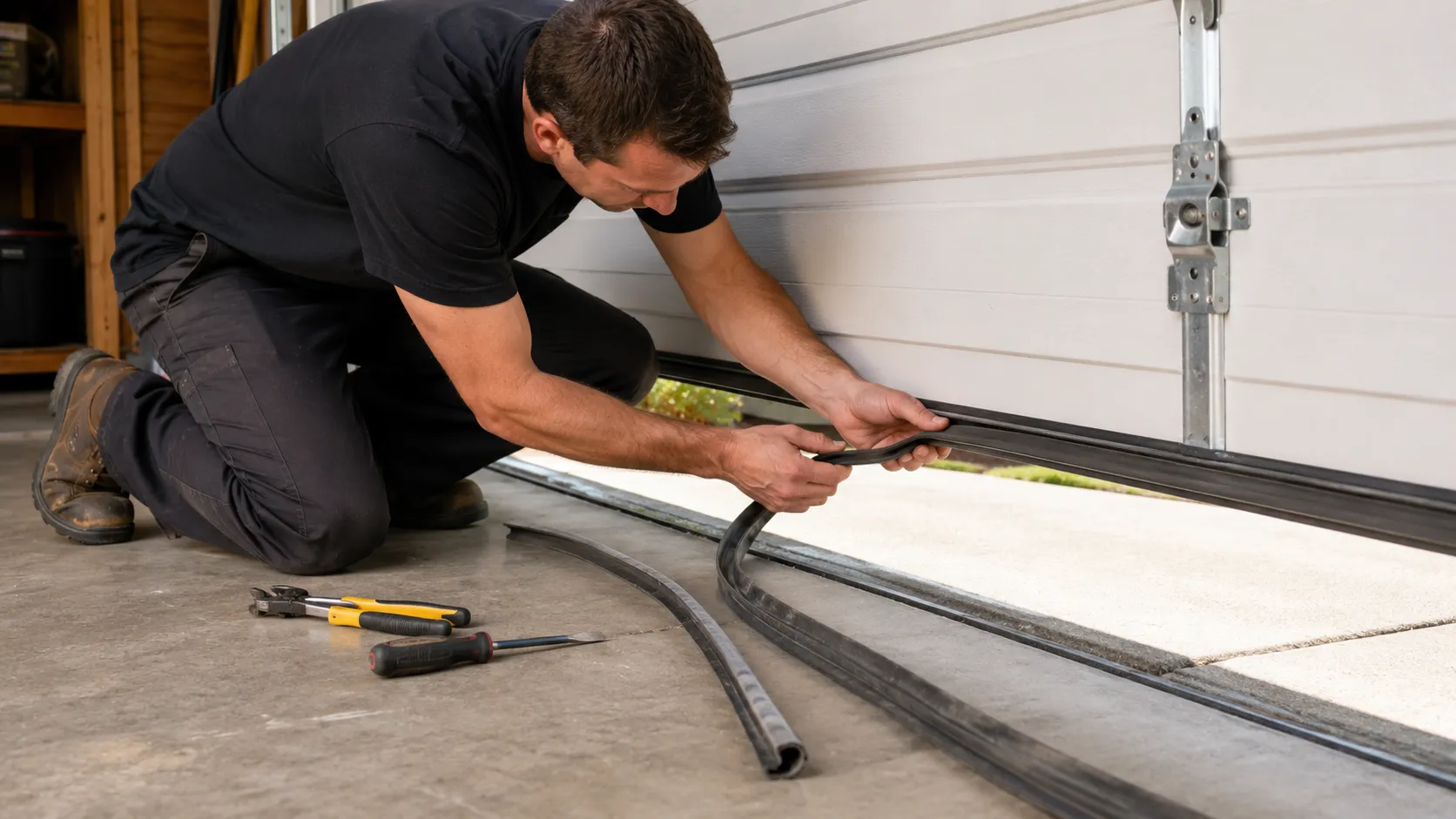
A standard maintenance visit on a house from this era runs through spring tension, cable condition, roller and hinge wear, track alignment, and opener force and limit settings - usually in that order, since a spring that's lost tension will throw off every reading after it. If your rollers are the original steel type, we'll often recommend swapping to nylon while we're in there; steel rollers are the noisiest part of a 1980s door and the easiest upgrade to make without touching the drive system. One honest limitation: if the opener is original to a 1986 build, replacement parts for that specific motor are frequently out of production, and we'll say so rather than order a part that may take weeks to source. In that case the more sensible fix is a new opener unit rather than chasing a part for one that's been running for close to forty years.
How it works
From “it’s stuck” to “it’s fixed”
1
Tell us what’s wrong
Describe the symptom - won’t open, loud bang, opener runs but the door won’t move.
2
On-site diagnosis
A technician tests the door under power and by hand and finds what actually failed.
3
Clear, up-front plan
You get the fix that’s needed and what drives the cost - before any work starts.
4
Repaired & tested
The repair is done, the door is set true and tested, and the work area left clean.
Serving Vernon Hills, IL - tell us what your door’s doing and we’ll take it from there.
Straight answers about garage door repair in Vernon Hills. Still unsure? Ask us directly.
How far out is Lindenhurst from your shop, and does that affect scheduling?
About 13 miles from our Vernon Hills location. We still service Lindenhurst regularly, but because of the drive we schedule these calls in batches rather than offering same-day slots, so booking a few days ahead gets you a better shot at the time you want.
My door is original to a house built in the mid-80s - is that a problem?
Not a problem, but it does change what we check. A door and opener from around 1986 has had decades of freeze-thaw cycling in this climate, so we pay closer attention to spring tension, cable wear, and roller condition than we would on a newer install.
Can you get parts for an opener that old?
Sometimes, but not always. Motor units from the mid-80s are frequently discontinued, and if that's the case we'll tell you rather than order a part on a long back-order. Often a new opener is the more practical fix at that age.
What's the most important thing I can check myself?
The auto-reverse safety feature. Lay a 2x4 flat on the ground under the closing door - it should reverse the moment it touches the board. If it doesn't, stop using the door and call for service.