
What Can Go Wrong
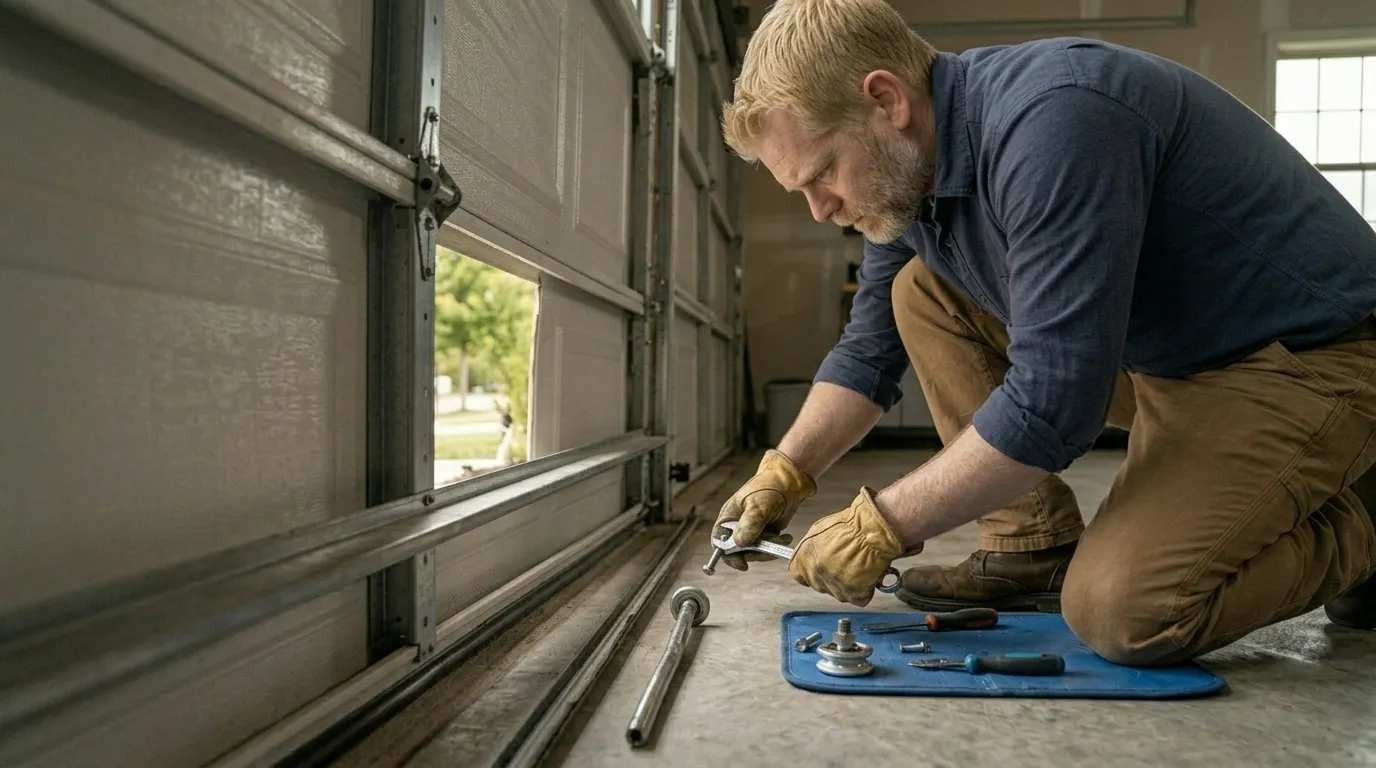
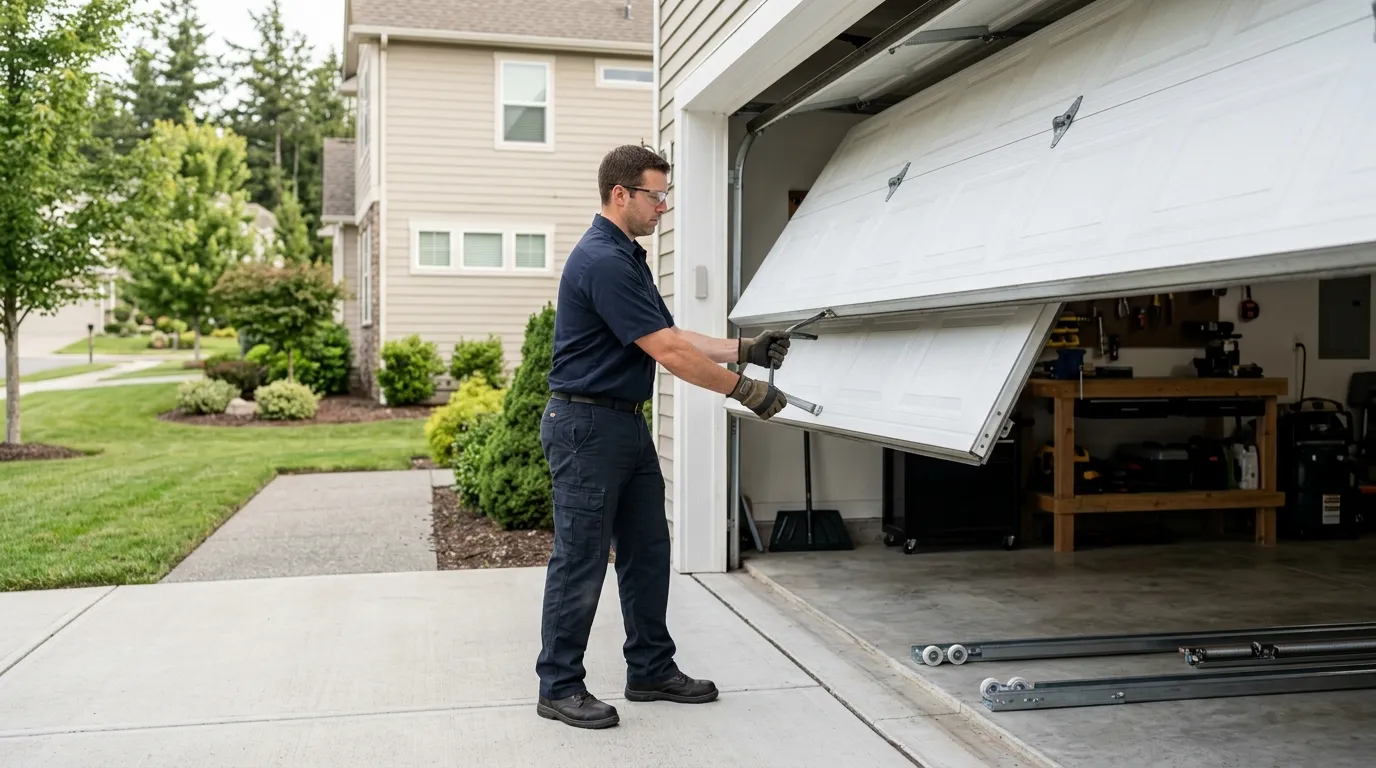
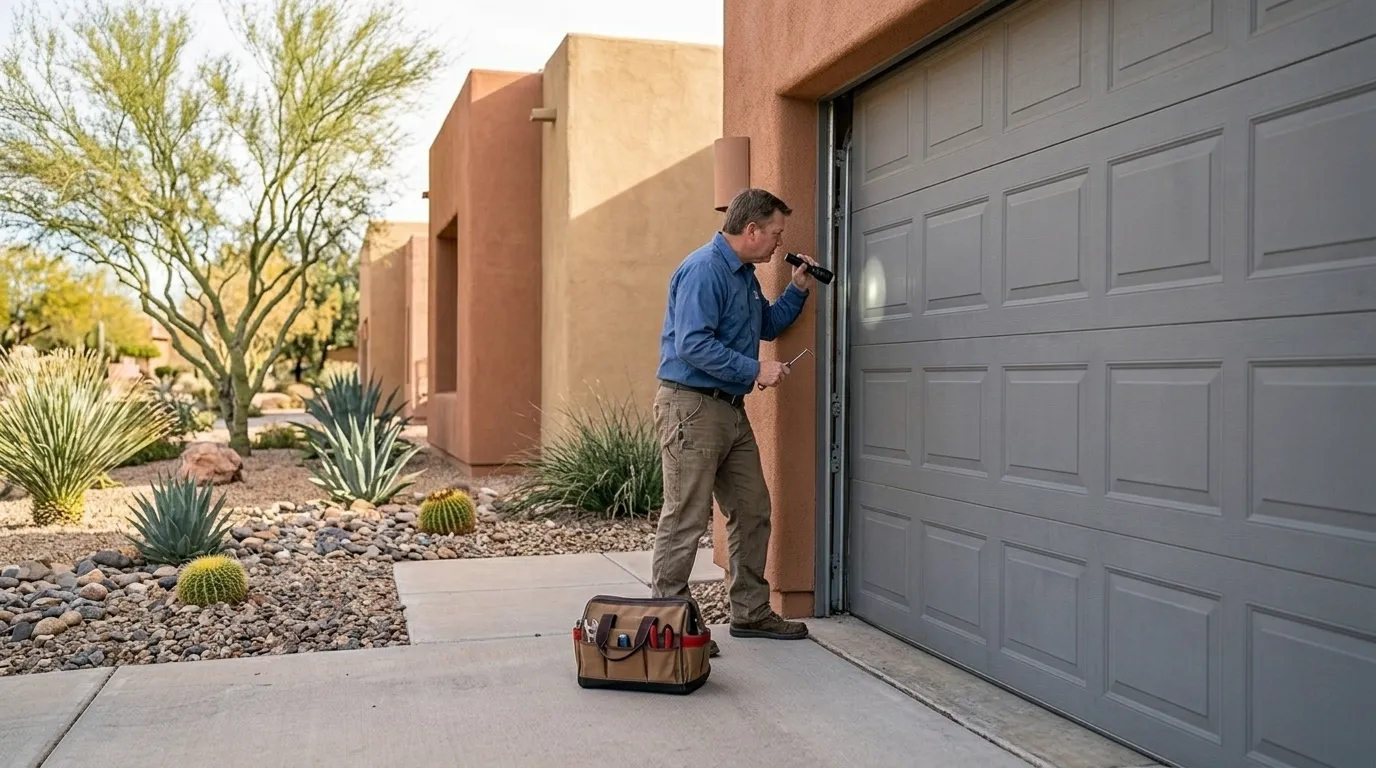
On a house built in the late 1980s, the most common failure we see is a snapped torsion spring on a door that's never been serviced since it went up - the spring simply reaches the end of its cycle life. The second most common is on the extension-spring side: a stretched or unraveling spring that's been quietly losing tension for a year, so the door gets heavier to lift by hand and the opener starts straining before anything actually breaks.
A door with no safety cables and a spring that lets go is not a job to open the garage and poke at. That's the one honest limit here - if the springs are unrestrained and under tension, we don't want a homeowner testing it before we get there.
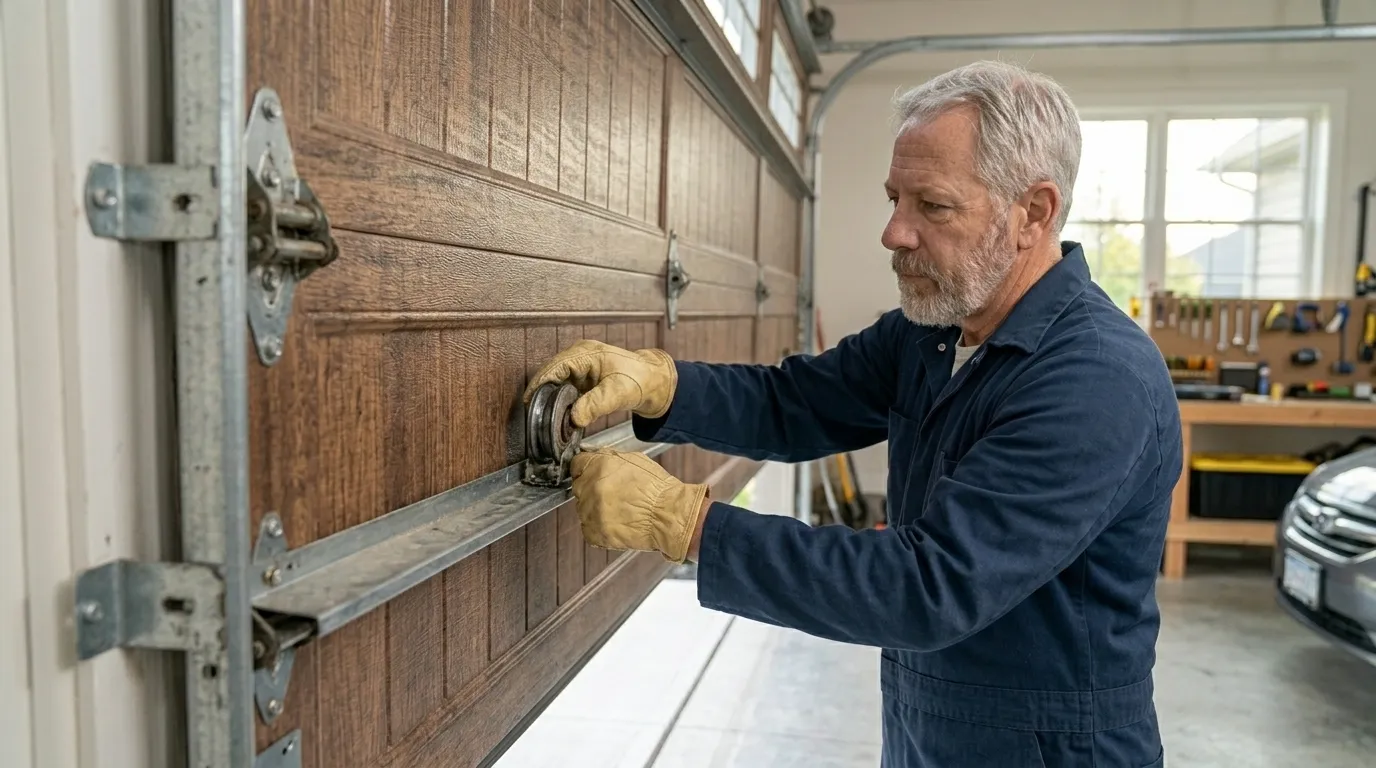
Cable fraying at the drum is common on doors this age too, especially where the bottom bracket has never been re-torqued. Left alone, a frayed cable usually takes the spring's replacement job and turns it into a cable-and-drum job as well, which is a longer fix than most people expect for what looked like a snapped spring.
Time on the Job
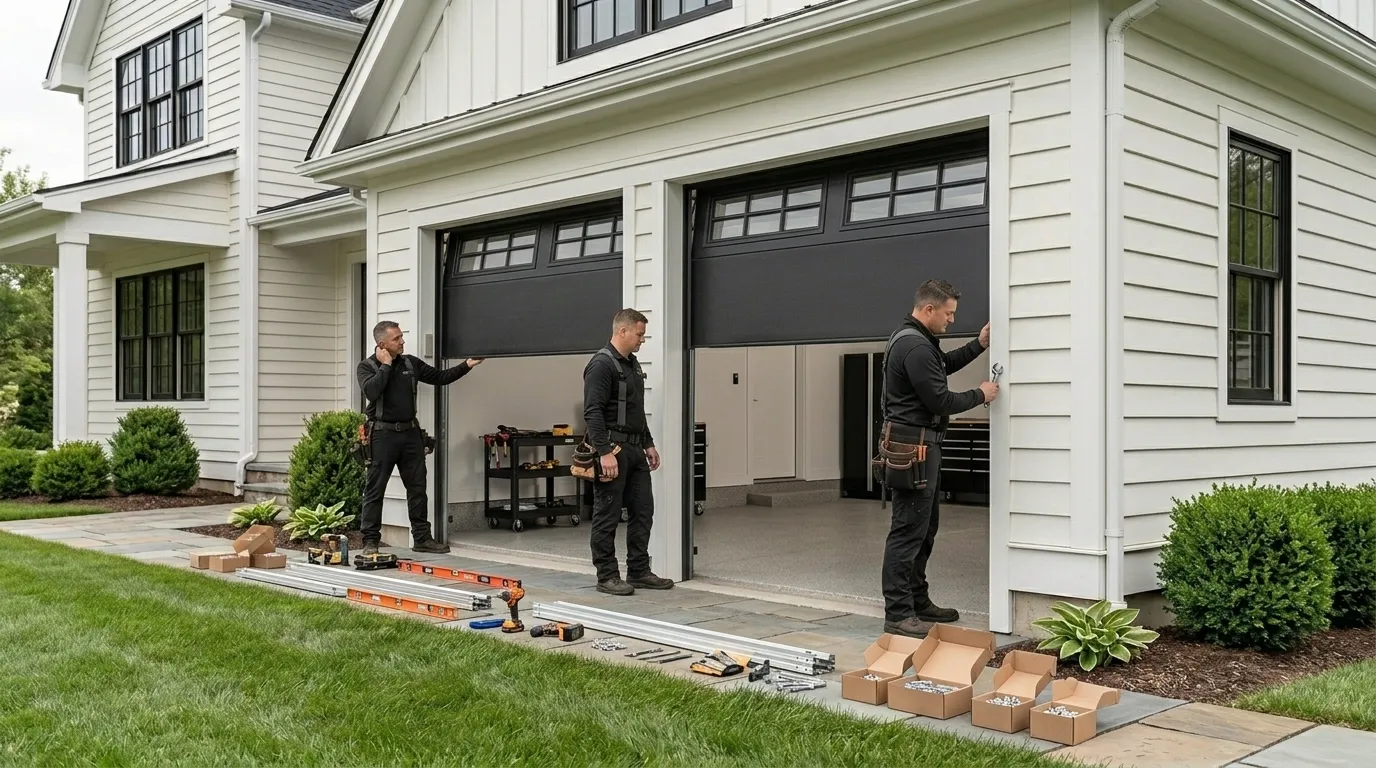
A straightforward torsion spring swap on a single door usually runs under an hour once we're on site with the right spring in the truck. Extension spring jobs, since both springs get replaced together along with the safety cables, run a bit longer - closer to ninety minutes when the cable and pulley hardware needs attention too.
We don't stock every spring size cold; if a door has an unusual wind count or a wire gauge outside what we normally carry, the wind itself can be delayed while we source it. That's rare on houses from this build era since the sizing is fairly standard for the period, but it does happen on doors that have already been