Attached and Detached Garages Wear Differently in Vernon Hills
Vernon Hills homes split between attached garages from the 1980s build-out and older detached structures. Here's what that means for door wear, insulation, and repair calls.
Most houses in this area went up between the 1980s and 90s, and that build-out came with attached garages as the default - a wall of the house doing double duty as a wall of the garage. That's the layout you'll find on the bulk of service calls we run. But housing here spans 1938 to 2009, with a median build year of 1984, so there's a real minority of older lots, especially the ones closer to Lincolnshire and Libertyville, where the garage sits detached from the house entirely - its own slab, its own roofline, sometimes twenty or thirty feet off the back corner of the lot.
The difference isn't cosmetic. An attached garage shares at least one wall with a heated living space. A detached one doesn't share anything - it's four walls and a door exposed on every side. That changes how the door, the spring, and the opener age, and it changes what we look for when we're called out. If you don't know which one you've got, walk the perimeter: if every wall of the garage borders the house or a breezeway, it's attached. If you can walk all the way around it, it's detached.
What to Check
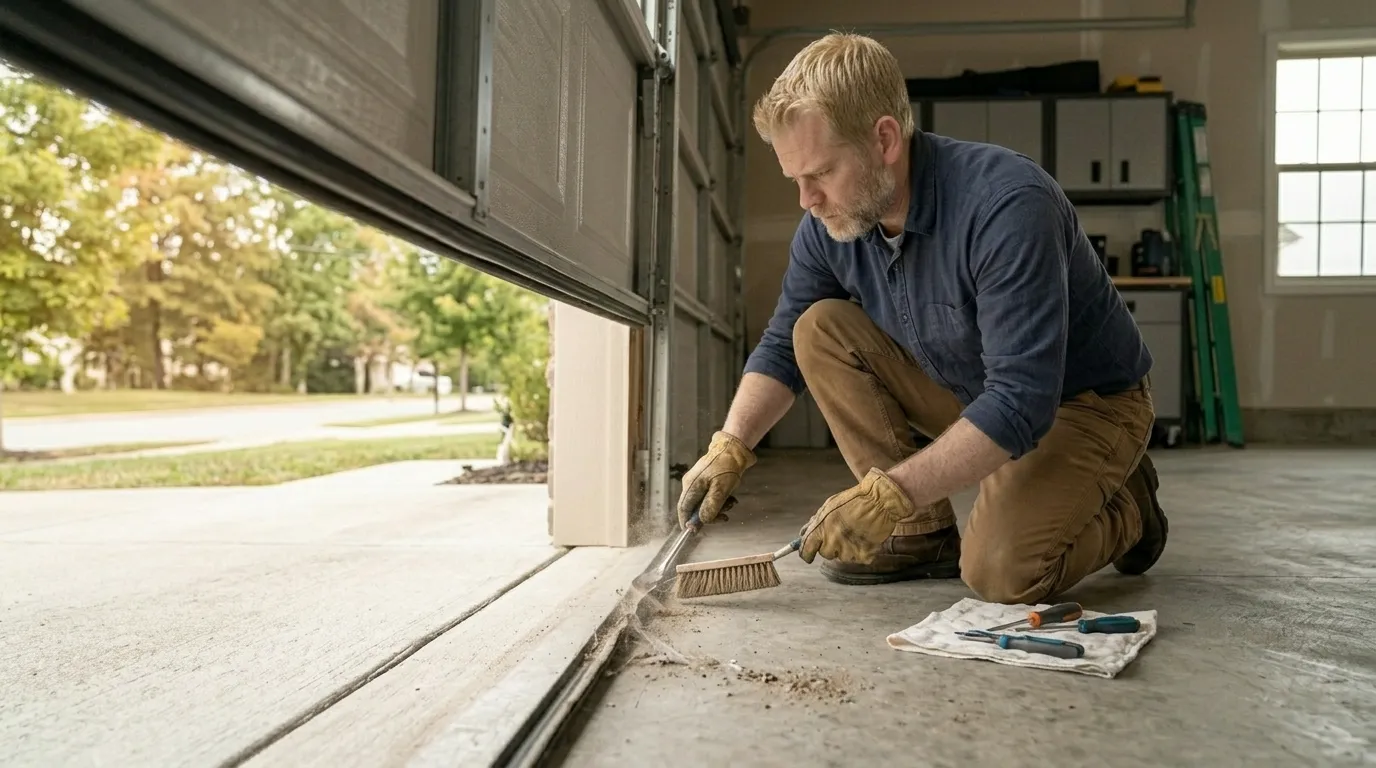
On an attached garage, check the weatherstripping where the garage wall meets the house - that seam is usually the first place cold air finds a way in, and it's often overlooked because it's not the door itself. On a detached structure, check all four sides the same way you'd check an exterior wall of the house, because there's no adjoining heated space bailing it out.
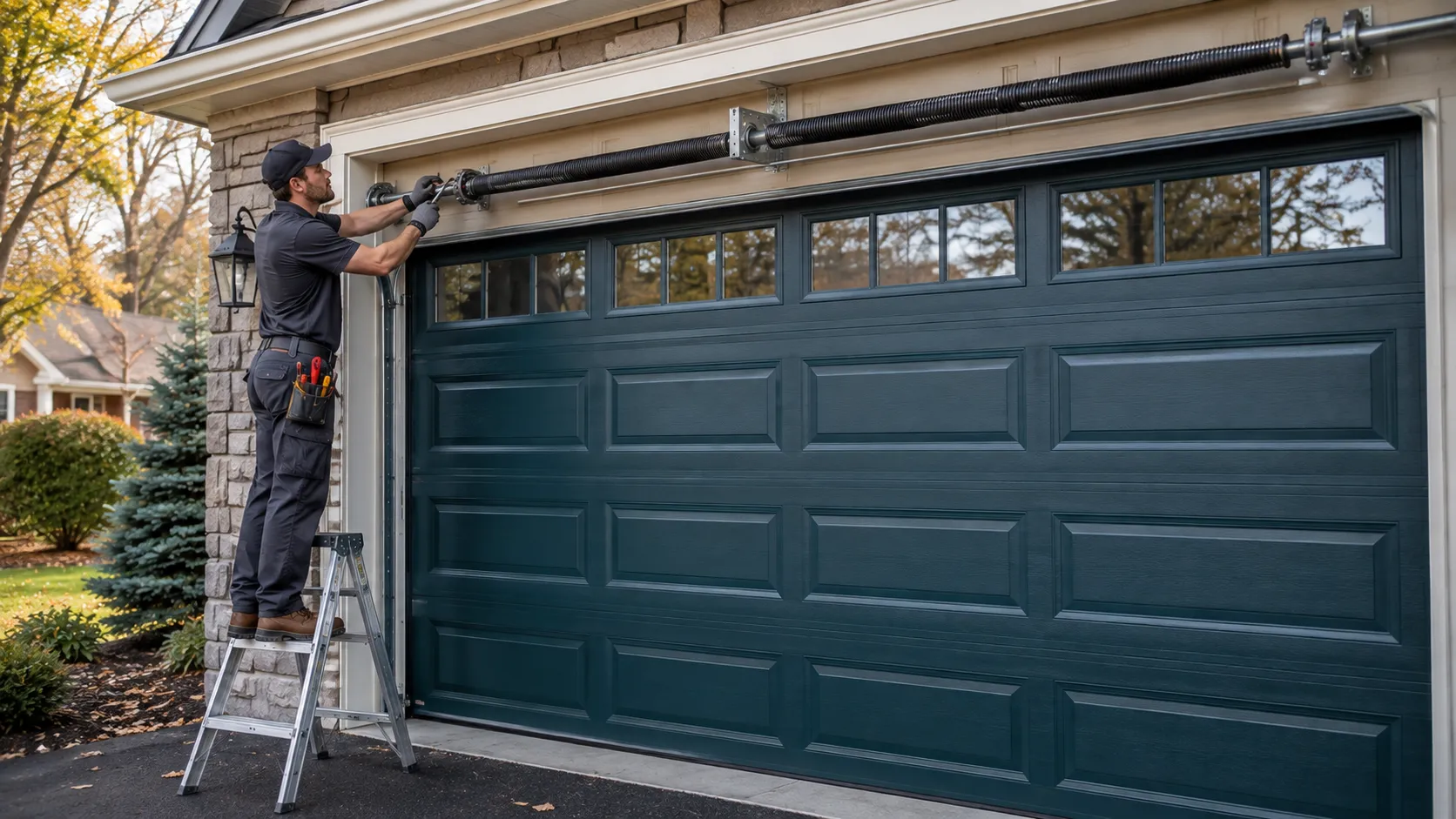
On both, look at the torsion spring end bearings and the track bolts where they meet the jamb. Detached garages tend to show looser jamb bolts sooner, since the whole structure racks slightly with wind that an attached garage's shared wall resists. Also check the bottom seal - on a detached garage sitting on its own slab, that seal is doing all the work of keeping ground moisture and drafts out, with no adjacent basement or crawlspace buffering the floor temperature the way an attached garage's slab sometimes gets.
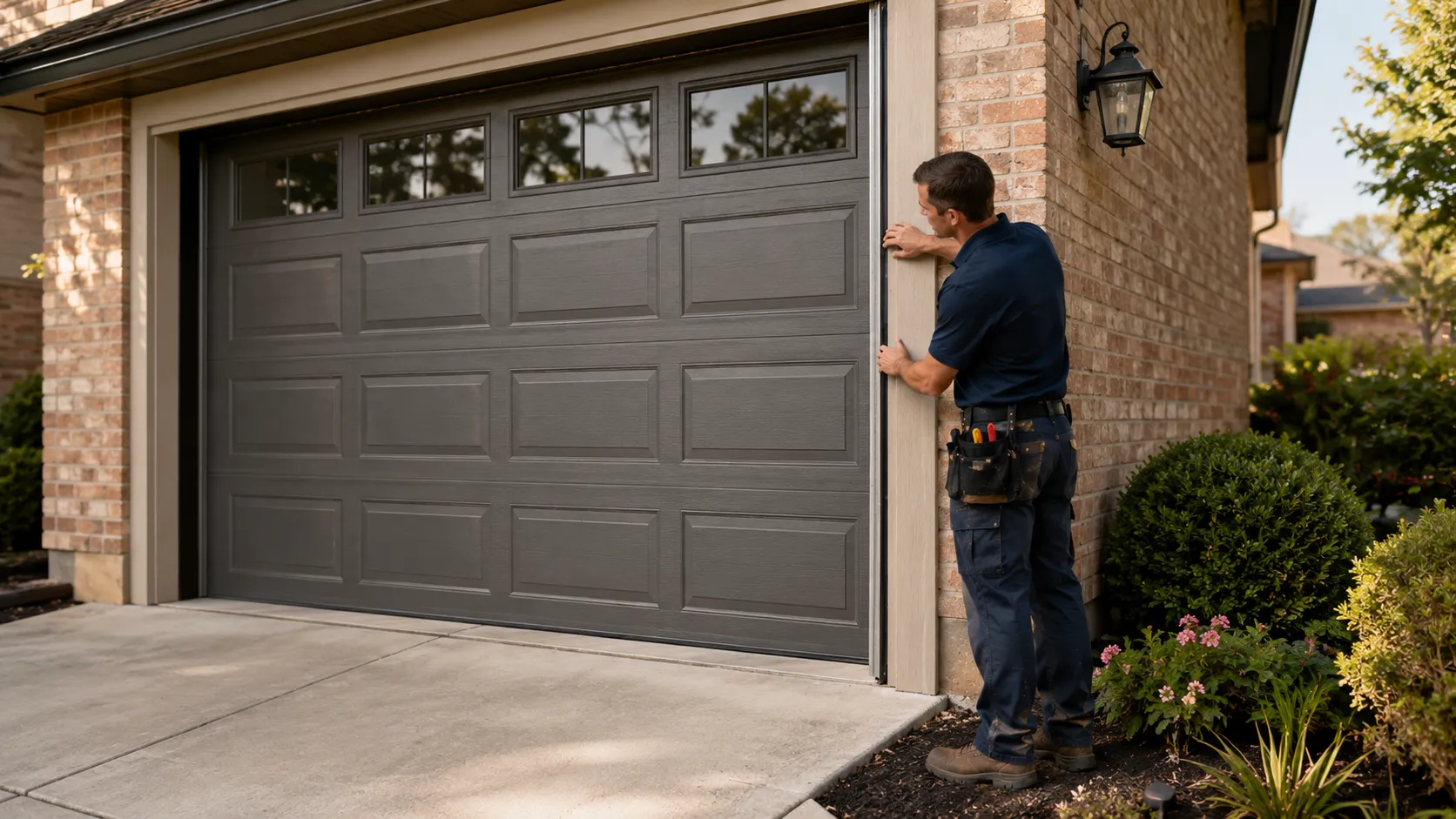
One thing we won't do over the phone: guess whether a detached garage's foundation has settled enough to be pulling the frame out of square. That needs eyes on it. If the door's dragging on one side and the weatherstrip won't seal no matter how many times you adjust it, that's a jamb problem, not a door problem, and it's worth having someone look before spending money on a new door.
What Changes With the Season
In a cold moderate climate band like this one, the swing between summer and winter matters more for a detached garage than an attached one. An attached garage picks up some residual heat bleeding through that shared wall from the house - not much, but enough to keep the temperature inside a few degrees closer to living-space norms than the outside air. A detached garage gets none of that. It tracks outdoor temperature almost one to one.
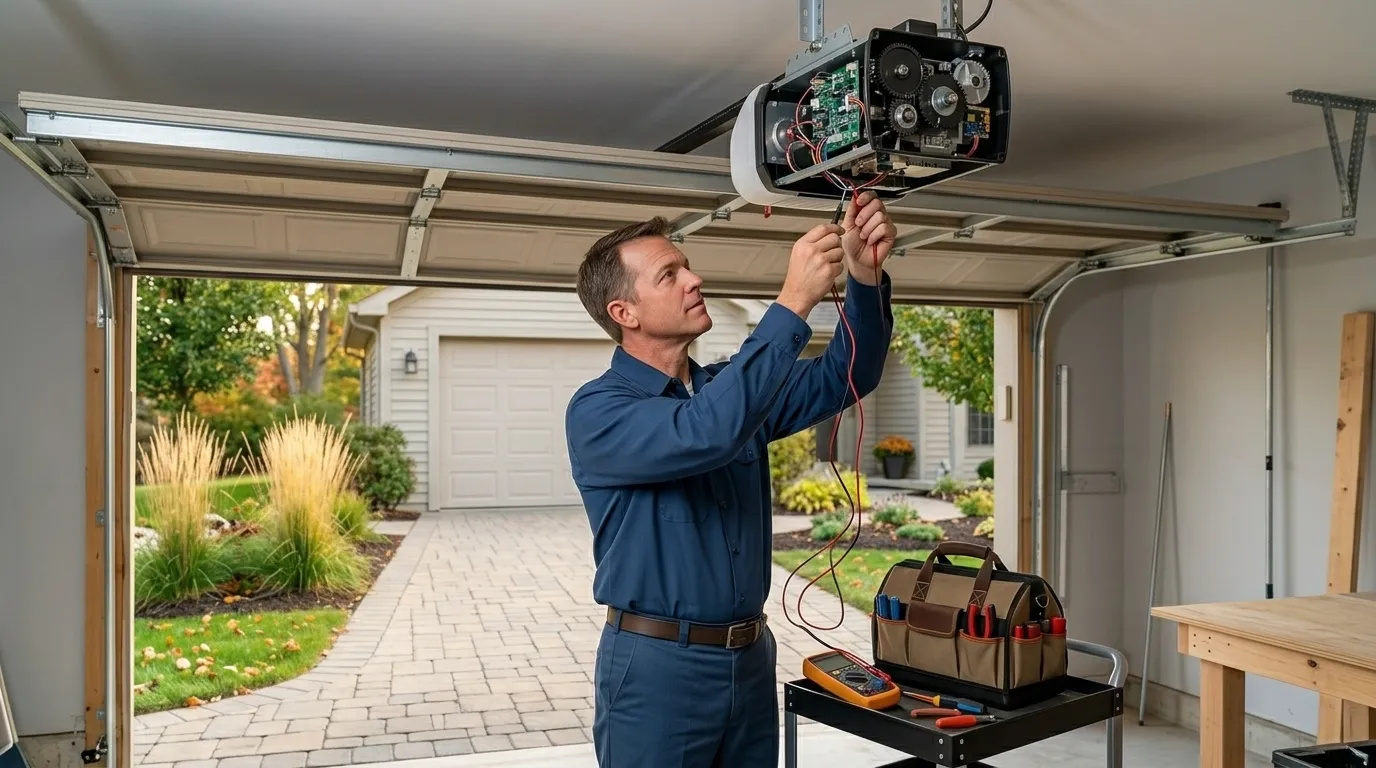
That matters for the torsion spring. Steel contracts as it cools, and a spring that's already near the end of its cycle count is more likely to let go on a cold morning in a detached garage than in an attached one just down the street, all else equal. It also matters for the opener - chain and belt drives both tighten up in the cold, and a detached garage's opener runs through more of that swing every winter than one sitting against a heated wall.
Come spring, both types see the same wave of homeowners calling about doors that stuck all winter and finally need the track realigned or the rollers replaced. The detached garages usually need it worse.
What the Weather Here Does to It
This area sits in a cold moderate climate band, and that means freeze-thaw cycling is the main thing working against a garage door over a winter, not any single hard freeze. Condensation forms on the inside of a cold steel door when the air warms during the day, then that moisture sits in the track and around the bottom seal overnight. On an attached garage, some of that condensation gets pulled off by warmth bleeding through the shared wall. On a detached garage, it just sits and refreezes, which is how you end up with a door that's frozen to the slab on a January morning.
The honest limitation here: we can't stop condensation from forming - no door or seal fully prevents it in this climate. What we can do is set the bottom seal correctly and make sure the track drains rather than pools, which cuts down on how much ice builds up call after call. If a detached garage door in this area is icing to the slab more than once or twice a winter, that's usually a grading or seal issue worth fixing rather than living with.
How it works
From “it’s stuck” to “it’s fixed”
1
Tell us what’s wrong
Describe the symptom - won’t open, loud bang, opener runs but the door won’t move.
2
On-site diagnosis
A technician tests the door under power and by hand and finds what actually failed.
3
Clear, up-front plan
You get the fix that’s needed and what drives the cost - before any work starts.
4
Repaired & tested
The repair is done, the door is set true and tested, and the work area left clean.
Serving Vernon Hills, IL - tell us what your door’s doing and we’ll take it from there.
Straight answers about garage door repair in Vernon Hills. Still unsure? Ask us directly.
Does it matter if my garage is attached or detached for how I maintain the door?
Yes. An attached garage gets some passive heat off the house through the shared wall, which softens the swing your spring and opener deal with. A detached garage tracks outdoor temperature more directly, so in this area's cold moderate climate it's worth checking the spring and weatherstripping a bit more often on a detached structure.
Are older homes in Vernon Hills more likely to have detached garages?
Housing here runs from 1938 to 2009 with a median build year of 1984, and most of the stock dates to the 1980s and 90s build-out, when attached garages became standard. The older pockets, more common toward Lincolnshire and Libertyville, are where you're more likely to find a detached garage.
Why does my detached garage door ice up worse than my neighbor's attached one?
A detached garage has no adjoining heated wall pulling warmth into the structure, so condensation that forms on the door and in the track has nothing working against it overnight. In this climate that often means it refreezes by morning. A properly set bottom seal and a track that drains help, but they don't eliminate it entirely.
Can I tell which type I have just by looking at the wiring?
Not reliably from wiring alone, but the walk-around test works: if every side of the garage borders the house, it's attached; if you can walk all the way around the structure, it's detached. That distinction is more useful for us than wiring when we're figuring out what's stressing the door.