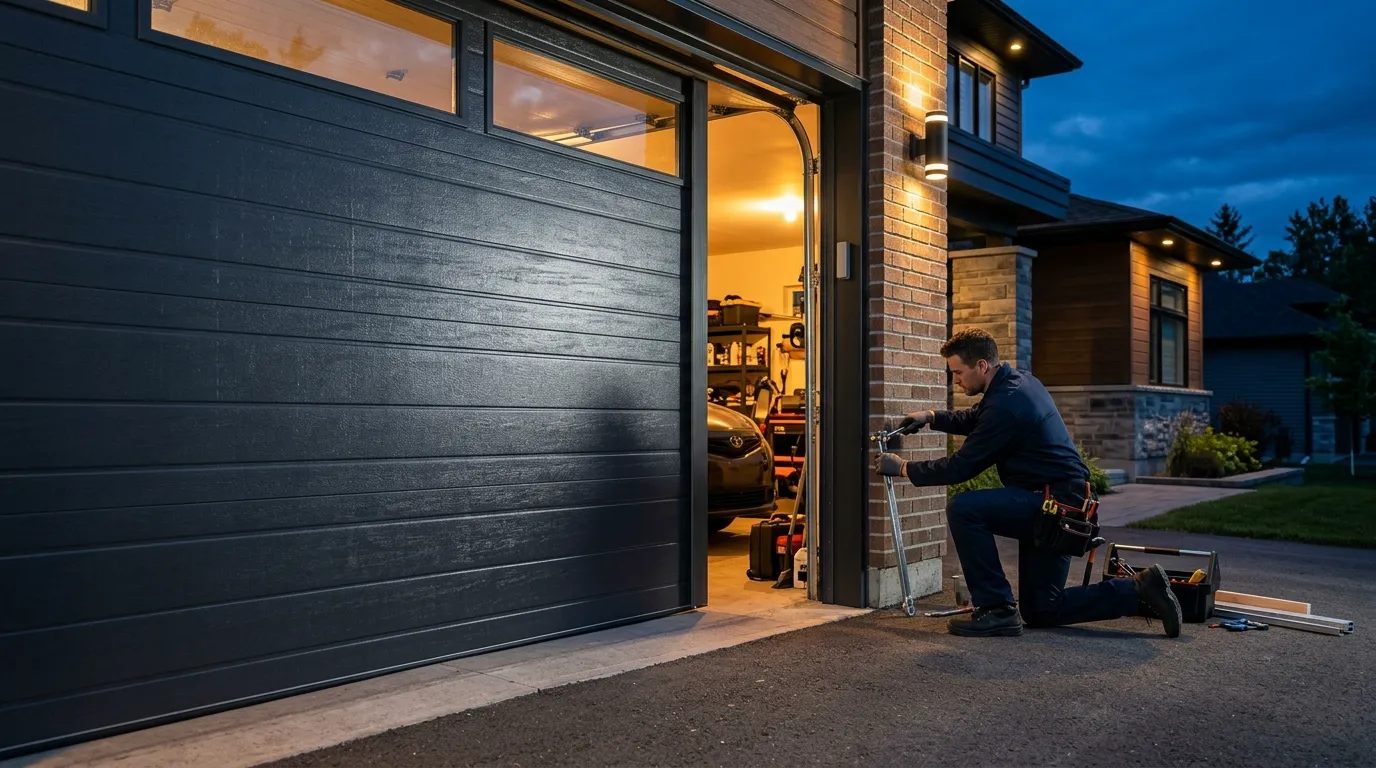
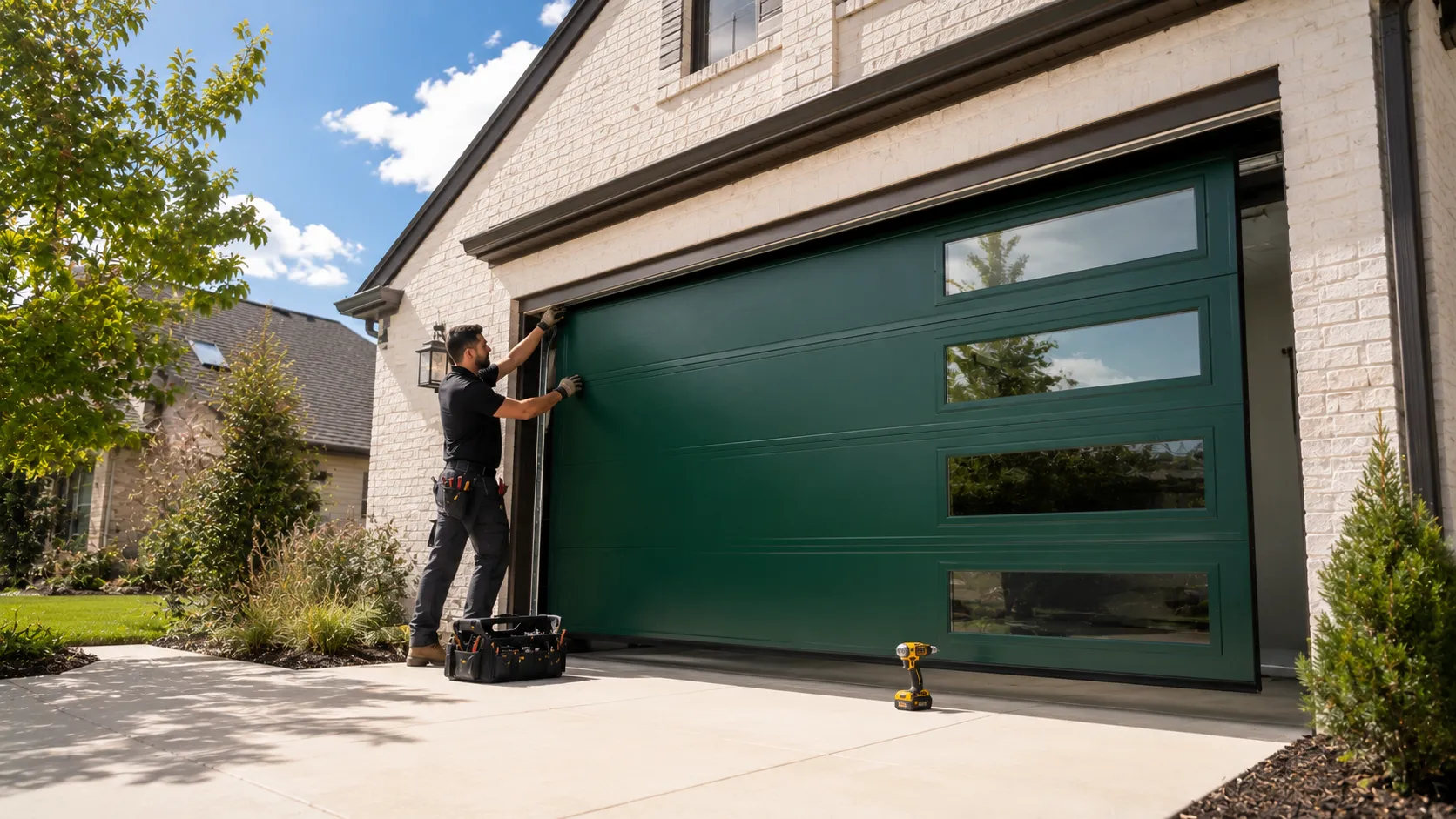
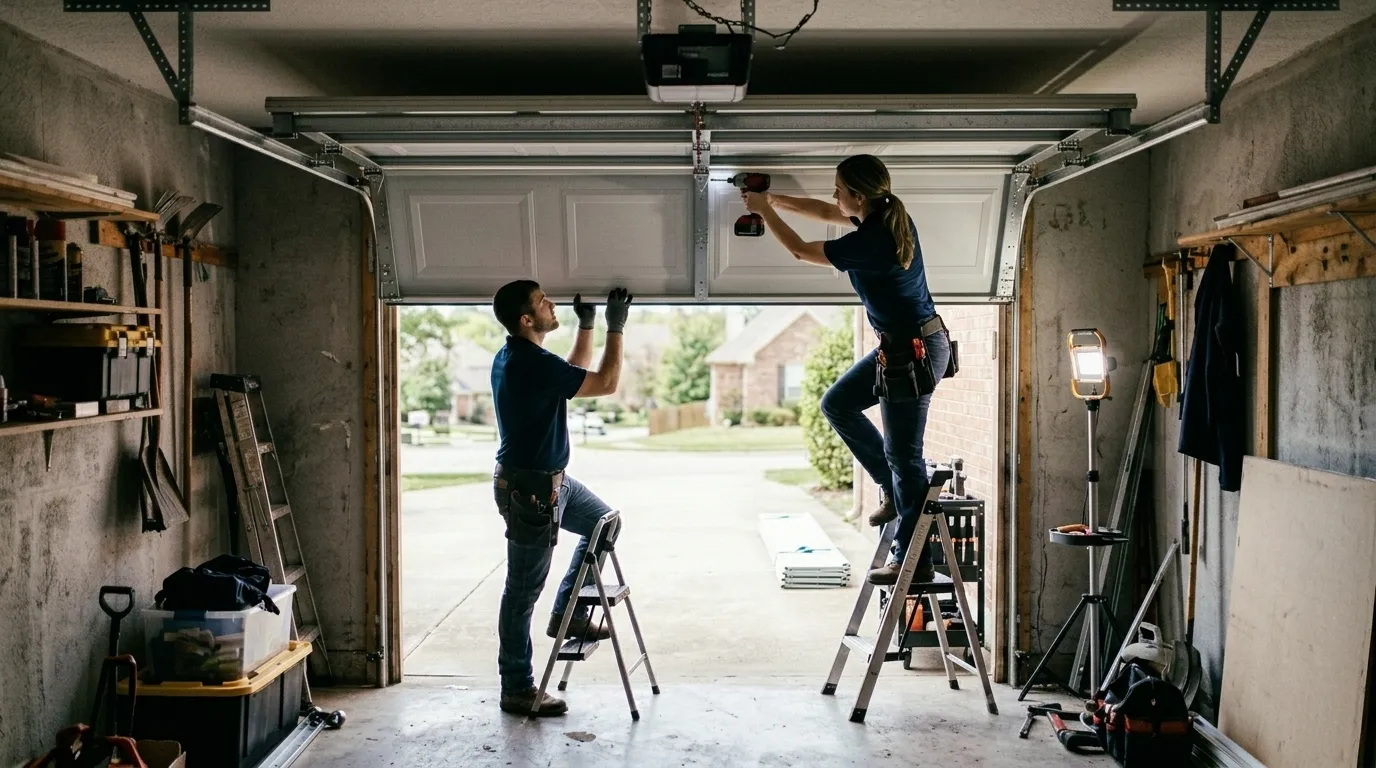
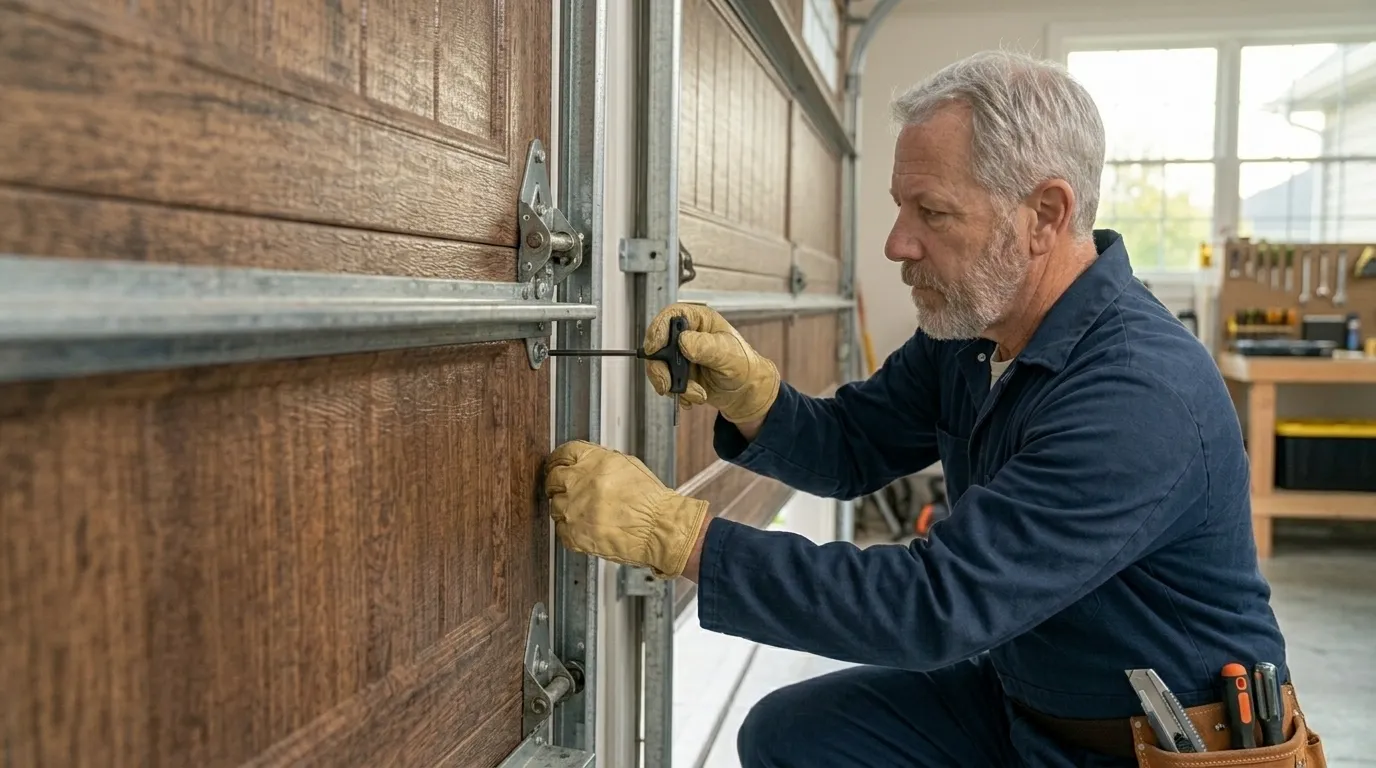
A repair-vs-replace guide for Vernon Hills homeowners, tied to the area's 1980s-90s housing stock and cold-moderate climate, from Vernon Hills Garage Door Pros.
Most of Vernon Hills went up between 1938 and 2009, with the median build year landing around 1984, and the bulk of the area's 65 named subdivisions filled in during the 1980s and 90s. That matters more than people think, because a garage door and its hardware are built to a service life, not a lifespan chosen by the homeowner. A torsion spring rated for around 10,000 cycles doesn't care what decade it is - it just counts openings and closings until it's done.
If your house sits in one of the developments that went up when this area was building out fast, your door is probably original or close to it. That puts a lot of Vernon Hills doors somewhere between 30 and 45 years old right now. At that age, you're not usually looking at one bad part. You're looking at a spring near the end of its count, a track that's been re-shimmed twice, an opener with a drive gear worn thin, and hinges stretched enough that the panels rack when they move. Fixing one thing on a door that old buys you a few months before the next thing goes.
The honest call: if a tech is quoting you a repair on a door built the same year as the house, and the house is a 1980s or 90s build, ask what the repair actually buys you. Sometimes it's five good years. Sometimes it's a stopgap before the next call.
What to Check
Before you decide anything, look at four things yourself.
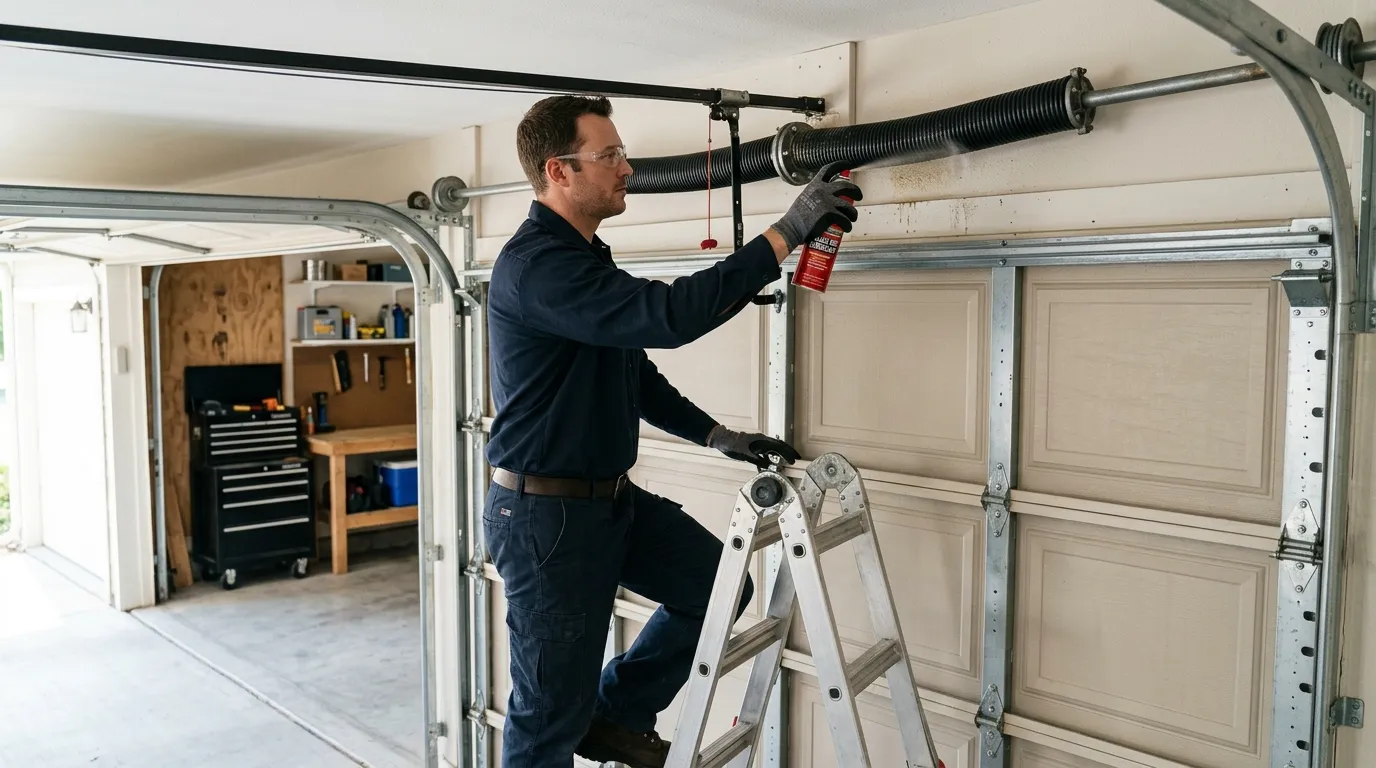
The spring. If it's original to a 1980s-build door, it has already done a lot of work. A spring that's rusted, has visible gaps in the coil, or was already replaced once and is failing again is a sign the rest of the hardware is probably close behind.
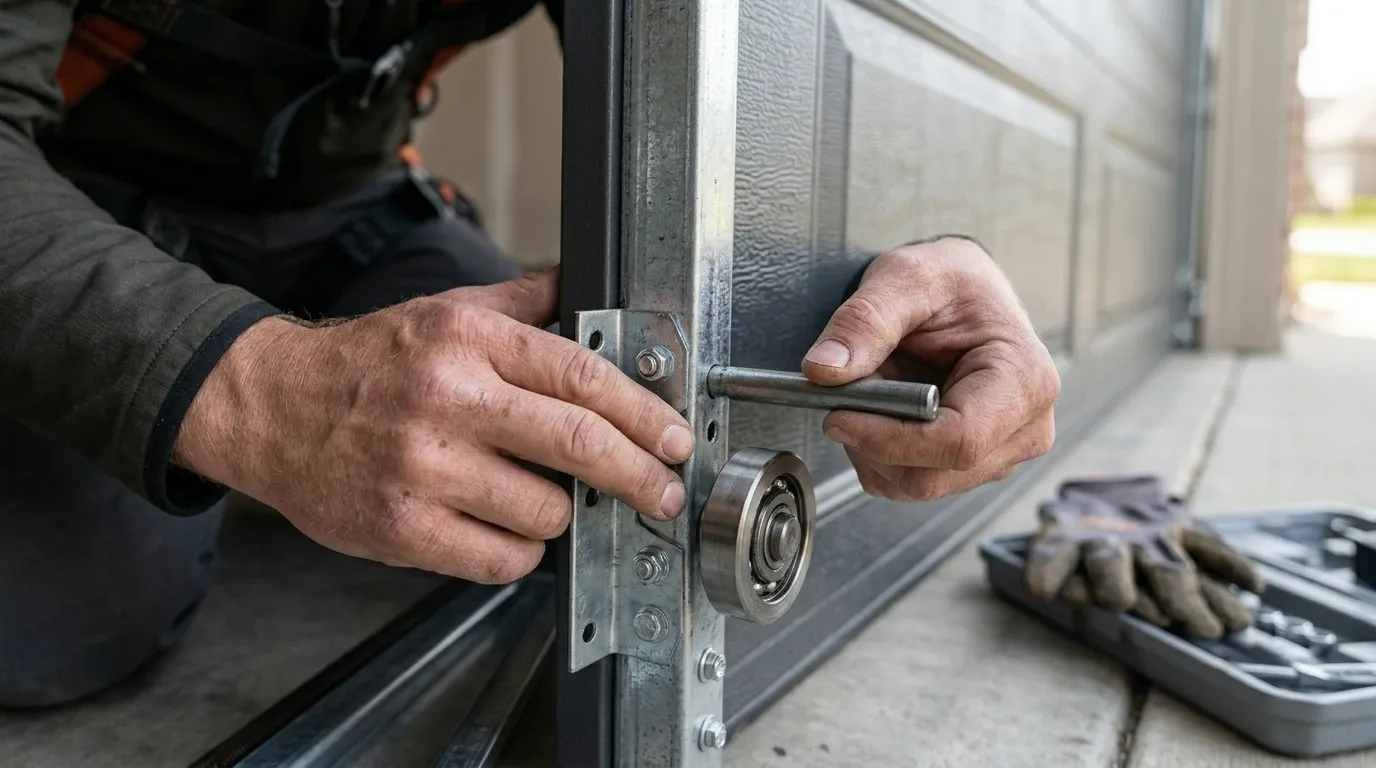
The track and rollers. Steel rollers on 30-plus-year-old track wear the track itself, not just the rollers. If the track is bent or the door binds partway up, a roller swap alone won't fix it.
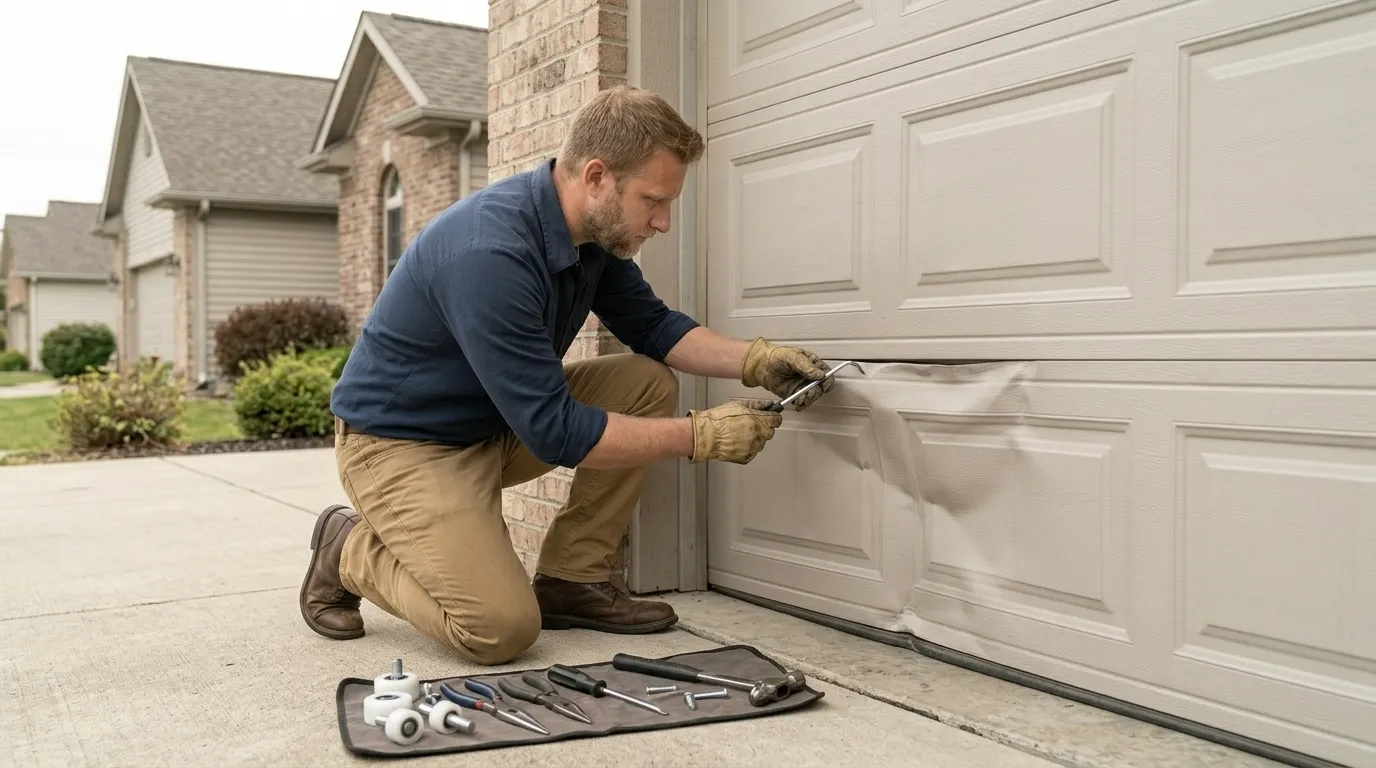
The panels. Original doors from this era are mostly steel with foam or no insulation. Surface rust, bottom-panel rot near the weatherstrip, or dents that have cracked the paint are worth noting - cosmetic damage on an old door usually means the door is also past its structural prime.
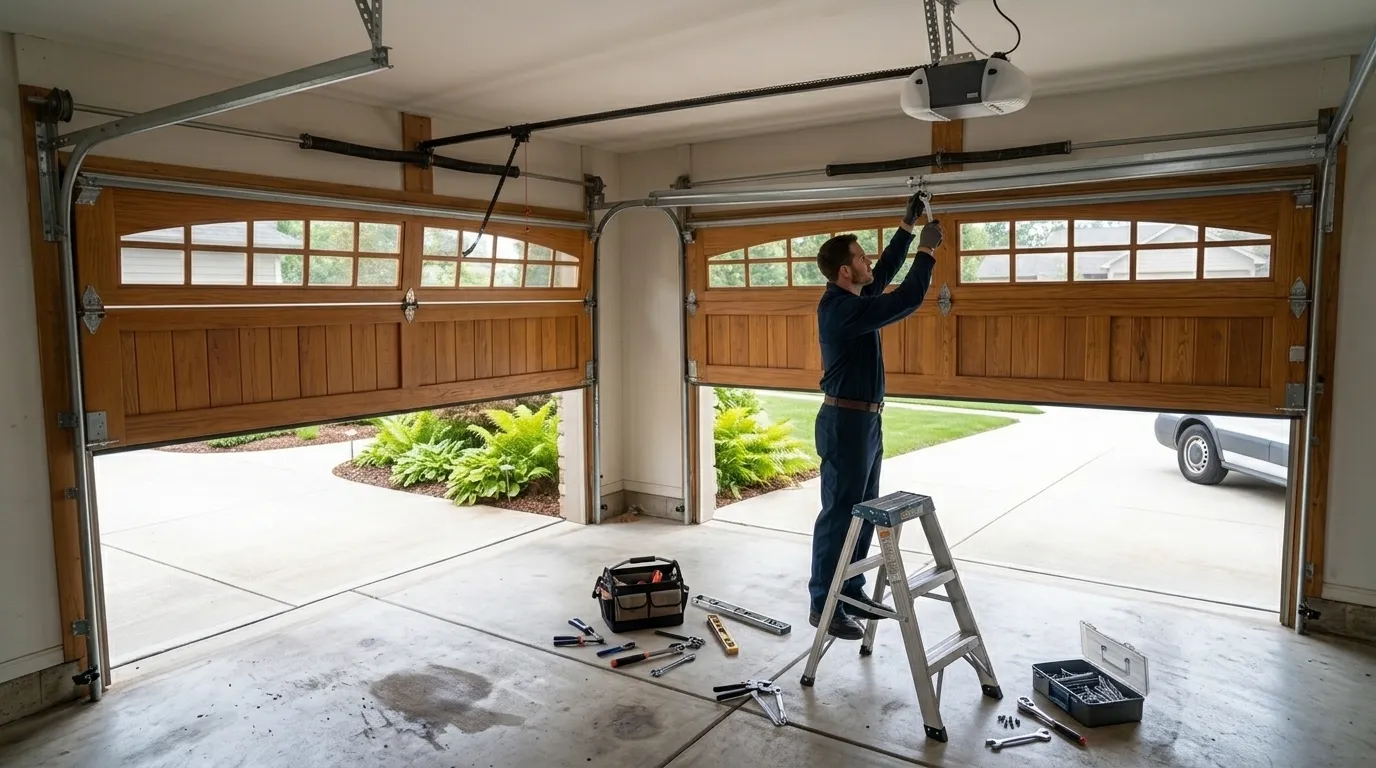
The opener. A drive gear that's stripped, a motor that hums but doesn't move the door, or a unit with no working safety reversal are all reasons to stop repairing and start pricing a replacement, since parts for openers from that build era are getting harder to source.
If you're checking two or more of these and the door dates to the original build, that's your answer before you call anyone.
What Changes With the Season
In a cold-moderate climate like Vernon Hills sits in, the calendar changes what a failing door actually costs you. A spring that's marginal in September can seize or snap outright once temperatures drop and the steel contracts. That's not a scare line - it's why late-fall repair calls here skew toward springs and openers rather than panels or weatherstrip.
If your door is already showing wear signs going into fall, that's the point to decide, not January. A repair done in October holds up better than the same repair rushed in a January cold snap, and a replacement scheduled before the season turns means you're not waiting on a truck during the busiest stretch of the year.
Spring and early summer are the opposite case: less urgency, more time to think it through, and a better window to compare a repair quote against a full replacement quote without the pressure of a door that won't close overnight. If your door is on the fence - old enough to worry about, not yet broken - that's when to make the call, not when it forces your hand.
What the Weather Here Does to It
The cold-moderate climate this area sits in puts real stress on aging hardware every winter. Steel springs and torsion bars contract in the cold, which raises tension on a coil that may already be near the end of its rated cycles. Openers work harder in the cold too - the motor draws more to move a door whose lubricant has thickened and whose rollers are stiffer than they were in July.
On a newer door this is a non-event. On a door original to a 1980s or 90s Vernon Hills build, it's often the thing that turns a slow decline into a Saturday morning where the door won't move at all. Humidity swings through the year also matter for wood-trimmed doors and steel panels with worn seals - moisture gets in at the bottom corners and the rot spreads from there, usually out of sight until the panel is soft.
Honest limitation: we can't tell you from a phone call whether your specific door is a repair or a replacement - that call needs someone standing in front of it, hand on the spring, watching how the track and opener behave together. What we can tell you is that a door built when this area was mostly going up, and still running today, is closer to the end of its service life than the beginning of it.
How it works
From “it’s stuck” to “it’s fixed”
1
Tell us what’s wrong
Describe the symptom - won’t open, loud bang, opener runs but the door won’t move.
2
On-site diagnosis
A technician tests the door under power and by hand and finds what actually failed.
3
Clear, up-front plan
You get the fix that’s needed and what drives the cost - before any work starts.
4
Repaired & tested
The repair is done, the door is set true and tested, and the work area left clean.
Serving Vernon Hills, IL - tell us what your door’s doing and we’ll take it from there.
Straight answers about garage door repair in Vernon Hills. Still unsure? Ask us directly.
How do I know if my garage door is original to the house?
If your home was built in the 1980s or 90s - which covers most of the Vernon Hills area - check the manufacture sticker on the inside of the door or the spring's install date if it's been logged. If there's no record and the door looks and sounds its age, treat it as original until proven otherwise.
Is it ever worth repairing a 30-year-old door?
Sometimes, if the issue is isolated - a roller, a cable, a sensor - and the panels and spring are otherwise sound. But once you're stacking repairs on a door built during this area's original construction boom, each fix tends to expose the next worn part.
Does cold weather actually break garage doors, or just make it obvious?
Both. Cold contracts the steel in springs and torsion bars, raising stress on parts already near their cycle limit. It doesn't create the wear, but it's often the point where a marginal part finally gives out, which is why winter calls skew toward springs and openers.