Why Your Garage Door Jumps the Track in Vernon Hills
Vernon Hills homes built between 1938 and 2009 carry different track hardware, and the area's cold winters push doors off track in specific, predictable ways. Here's what to check.
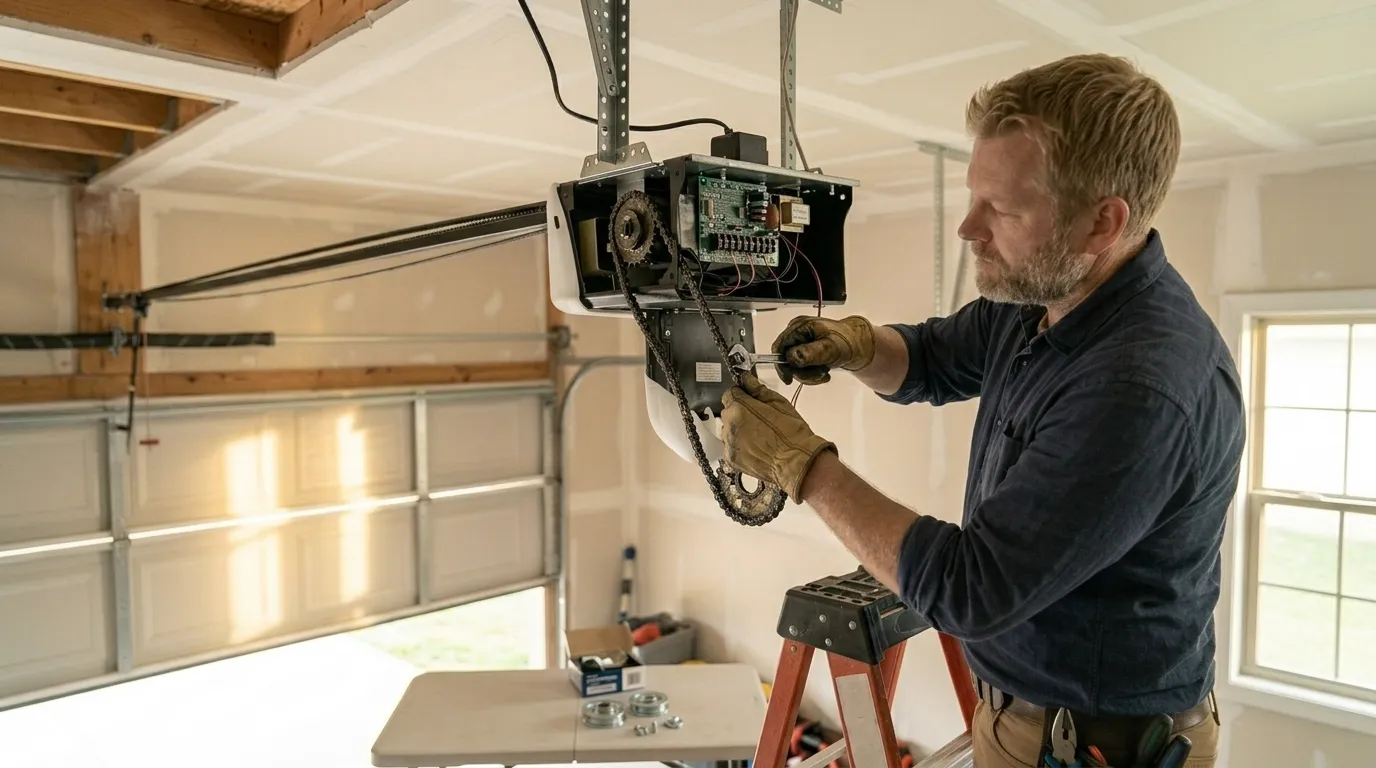
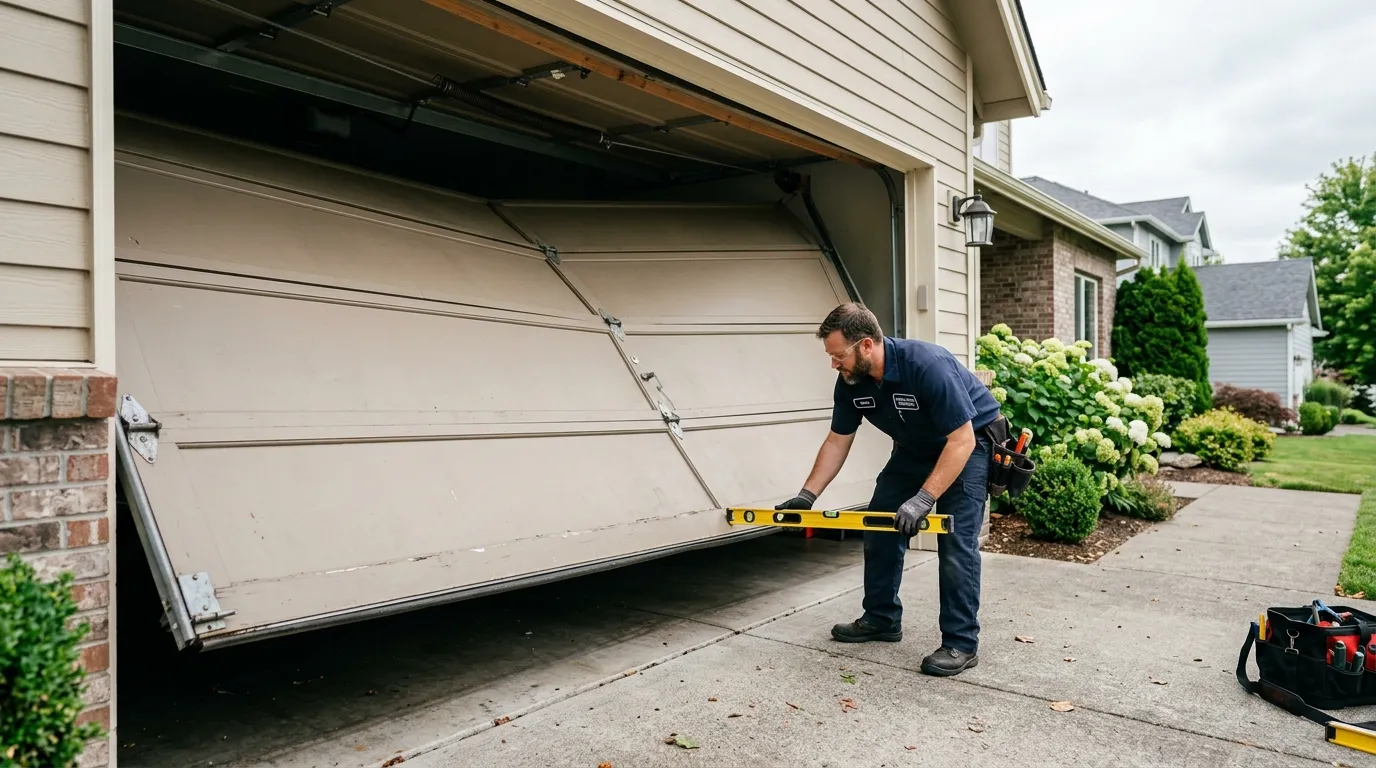
Most of the calls we get for a door off its track aren't mysterious once you look at the house. Vernon Hills housing spans 1938 through 2009, with the bulk of it built in the 1980s and 90s, and that matters because a door doesn't jump the track on its own - something pushes it there. A bent roller bracket, a track that's pulled away from the framing, a cable that's frayed and skipping its drum. On a house from the 80s or 90s stretch, the track is usually galvanized steel bolted to original framing that's had thirty-plus years to shift slightly, and that shift is enough to throw alignment off by the eighth of an inch it takes to derail a roller. On the older end of the range, from the late 1930s through the 1960s builds still standing in pockets around here, the jambs themselves have often settled, which cants the whole track assembly a few degrees off plumb. Either way, the door doesn't fail all at once. It gets noisy, then it binds on one side, then a cold morning finishes the job. We'll tell you straight: if the track is bent in more than one spot, or the roller brackets have pulled loose from rotted jamb wood, replacing the section is cheaper long-term than fighting a repair that won't hold.
What to Check
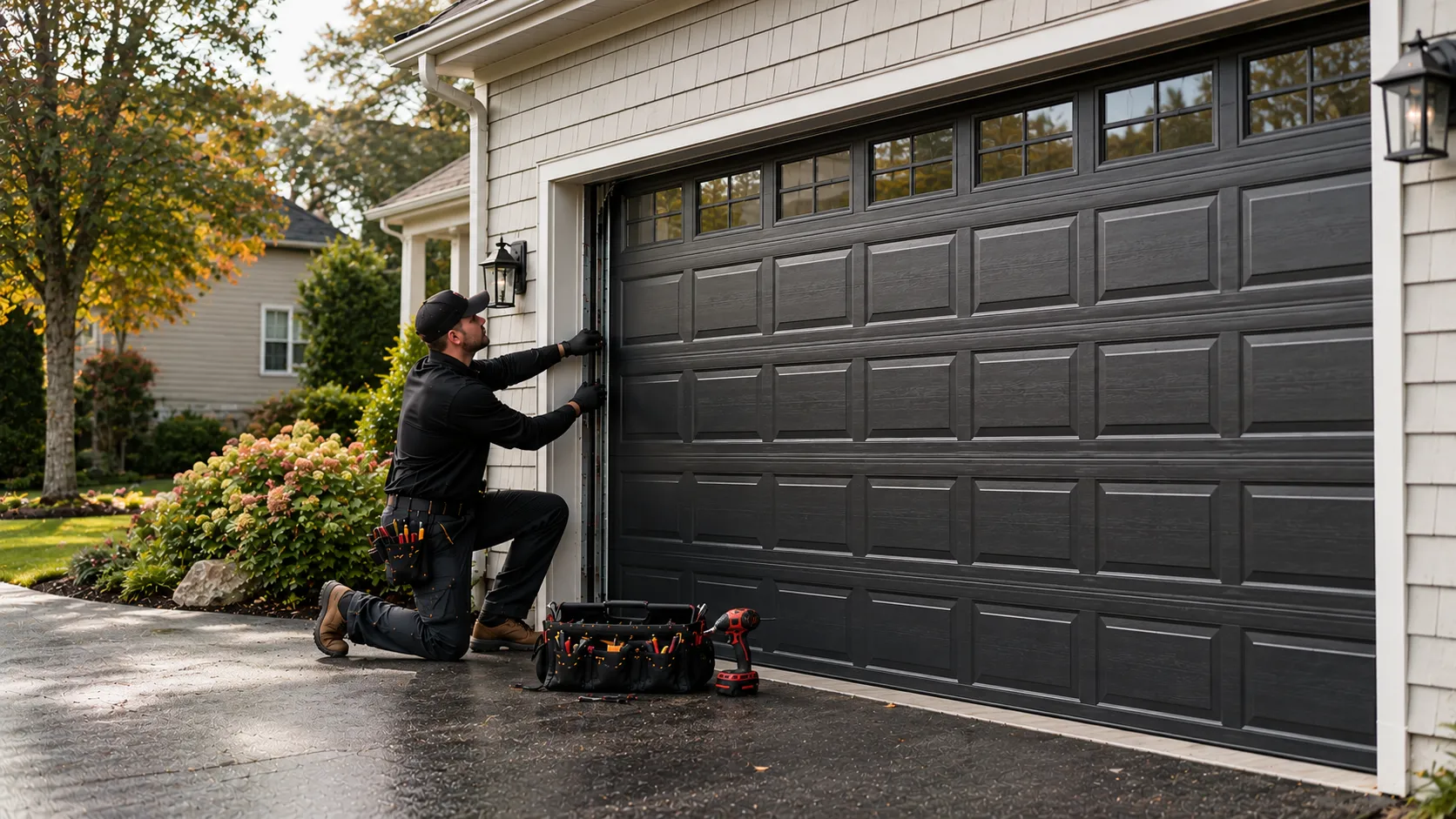
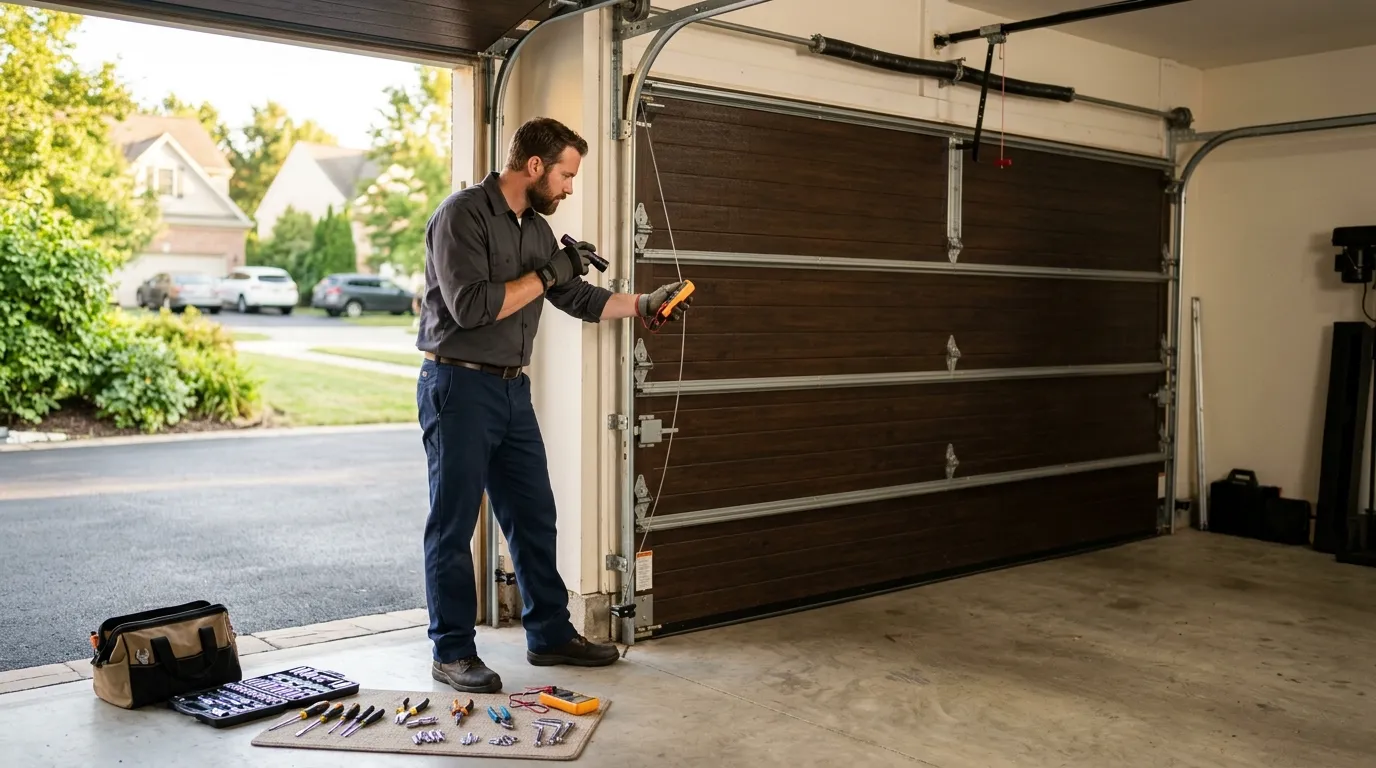
Stand inside the garage and look at the vertical track section on each side, the part that runs up from the floor before the curve. On houses in the 1980s-90s range that make up most of this area's stock, look for daylight between the track and the wall bracket - a gap wider than about a nail's width means the bracket has worked loose, often from decades of the door slamming the last inch on a worn-out spring. Next check the rollers themselves where they meet the track. A roller that's flat on one side, or has a chunk missing, will catch every time it hits a track seam and can walk itself right out. Run your hand along the horizontal track near the ceiling too; sagging support hardware lets that section drift downward on one side, which is enough to pull the door off-square. Last, look at the bottom corner brackets on the door panel itself - on the older end of the housing stock, from builds before the 1960s, these are more likely to have been replaced at some point with a mismatched part that doesn't sit true. None of this requires tools to spot. It requires standing there for two minutes before you touch the emergency release.
What Changes With the Season
Vernon Hills sits in a cold, moderate climate band, and that means the track problem isn't constant - it has a season. Steel track contracts in cold weather, and on a door that was already borderline out of alignment through the fall, that contraction is what finally lets a roller ride up over the lip instead of staying inside the channel. We see this most on the first hard cold snap of the year, not gradually over the winter. The opposite happens in warmer months: humidity and heat can make wood jamb framing swell slightly, which on an older house can tighten a track that was already a hair too narrow and cause binding rather than derailment. So a door that's fine in August and off the track in December isn't coincidence - it's the same marginal alignment problem showing up as two different symptoms depending on the month.
What the Weather Here Does to It
Cold is the mechanism, not just the backdrop. In a cold moderate climate like this one, the metal in a garage door track behaves differently at 20 degrees than it does at 70, and torsion springs lose a measurable amount of tension in deep cold, which changes how hard the door pulls against the rollers on its way up. A track that's a sixteenth of an inch out of true might never cause a problem in mild weather. Add a cold-soaked spring pulling unevenly and a roller that's already worn from age, and that same track lets the door jump. This is also why we see more off-track calls in Vernon Hills in the weeks after the first real cold stretch than at any other point in the year - it's not a coincidence of scheduling, it's the mechanics of steel and tension responding to temperature on hardware that was already close to its limit.
How it works
From “it’s stuck” to “it’s fixed”
1
Tell us what’s wrong
Describe the symptom - won’t open, loud bang, opener runs but the door won’t move.
2
On-site diagnosis
A technician tests the door under power and by hand and finds what actually failed.
3
Clear, up-front plan
You get the fix that’s needed and what drives the cost - before any work starts.
4
Repaired & tested
The repair is done, the door is set true and tested, and the work area left clean.
Serving Vernon Hills, IL - tell us what your door’s doing and we’ll take it from there.
Straight answers about garage door repair in Vernon Hills. Still unsure? Ask us directly.
Can I put the door back on the track myself?
If it's just a roller that popped out on one side and the track isn't bent, sometimes yes, with the door manually lifted and the tension released first. If the track shows any bend, or the door came off on both sides, leave it - a door under spring tension that's off-track is one of the more dangerous things in a garage.
Is a bent track always worth fixing instead of replacing?
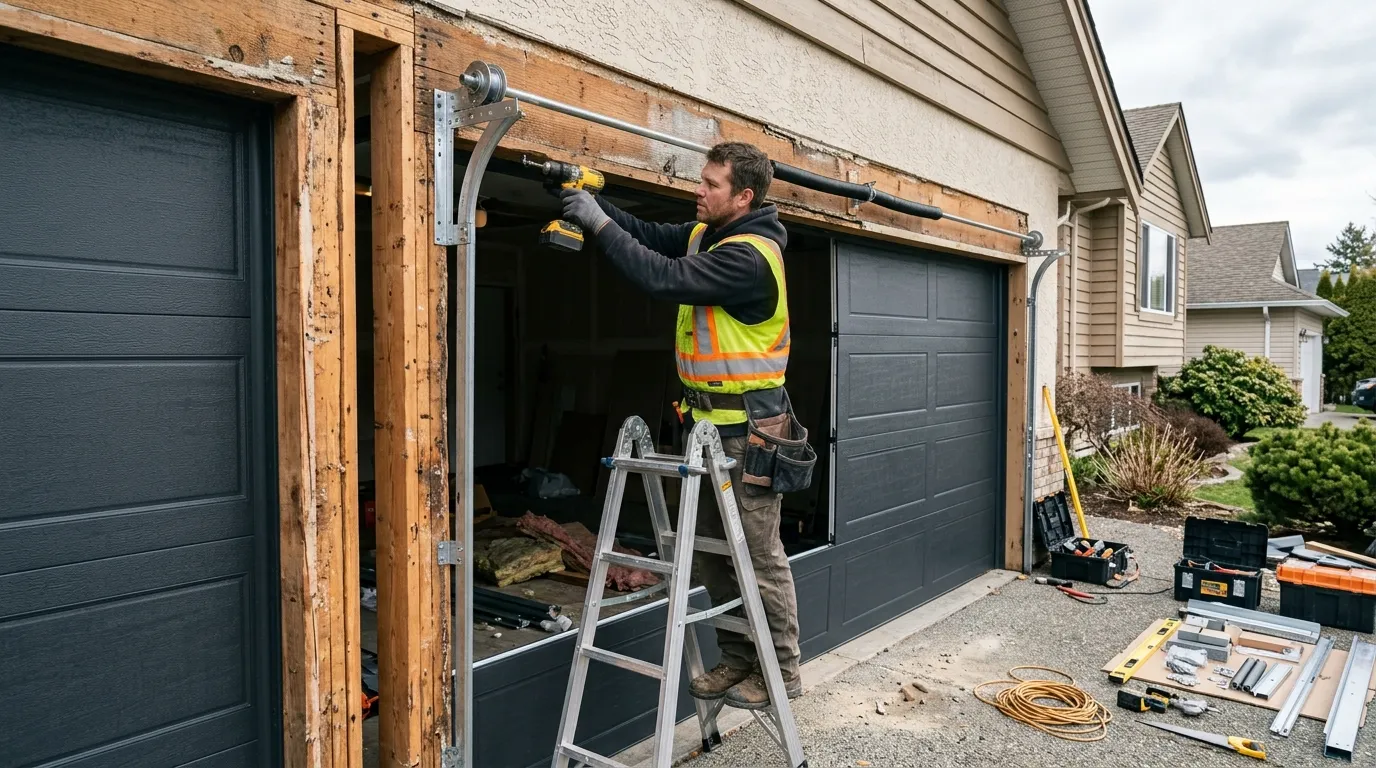
Not always. A track bent in one spot from an impact can often be repaired. A track that's warped along its length, or one on a house old enough that the wall bracket wood has rotted, usually costs less to replace outright than to keep re-aligning.
Why does this happen more in winter here?
Cold makes steel track contract slightly and reduces torsion spring tension, so a door that was already close to misaligned is more likely to actually derail once the first hard cold snap hits, rather than just binding.