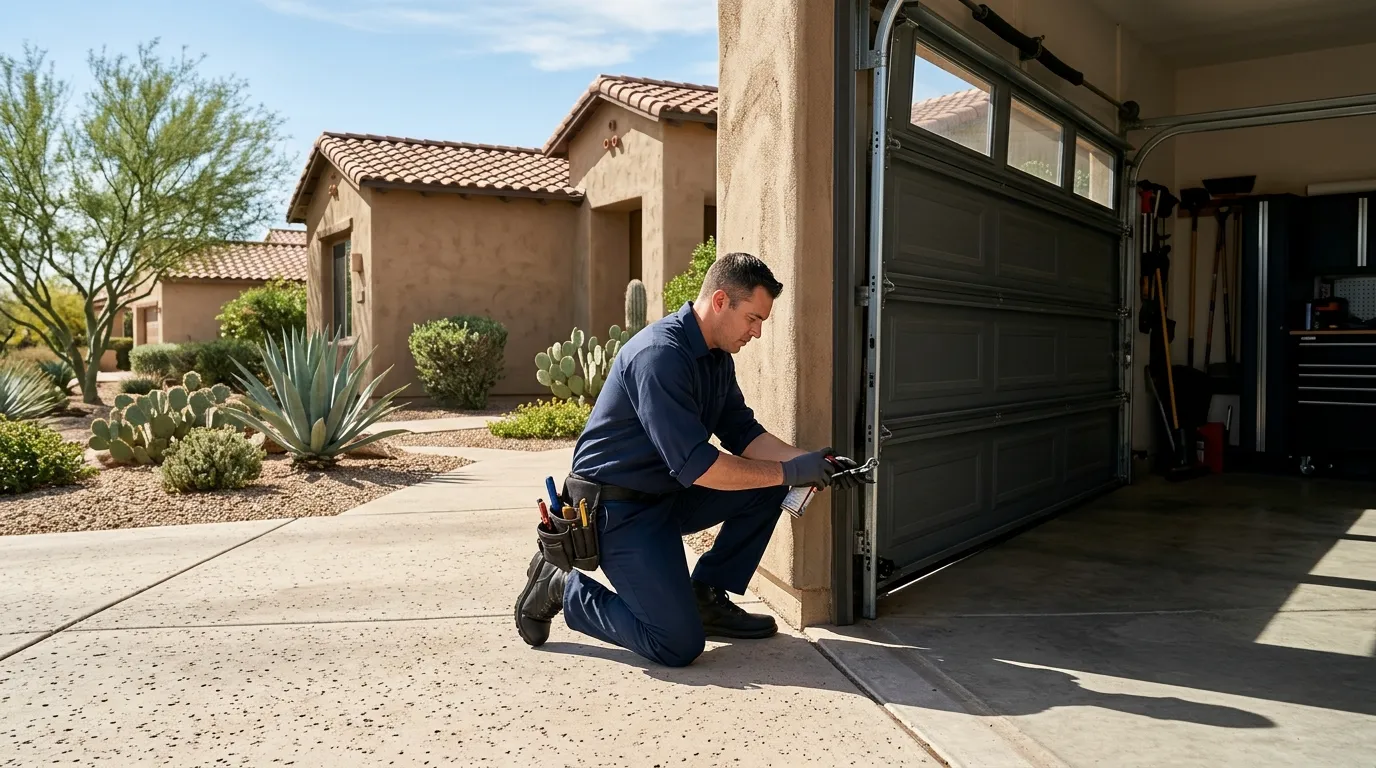
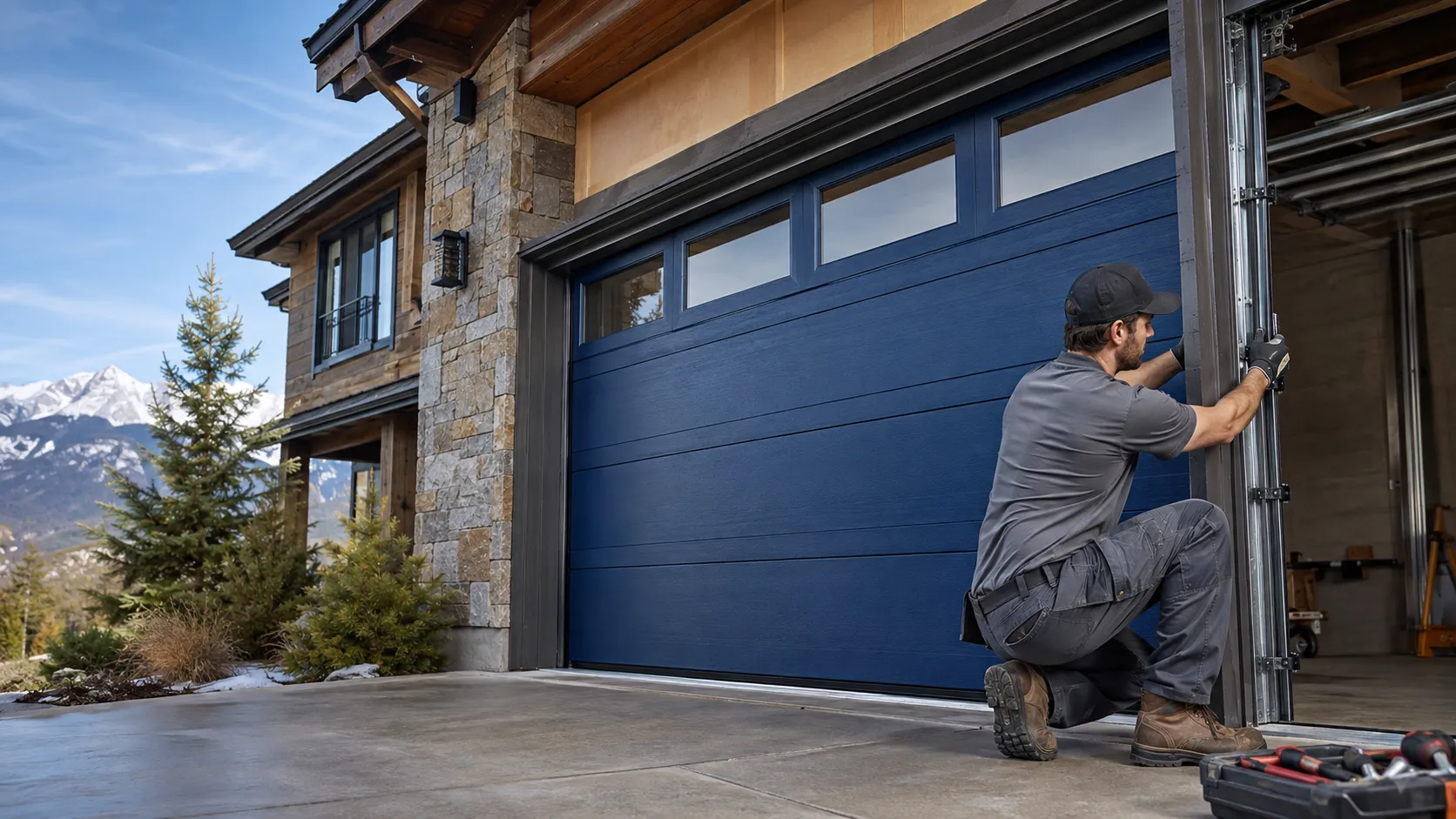
Vernon Hills homes built mostly in the 1980s and 90s meet cold winters hard on garage door springs. Here's what to check before the door won't move at all.
You go out on a cold morning, hit the button, and the door either doesn't move or comes up crooked and slams back down. That's usually a torsion spring, and it's not a coincidence that it happens in the cold. Steel loses flex as the temperature drops, and a spring that's been slowly fatiguing for years will often pick the coldest morning of the year to finish the job.
Most of the houses we work on around Vernon Hills went up between 1938 and 2009, with the bulk of that stock dating to the 1980s and 90s. A spring installed when a house was built in, say, 1986 has had close to forty winters to work through its rated cycle count. If your house falls in that build window and the door has never had the springs replaced, you're closer to a failure than you might think, cold snap or not.
We don't guess at a spring's age from the outside. If you don't know when yours was last replaced, that's worth finding out before it fails on you in January instead of on your schedule.
What to Check
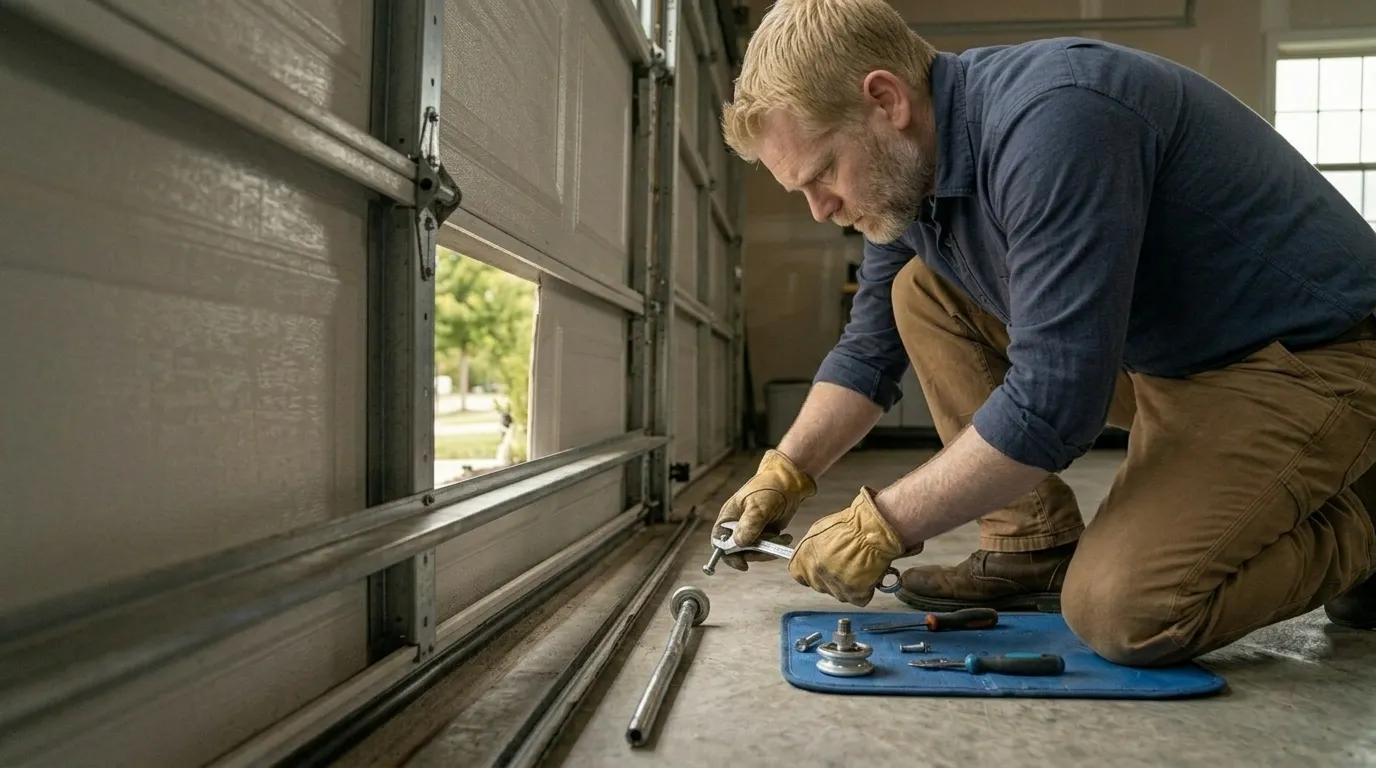
Before you call anyone, look at the spring itself - the coiled bar above the door, mounted on a shaft. A separated gap in the coil means it's broken and the door isn't safe to run on the opener. Don't force it.
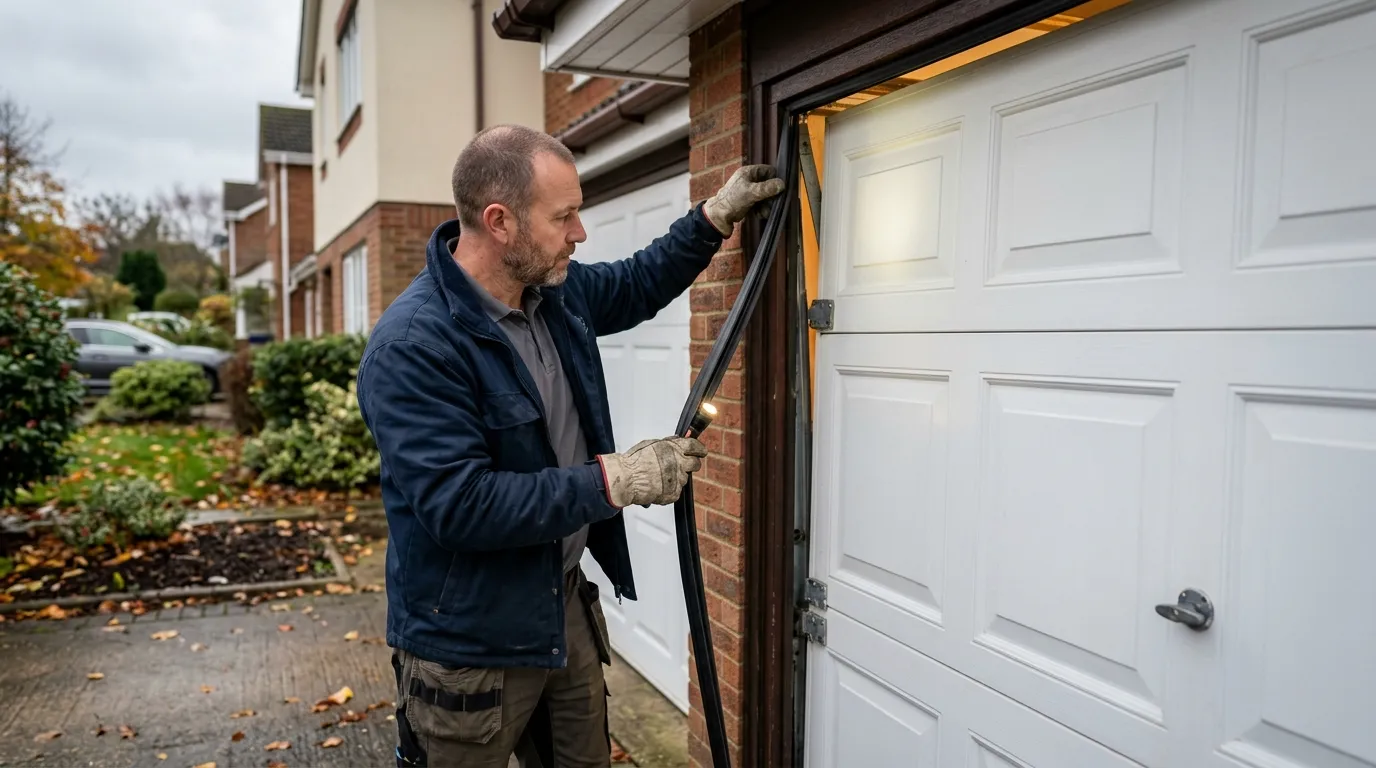
If the spring looks intact, check the cables running down each side of the track. Cold makes cable fraying more visible - the wire strands stiffen and splay rather than lying flat, so a cable close to giving out often shows itself in winter first.
Listen for the door's behavior on the way up. A door that gets partway and reverses, or one that opens unevenly, side higher than the other, is telling you a spring is losing tension even if it hasn't snapped yet. That's a workable warning sign - a call now beats a call after it lets go entirely.
One honest limit here: we can't tell you over the phone whether a spring is a repair or a full replacement. Torsion springs are sold in matched pairs sized to door weight, and guessing at that from a description usually means a second trip. Someone needs to look at it in person.
What Changes With the Season
Steel contracts as it cools, and a torsion spring under load behaves differently at 15 degrees than it does at 70. The tension doesn't change, but the metal's tolerance for that tension does - a spring with a small crack or a thinning coil that would have held through summer can finish failing the first hard cold snap.
This matters more in a service area like ours, where the housing stock spans seven decades but clusters heavily in that 1980s-90s window. Original hardware from that era - springs, rollers, cables - was built to a lower cycle count than what's sold today, and none of it was designed with today's winters as a design assumption.
Openers feel the season too. Cold grease in the drive mechanism and slower-moving belts or chains mean the opener's force settings, dialed in during a mild month, can suddenly seem too weak or too strong for the door. If your door has started reversing or straining only since the temperature dropped, that's the opener compensating for a mechanical problem it wasn't built to solve.
What the Weather Here Does to It
This area sits in a cold, moderate climate band, which means the real stress on a garage door isn't one brutal week - it's the repeated cycle of freeze and thaw across a long winter. Metal contracts, moisture works into any exposed threading or fastener, and springs that are already near the end of their life get pushed over that edge a little at a time rather than all at once.
Garages themselves make this worse in a lot of these houses. An unheated attached garage in a home built decades ago often sits ten to twenty degrees colder than the living space next to it, which means the door hardware is running through the same freeze-thaw cycle as anything left outdoors.
We can't tell you your specific spring will fail this winter - that depends on its age, cycle count, and how it was installed, not just the thermometer. What we can tell you is that cold weather doesn't create a bad spring, it exposes one that was already failing. If your door has been acting up in warmer months too, don't wait for the cold to make the decision for you.
How it works
From “it’s stuck” to “it’s fixed”
1
Tell us what’s wrong
Describe the symptom - won’t open, loud bang, opener runs but the door won’t move.
2
On-site diagnosis
A technician tests the door under power and by hand and finds what actually failed.
3
Clear, up-front plan
You get the fix that’s needed and what drives the cost - before any work starts.
4
Repaired & tested
The repair is done, the door is set true and tested, and the work area left clean.
Serving Vernon Hills, IL - tell us what your door’s doing and we’ll take it from there.
Straight answers about garage door repair in Vernon Hills. Still unsure? Ask us directly.
Why did my garage door spring break on the coldest morning of the year?
Cold steel is less flexible, so a spring that's been fatiguing for years - common in homes here built in the 1980s and 90s - often reaches its breaking point exactly when the temperature drops hardest. The cold doesn't cause the wear, it just tends to be when it finally gives.
Can I use my garage door if the spring looks broken?
No. A broken torsion spring means the door has no counterbalance, and the opener isn't built to lift that weight alone. Running it can strip the opener gear or drop the door. Leave it closed and get the spring looked at before using the door again.
Does the age of my house matter for spring problems?
Yes, roughly. Housing in this area was built between 1938 and 2009, with most of it dating to the 1980s and 90s, and original hardware from that window is decades past its intended service life. If your springs haven't been replaced since the house was built, age alone puts you at higher risk.