Wind, Cold, and the Wide Door on Your Vernon Hills Garage
Vernon Hills homes mostly went up in the 1980s and 90s with 16-foot double doors and light bracing. Here's what wind and cold do to that setup and what to check.
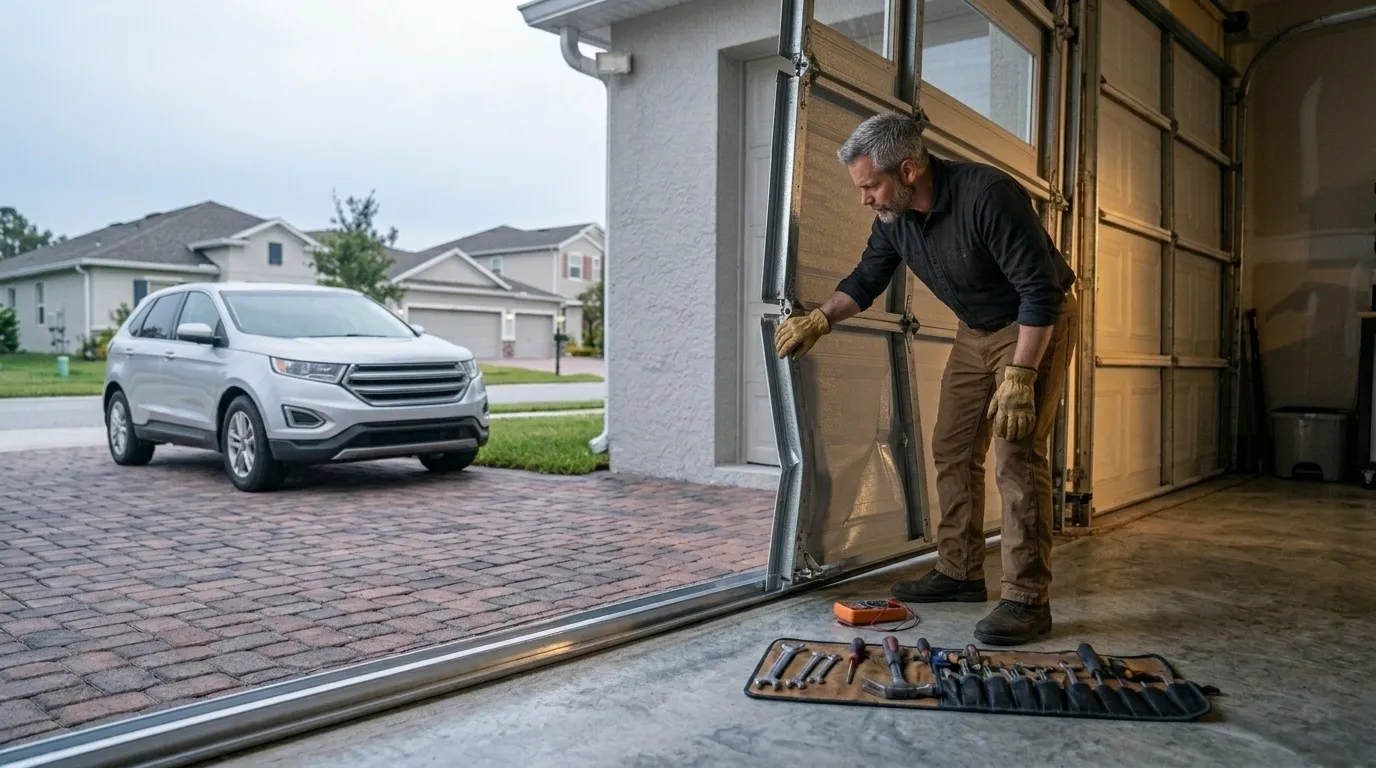
Vernon Hills housing runs from 1938 to 2009, but the median build year is 1984, and most of the stock across the area's 65 named subdivisions dates to that 1980s-90s run. That's the era builders switched from a single 9-foot opening to the 16-foot double door that now sits on most driveways in town. A 16-foot door has roughly twice the surface area of a single door, which means it catches roughly twice the wind load for the same gust. Builder-grade doors from that period were priced to move, not engineered against load - most shipped with two thin horizontal ribs stamped into the steel and no center strut. That was fine for a door that mostly just sat there. It's not fine when a gust front comes through and the whole panel flexes instead of staying flat. Flex is what cracks a panel, pulls a hinge screw loose, or works a roller out of its track. None of this is a defect - it's just what a wide, lightly braced door from that generation does under load it wasn't built to expect. The fix isn't always a new door. Often it's adding a strut kit to a door that's otherwise sound, which costs a lot less than replacement and solves the actual problem instead of the symptom.
What to Check
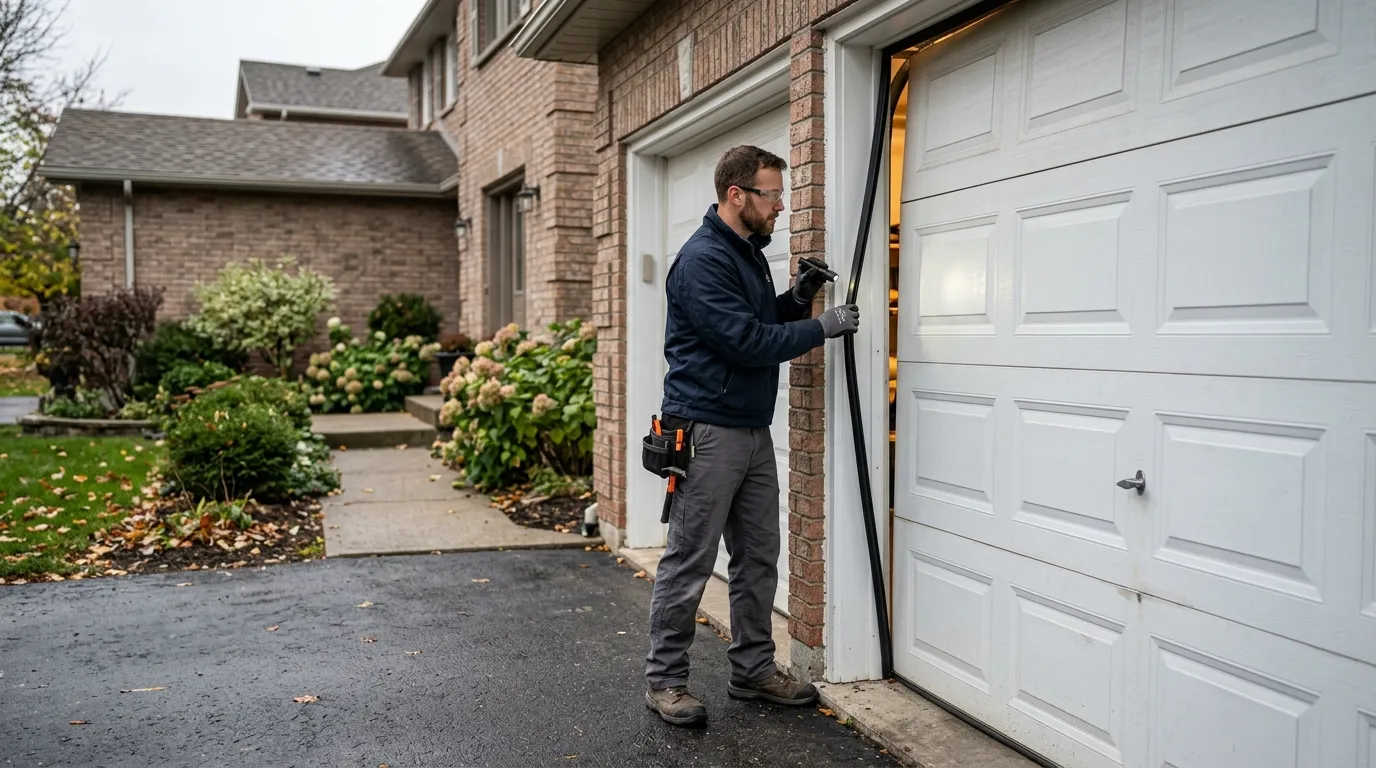
Start at the horizontal ribs stamped into the panels - on a builder-grade 1980s or 90s double door there are usually only two, and you can see daylight flex in the middle section on a windy day if you watch it from inside the garage while it's closed. Check the track brackets where they bolt to the framing; wind load transfers there first, and loose lag screws are the most common early sign. Look at the top and bottom rollers for wear - a door that's been flexing sheds roller life faster than one that hasn't. Run a hand along the weatherstripping at the bottom seal and the sides; if it's cracked or has pulled away from the track, wind gets under the door and turns flex into slam. If you see a panel with a horizontal crack near the center, that's the rib giving out under repeated load, not a one-time event. None of this needs a technician to spot - fifteen minutes with a flashlight tells you most of what you need to know before you call anyone.
What Changes With the Season
Vernon Hills sits in a cold, moderate climate band, which means the same door goes through several hard freeze-thaw cycles every winter instead of one clean seasonal swing. Steel contracts in the cold, which tightens tolerances at the track and can turn a door that ran fine in October into one that binds or grinds by January. Weatherstripping stiffens in the cold too, so a seal that flexed enough to absorb wind pressure in summer can crack under the same gust in February. Spring is when the flex damage from winter shows up as a real problem - loosened hardware and worn rollers that made it through the cold finally give out once the door's back to being used through wider open-close swings and warmer, gustier fronts move through. If your door has been fine for years and suddenly starts acting up right as the weather turns, that's usually not coincidence - it's the accumulated wear from a full freeze-thaw cycle meeting a windy day.
What the Weather Here Does to It
Cold and wind together do more damage than either alone. A gust that a door could flex through in July hits stiffer steel and brittler weatherstripping in January, so the same load produces a crack instead of a bend. Vernon Hills' cold moderate climate means that stress cycle repeats itself several times a winter, not once - freeze, thaw, freeze again, each cycle re-tightening tolerances and re-loading whatever hardware already took a hit. On a 1980s or 90s double door without a center strut, this is exactly the combination that eventually cracks a panel or pulls a track bracket loose. Here's the honest limit: adding a strut kit helps a sound door hold up to this cycle, but it doesn't rescue a door that's already sagging or has a cracked panel. Past that point you're not reinforcing a door, you're patching one that's already lost the fight, and replacement is the better call.
How it works
From “it’s stuck” to “it’s fixed”
1
Tell us what’s wrong
Describe the symptom - won’t open, loud bang, opener runs but the door won’t move.
2
On-site diagnosis
A technician tests the door under power and by hand and finds what actually failed.
3
Clear, up-front plan
You get the fix that’s needed and what drives the cost - before any work starts.
4
Repaired & tested
The repair is done, the door is set true and tested, and the work area left clean.
Serving Vernon Hills, IL - tell us what your door’s doing and we’ll take it from there.
Straight answers about garage door repair in Vernon Hills. Still unsure? Ask us directly.
Why does my garage door flex in the middle when it's windy?
If your house was built in the 1980s or 90s, which covers most of Vernon Hills, your double door likely shipped with only two horizontal ribs and no center strut. On a 16-foot door that's not enough bracing to keep the panel flat under a strong gust, so the middle section bows in and out. A strut kit added after the fact usually fixes this.
Does cold weather make wind damage worse?
Yes. Vernon Hills sits in a cold, moderate climate band with several freeze-thaw cycles each winter. Steel gets stiffer and weatherstripping gets brittler in the cold, so the same wind gust that a door could flex through in summer is more likely to crack a panel or loosen hardware in winter.
Is a cracked panel from wind worth repairing or should I replace the door?
Depends on how far it's gone. A single hairline crack on an otherwise sound door can sometimes be patched or the panel swapped. Once a door is sagging or has multiple cracked ribs, reinforcing it doesn't hold - at that point replacement costs less over time than repeated patch repairs.