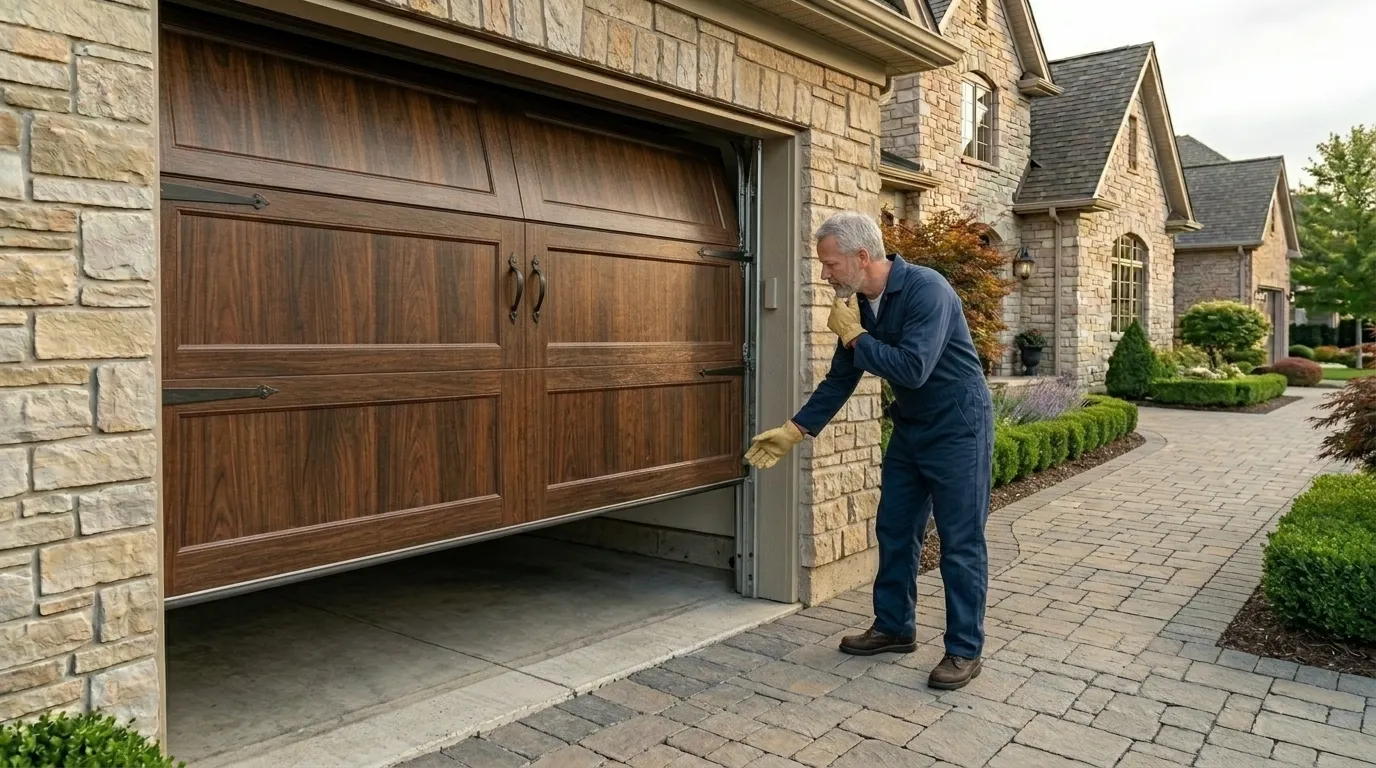
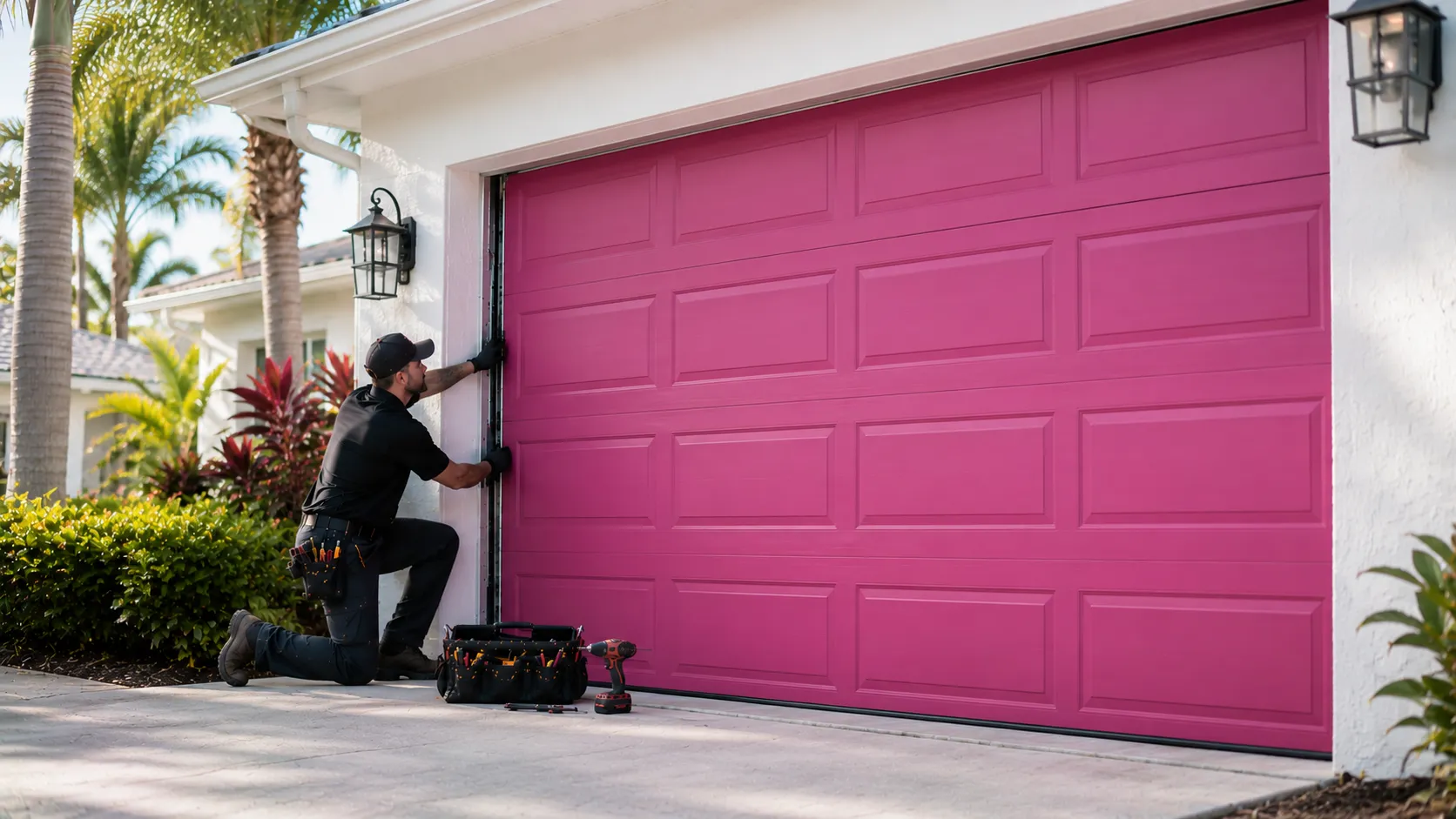
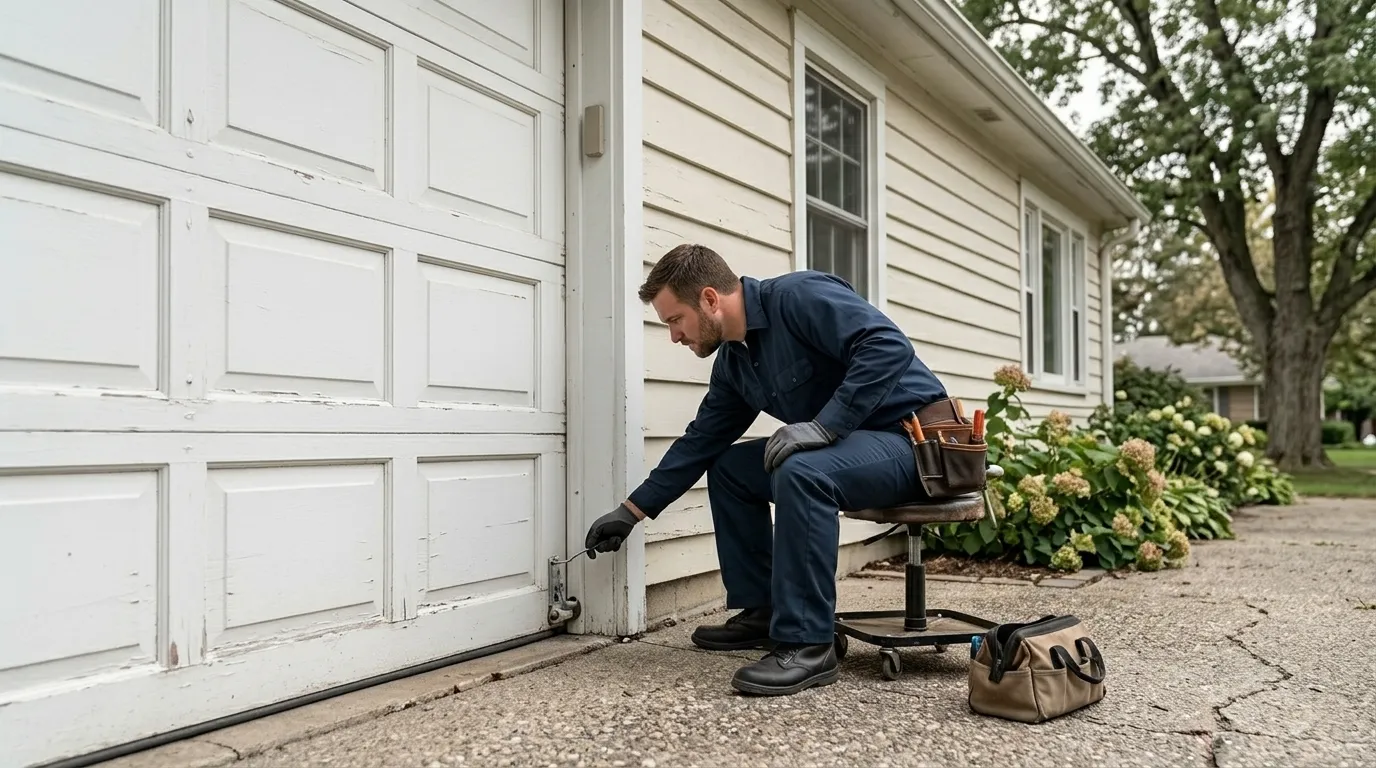
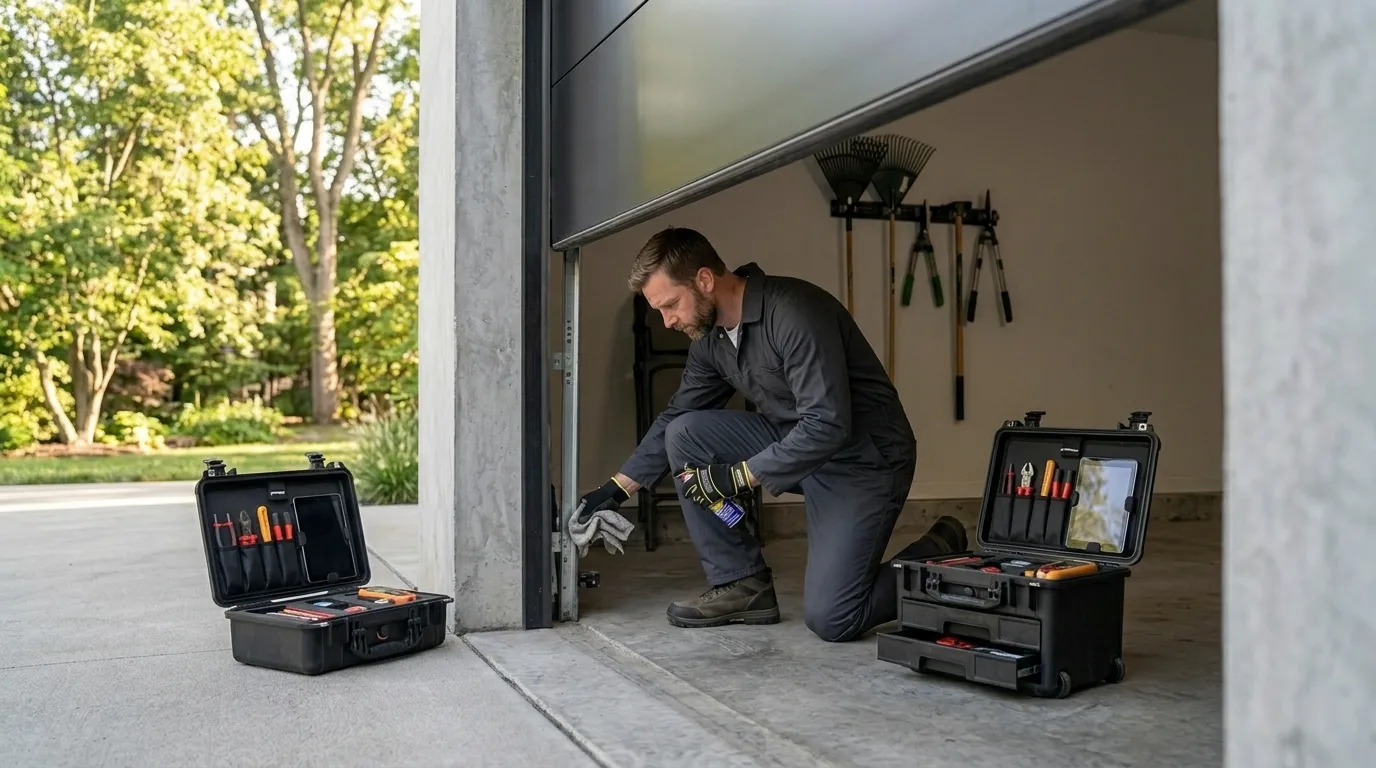
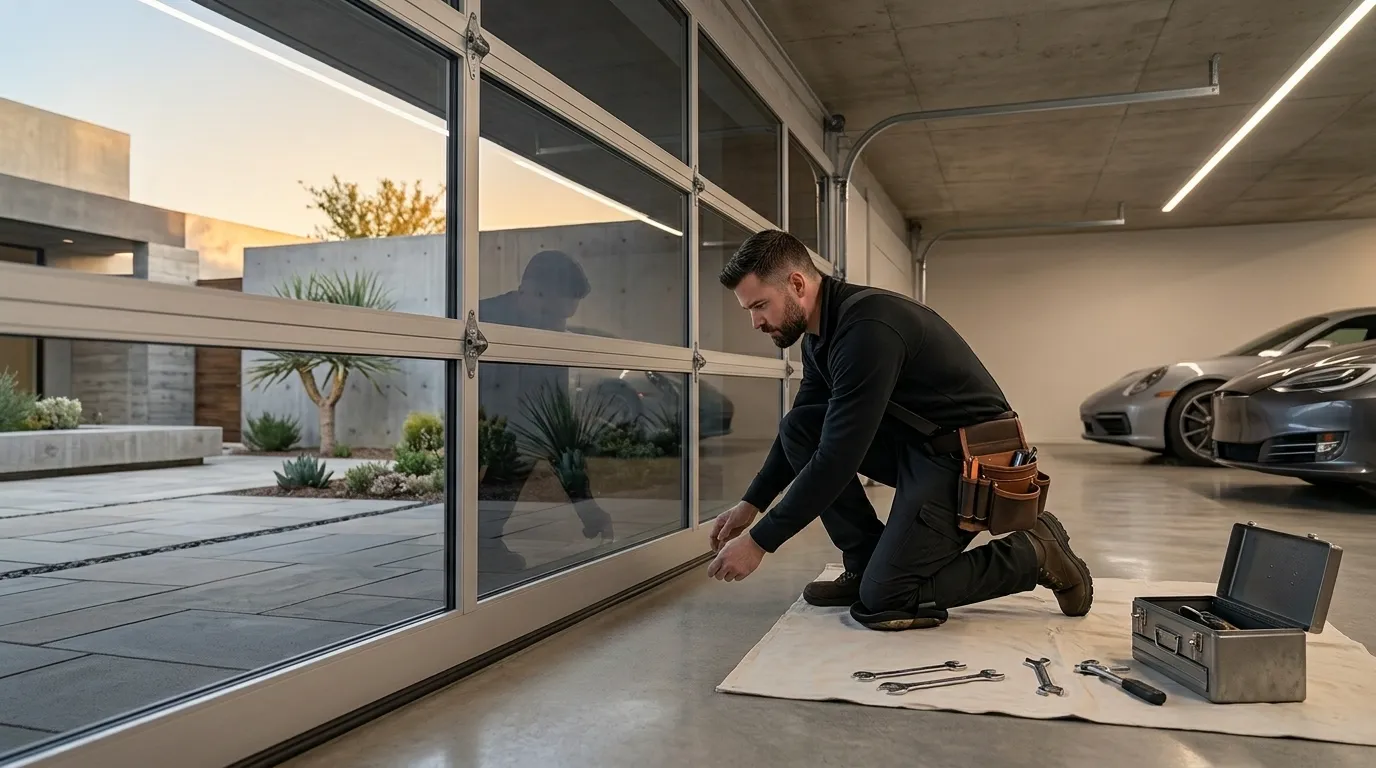
A Vernon Hills service call means checking the spring, track, and opener on a door that likely dates to the 1980s or 90s, built for cold Illinois winters.
Most garage doors in Vernon Hills sit on houses built between 1938 and 2009, with the bulk of that stock going up in the 1980s and 90s. That matters more than people think, because a service call on a door from that era isn't the same job as a service call on something installed five years ago. The hardware, the spring wind, even the way the track was shimmed to the framing, all reflect what builders were doing here in that stretch of decades. We're not guessing at a national average - the housing in this part of Lake County clusters tightly around that window, which is why the same handful of failure points shows up call after call. A service call here starts with figuring out which generation of door and opener you've actually got, because parts and adjustments for a 1985 door don't match parts for a 2005 door, even on the same street. We work across this area - including houses out toward Lincolnshire, Libertyville, and Long Grove - and the pattern holds pretty consistently: builder-grade doors, original hardware, and openers that have usually already been replaced once.
What to Check
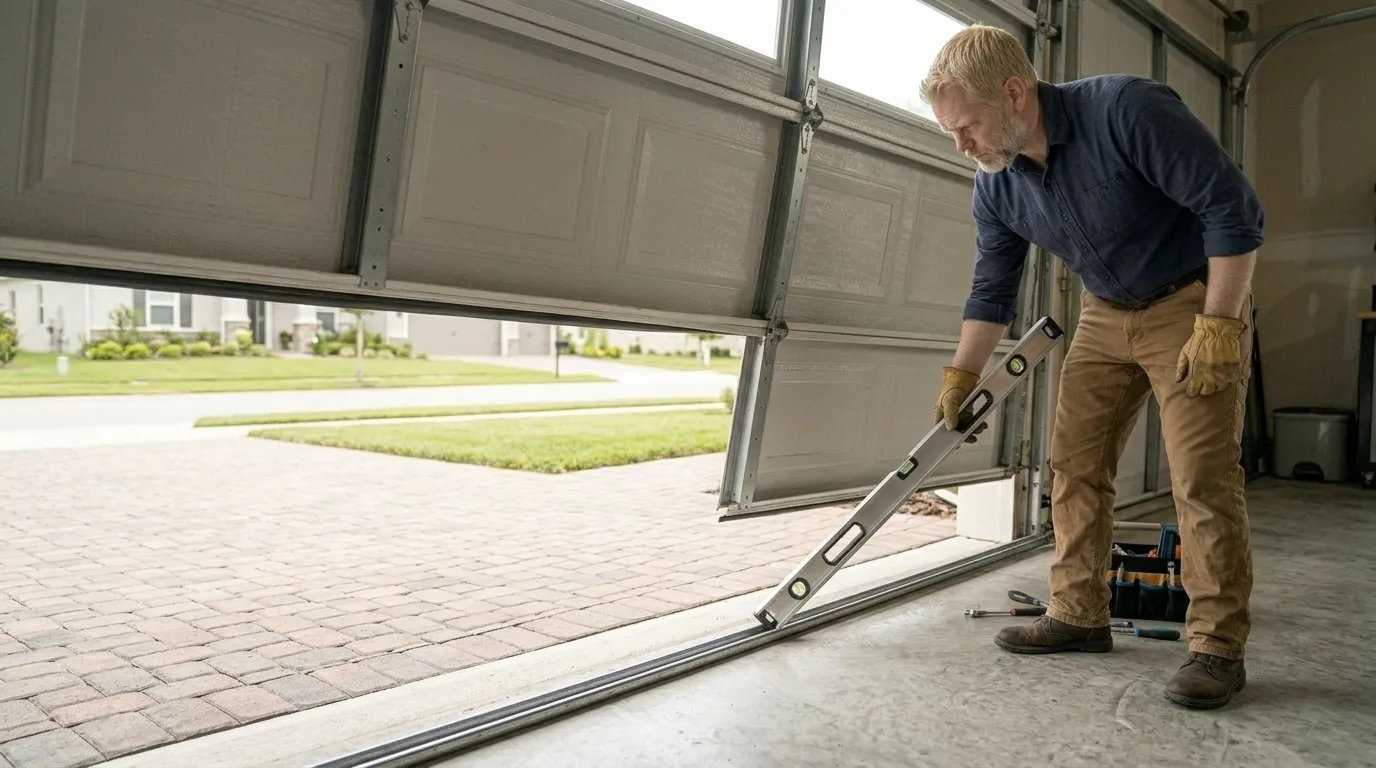
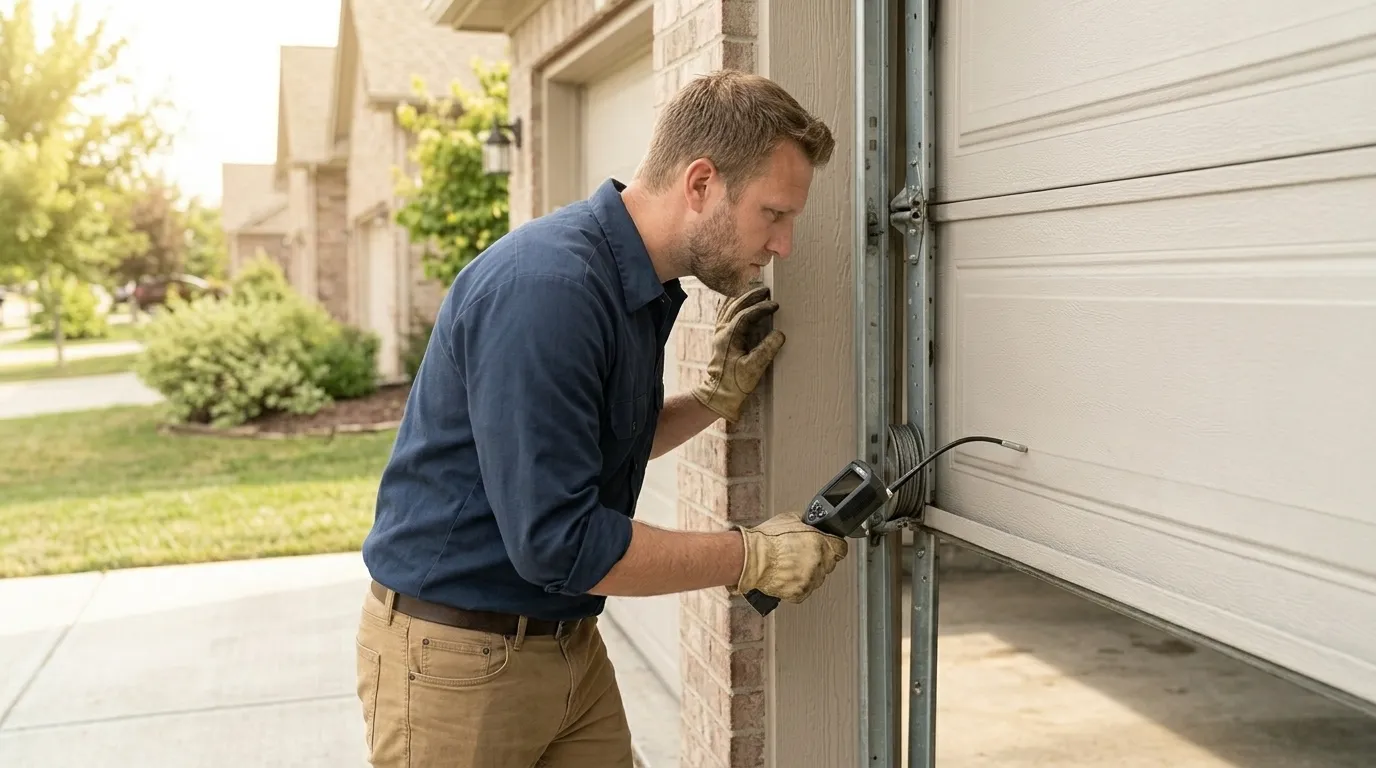
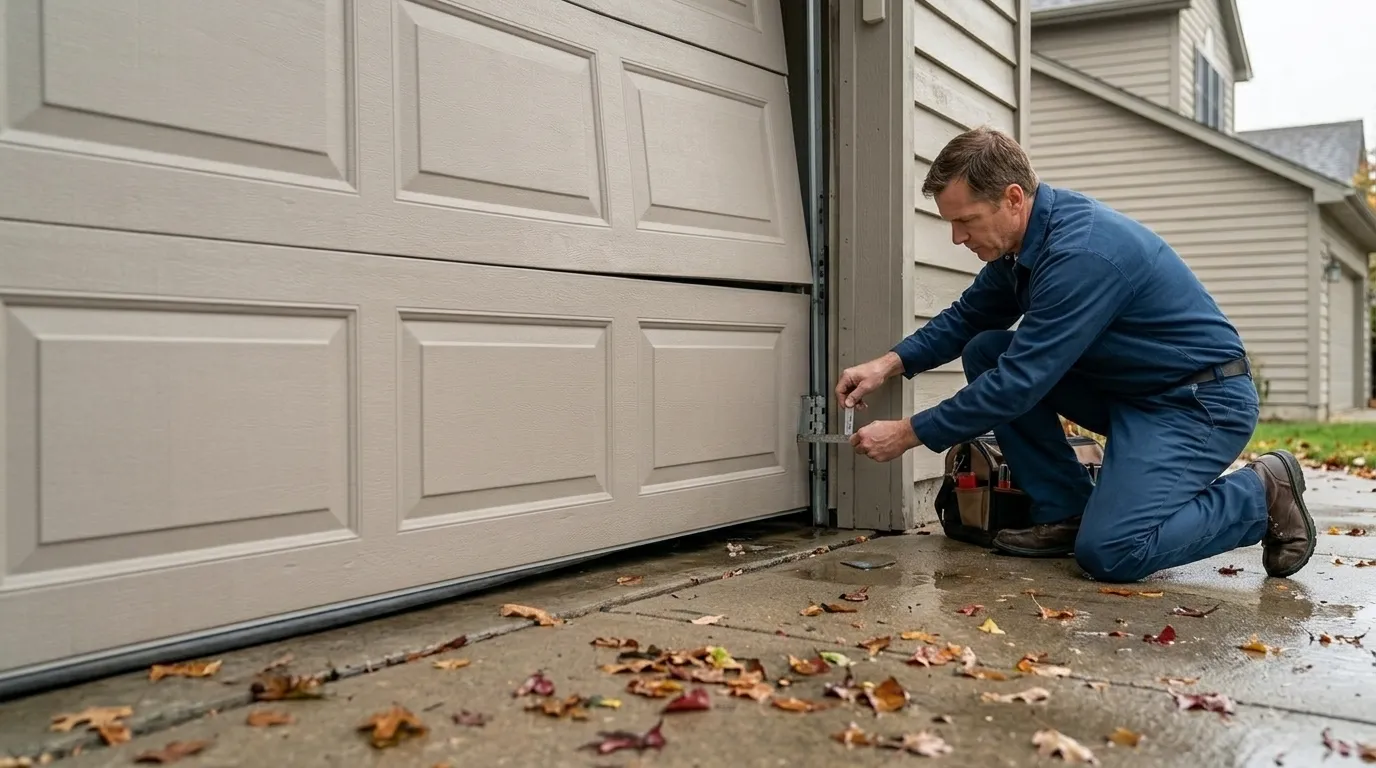
A real service call covers the spring first - torsion springs on doors from the 1980s and 90s were sized for the door weight of that period, and if a heavier insulated panel got swapped in later without re-rating the spring, that's the first thing we catch. Next is the track alignment, since houses from this construction wave often used side-mounted brackets that shift slightly as a slab settles over thirty-plus years. We check roller condition - steel rollers from that era were never built for the cycle counts a door sees today - and we check the opener's force settings, since original units from the 80s and 90s rarely had auto-reverse tuned to modern safety expectations. We also check the cable drums and bottom brackets for rust pitting, which shows up more on doors that have spent three decades in a cold-moderate climate. One honest note: if the door is original to a 1980s build and the springs are original too, we're often talking replacement, not adjustment - patching thirty-five-year-old torsion hardware isn't a repair we'll sell you if it isn't going to hold.
What Changes With the Season
On a door from this housing stock, spring tension and lift balance shift noticeably as temperatures swing through a Midwest year. Steel contracts in the cold, which means a spring that was properly balanced in July can feel heavy or bind slightly by January, especially on a door that's already 30-plus years old and hasn't had the coils re-tensioned. We see it most on original one-piece and early sectional doors common to the 1980s-90s wave - the metal fatigue that's been building for decades gets exposed by the seasonal swing, not caused by it. Opener force settings drift the same way; a unit calibrated in warm weather can start straining, or start reversing when it shouldn't, once the cold sets in. None of this is dramatic on its own, but on hardware this old, a seasonal service call is often the difference between catching a worn cable before it snaps and getting the emergency call after it does.
What the Weather Here Does to It
Vernon Hills sits in a cold, moderate climate band, and that's the single biggest factor in how these older doors age. Repeated freeze-thaw cycles work on the weather seal at the bottom panel first, and on doors original to the 1938-2009 build range, that seal has usually been replaced at least once already, sometimes never. Cold makes torsion spring steel more brittle over time, which is why a spring that's held fine for twenty winters can fail on the twenty-first with no warning beyond a loud bang. Moisture from snowmelt also gets into track brackets mounted directly to concrete slabs, corroding the fasteners on houses from that same construction era. We don't stock every obsolete part for every 1980s opener model - some of that hardware is long out of production - so a service call sometimes ends with a recommendation to replace a component rather than chase down a part that manufacturers stopped making years ago.
How it works
From “it’s stuck” to “it’s fixed”
1
Tell us what’s wrong
Describe the symptom - won’t open, loud bang, opener runs but the door won’t move.
2
On-site diagnosis
A technician tests the door under power and by hand and finds what actually failed.
3
Clear, up-front plan
You get the fix that’s needed and what drives the cost - before any work starts.
4
Repaired & tested
The repair is done, the door is set true and tested, and the work area left clean.
Serving Vernon Hills, IL - tell us what your door’s doing and we’ll take it from there.
Straight answers about garage door repair in Vernon Hills. Still unsure? Ask us directly.
How much does a garage door service call cost in Vernon Hills
That depends on what the door needs once we're on site, and we don't have a flat number to quote sight unseen. What we can tell you is that a call on a house from the common 1980s-90s stock usually starts with checking the spring, track, and opener settings before anything gets replaced.
Will you fix an original spring from the 1980s or replace it
On a spring that old, replacement is usually the honest answer. Torsion springs from that era have already absorbed thirty-plus winters of cold-weather stress, and re-tensioning brittle steel isn't a repair we'll sell you if it won't hold through another season.
Do you work on doors outside Vernon Hills itself
Yes, we cover the surrounding area, including Lincolnshire, Libertyville, Long Grove, Mettawa, and the other nearby towns that share this same housing wave and climate exposure.
Why does my opener act up more in winter
Cold steel contracts, which changes spring tension and lift balance on older doors. An opener calibrated for warm weather can start straining or misreading resistance once temperatures drop, especially on units original to a 1980s or 90s installation.