Vernon Hills homes built between 1938 and 2009 face cold-climate spring wear; we repair broken springs, tracks, and openers across Vernon Hills, IL fast.
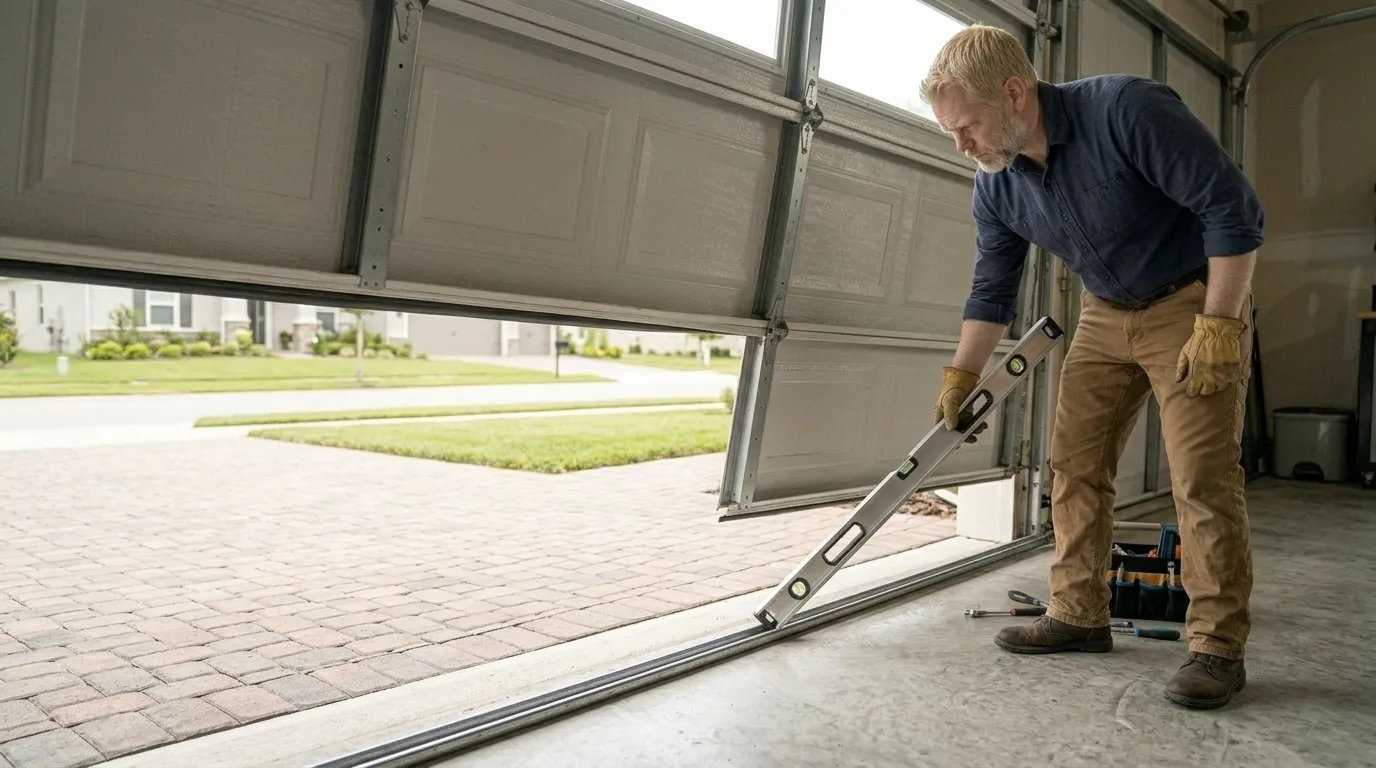
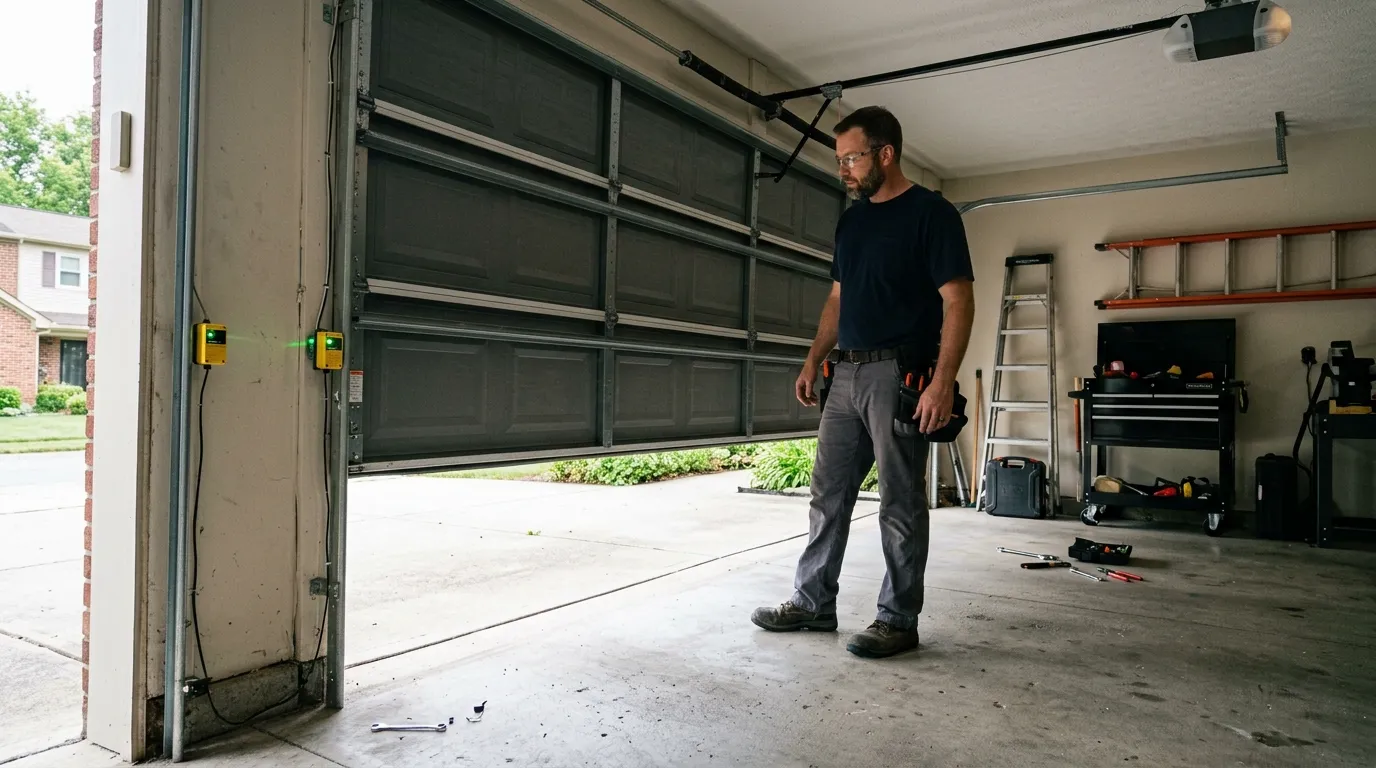
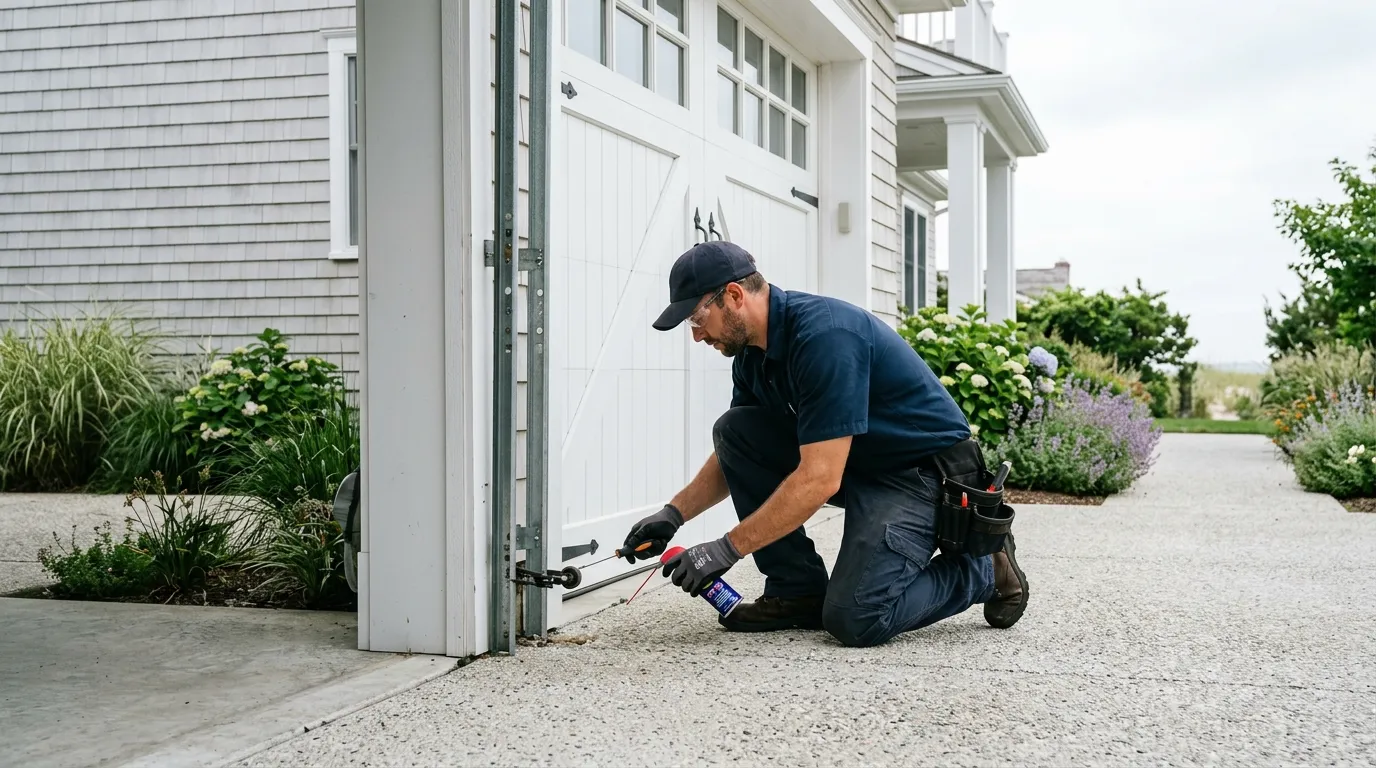
Most of the calls we get start the same way: the door stops halfway, or the opener hums but the door doesn't move, or a panel hangs crooked in the track after a cold night. Vernon Hills housing runs from 1938 through 2009, with the median build year sitting around 1984, so a lot of what's on the tracks out there is original hardware pushing forty years old. On those older doors the first sign is usually a loud bang from the spring area, followed by a door that won't budge without help. On the newer end of that range (2000s builds) the failure shows up differently - a stripped opener gear or a sensor that won't align after the bracket loosens. Either way, it rarely happens gradually. A spring wound for a certain door weight holds until it doesn't, and in a cold moderate climate the steel loses a little flex every winter, so the failure tends to land on the coldest mornings, not the mild ones. If your door is dragging on one side rather than stuck flat, that's usually a track or roller problem, not the spring - worth knowing before you call, since it changes what we bring on the truck.
What Can Go Wrong
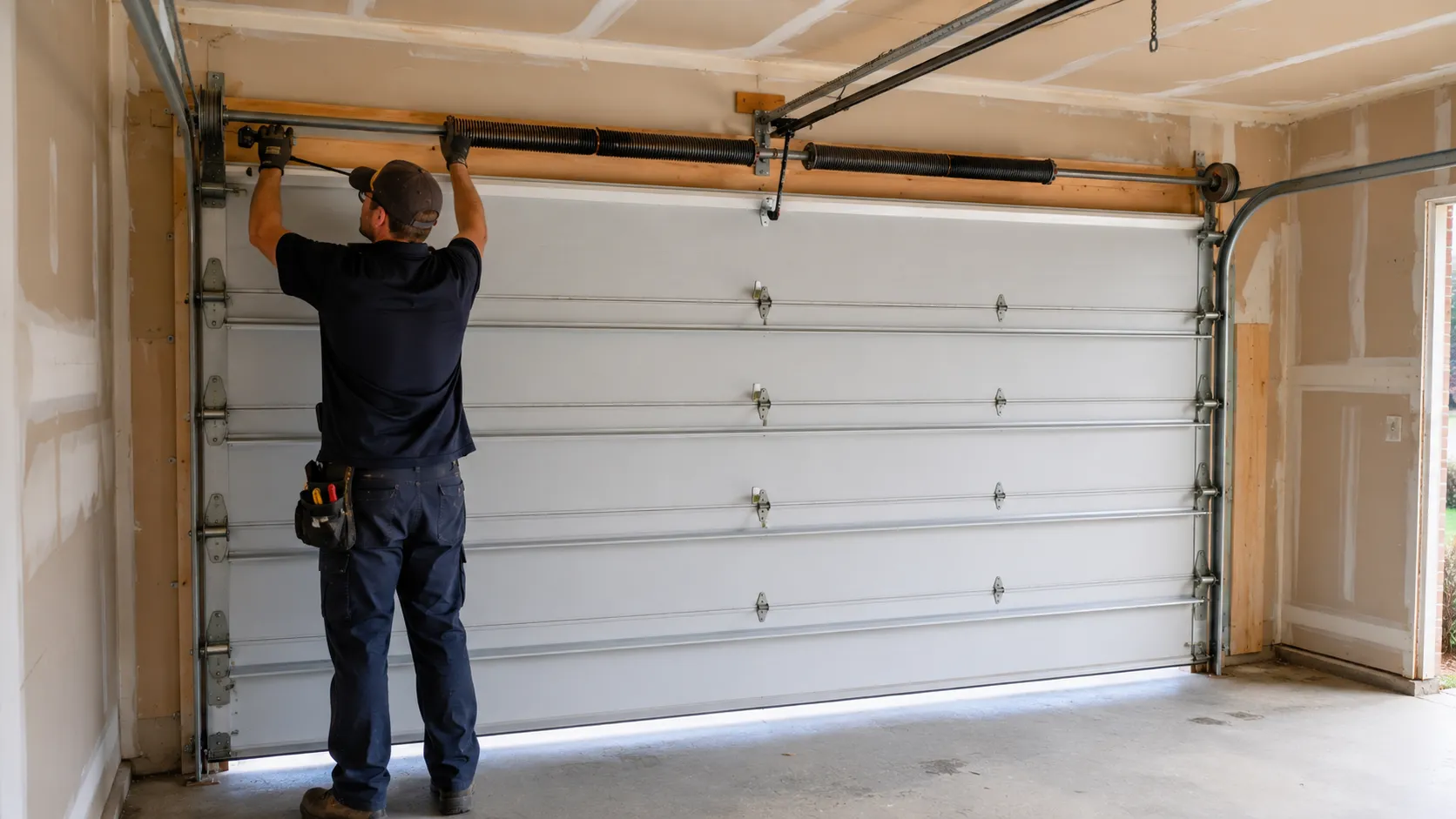
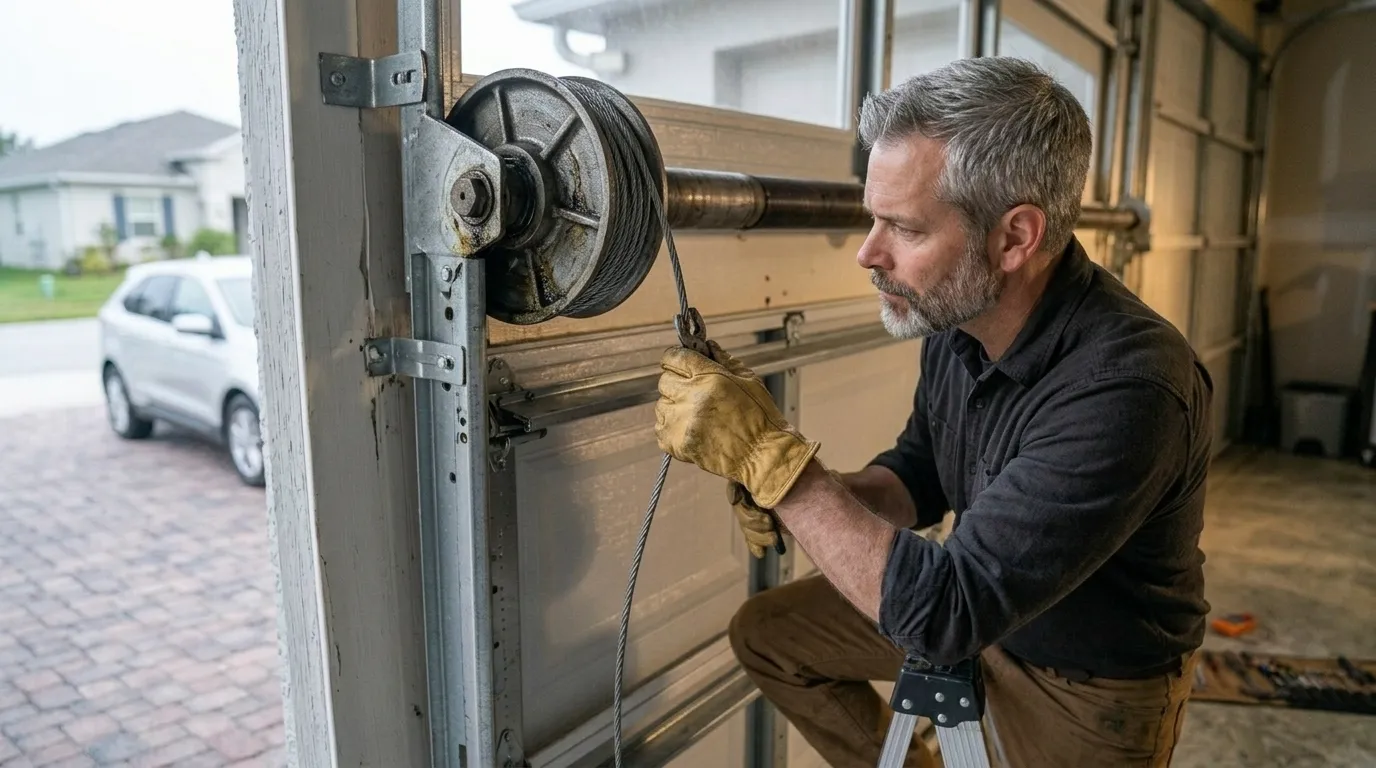
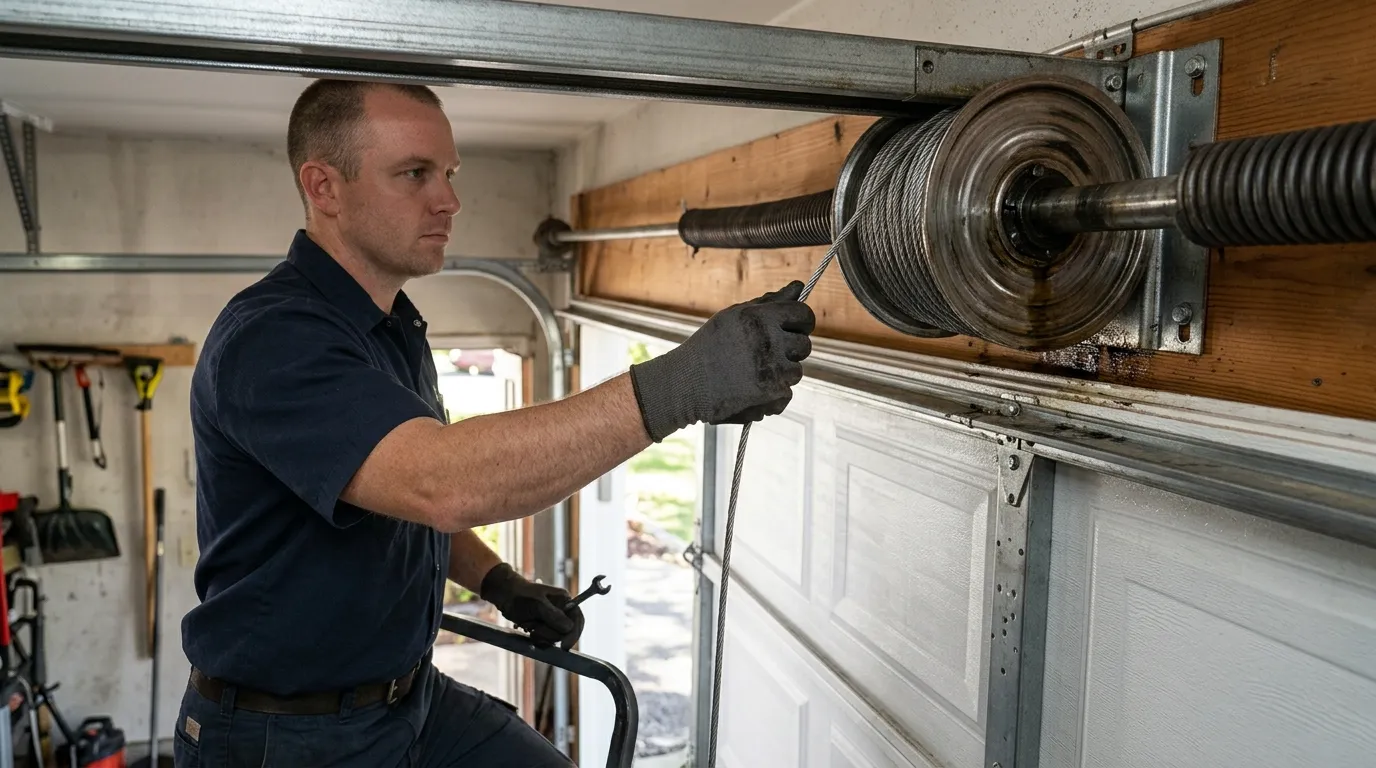
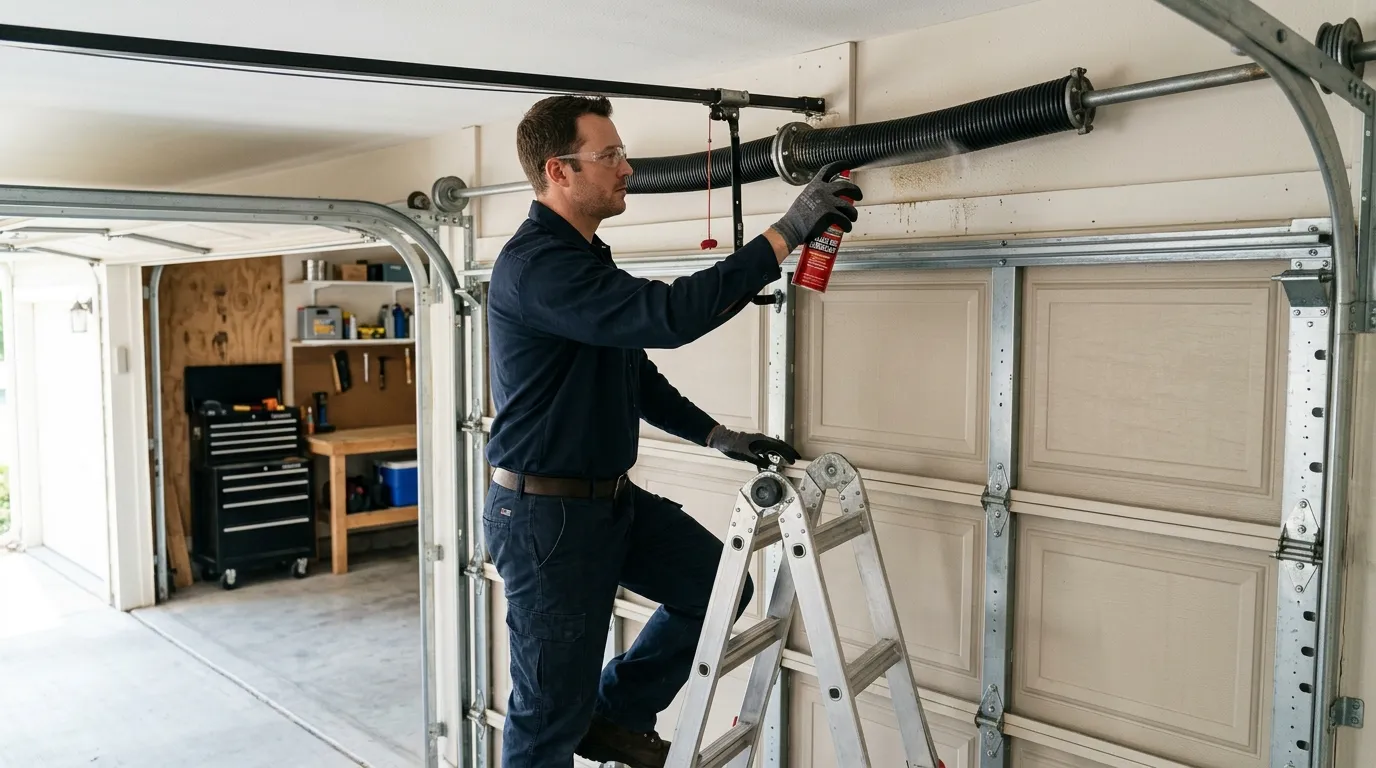
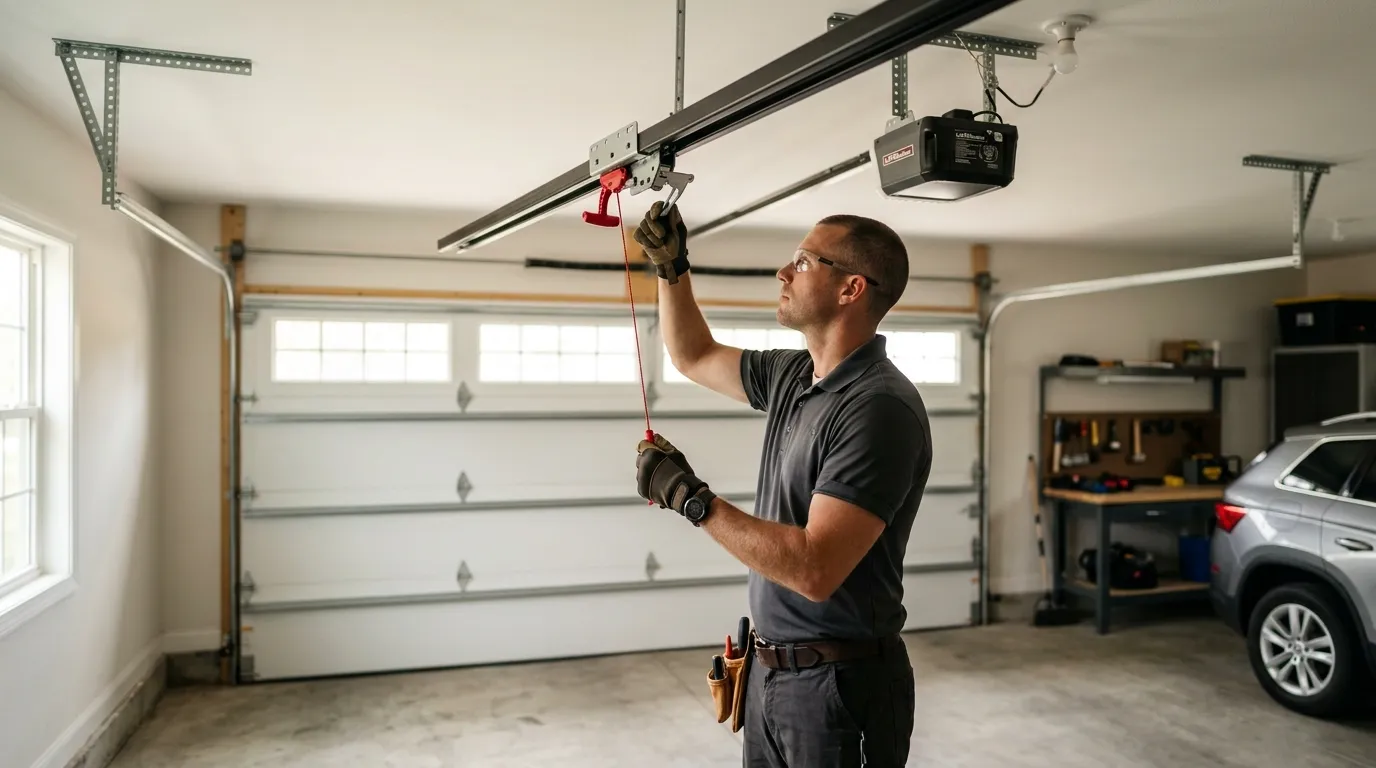
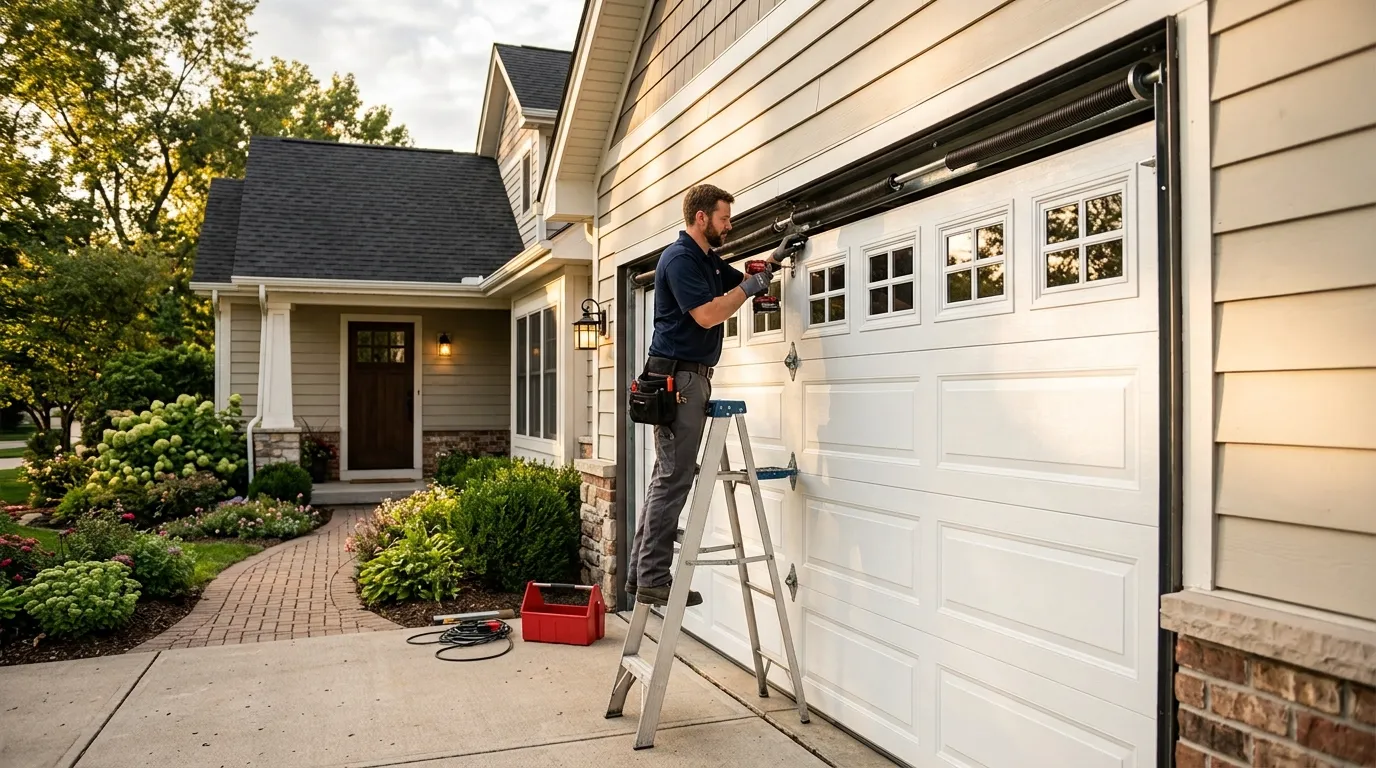
A torsion spring snapping is the most common failure we see on doors from this area's 1980s-90s wave of construction - the coil fatigues after tens of thousands of cycles and lets go, usually with a bang loud enough to hear from the driveway. Frayed lift cables come next, often on the same doors, since cable and spring wear on a similar timeline. Rollers crack or seize in the track, especially the nylon ones from builds in the 1990s that were never swapped for steel. Tracks themselves can bend or pull away from the jamb, more often on older 1938-1970s garages where the framing has shifted slightly over the decades. Openers fail in their own way - a stripped drive gear, a burnt-out capacitor, or a logic board that won't take a signal from the remote. None of these are related, but on a door old enough, more than one shows up at once, which is why a
What Causes It Around Here
Vernon Hills housing runs 1938 to 2009 with the median build year around 1984, and most of the stock across the roughly 65 named areas in this part of the county dates to that same 1980s-90s wave. That matters for garage doors because springs, cables, and openers from that era are past or near the end of their rated cycle count - a torsion spring is built for a number of open-close cycles, not a number of years, and a 35-to-40-year-old door has usually burned through its coil's rated life regardless of how well it's been kept. Add a cold moderate climate on top of that: steel spring wire stiffens and gets more brittle as temperatures drop, so a spring already near the end of its life is more likely to let go on a cold morning than a mild one. Neighboring communities in this same corridor - Lincolnshire, Libertyville, Mettawa, Long Grove - share the same building era, which is why the failure pattern looks consistent across the area rather than being a one-house problem.
What You Pay
We don't post a flat price list, because a torsion spring sized for a door built in 1984 isn't the same part as one for a house finished in 2005, and quoting blind over the phone means quoting wrong. What you pay depends on what the door actually needs - spring wire gauge, track length, opener horsepower - not on a generic service-call number. This service area covers 204,794 households and 115,228 owner-occupied houses, spanning more than sixty years of construction, so no two jobs price out the same way. We give you a number after we've looked at the spring, the drum, and the track, not before. One honest limitation: if your door uses an odd or discontinued spring size - more common on the pre-1970 end of the housing stock here - the part isn't always on the truck, and lead time can push the job out a few days. We'd rather tell you that up front than promise a same-day fix we can't back.
How it works
From “it’s stuck” to “it’s fixed”
1
Tell us what’s wrong
Describe the symptom - won’t open, loud bang, opener runs but the door won’t move.
2
On-site diagnosis
A technician tests the door under power and by hand and finds what actually failed.
3
Clear, up-front plan
You get the fix that’s needed and what drives the cost - before any work starts.
4
Repaired & tested
The repair is done, the door is set true and tested, and the work area left clean.
Serving Vernon Hills, IL - tell us what your door’s doing and we’ll take it from there.
Straight answers about garage door repair in Vernon Hills. Still unsure? Ask us directly.
Why did my garage door spring snap on a cold morning?
Spring steel gets stiffer and more brittle as temperatures drop, and this area sits in a cold moderate climate band. A spring that's already near the end of its cycle life is far more likely to fail on a cold morning than a mild one, which is why we see a jump in spring calls right after a cold snap.
My house was built in the 1980s - is the opener original?
It's possible. Median housing age in Vernon Hills is around 1984, and a lot of openers from that era are still in service, though most have been swapped at least once. If yours is grinding, humming without moving the door, or not taking a remote signal, it's worth having it looked at before it fails completely.
Do you come out to Lincolnshire or Libertyville too?
Yes, we cover Vernon Hills and the surrounding area including Mettawa, Lincolnshire, Libertyville, Long Grove, and the other nearby communities in this corridor. Call and give us the town and we'll confirm.
Can you give me a price over the phone?
Not for spring or cable work - the part depends on the door's weight and age, which we can't judge accurately without seeing it. We can give you a ballpark once we know the opener brand and rough door size, but the firm number comes after inspection.