What Our Technician Looks at First on a Vernon Hills Call
Vernon Hills Garage Door Pros explain what a technician checks first on a service call, tied to the town's 1980s-90s housing stock and cold winter swings.
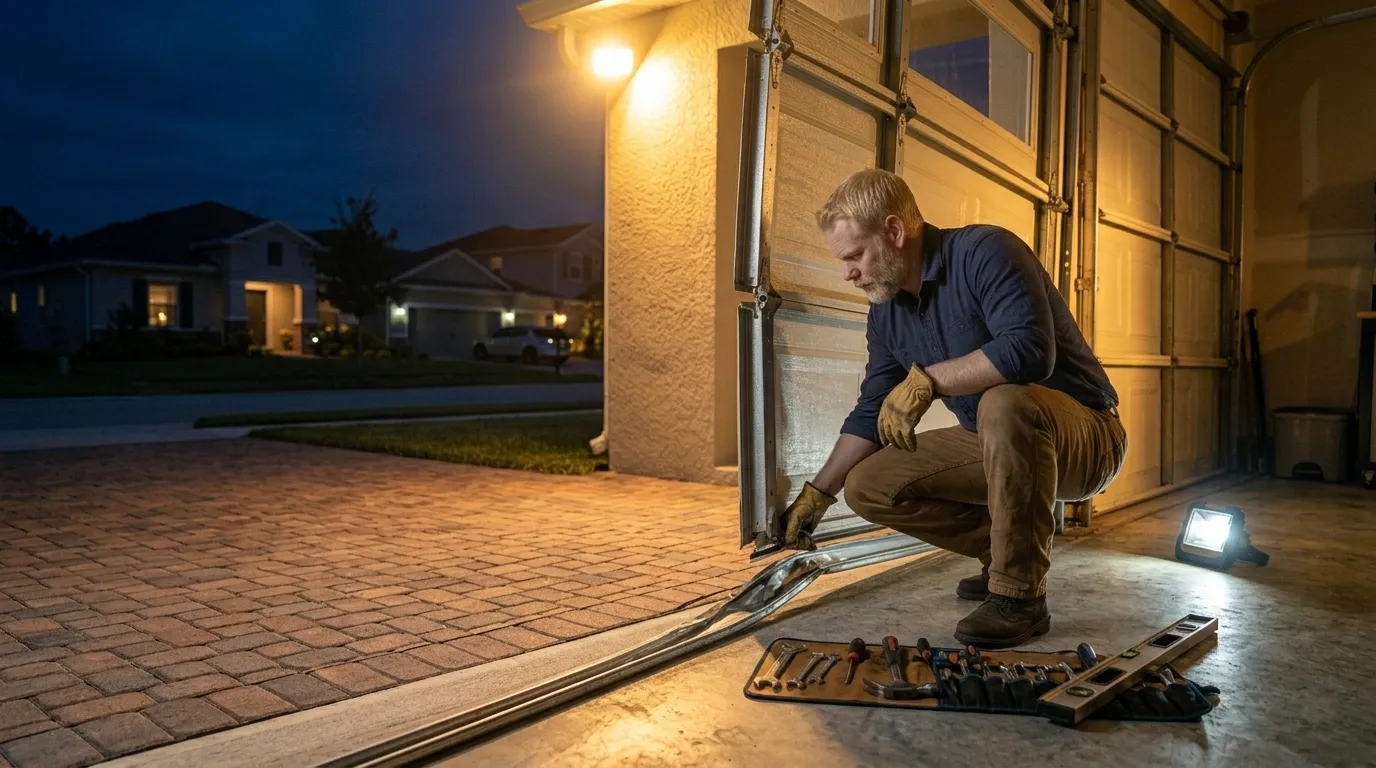
When we pull up to a job in Vernon Hills, the first thing we're doing before we even open the toolbox is placing the house in time. Housing here runs from 1938 up through 2009, but the median build year sits at 1984, and most of what we work on across this area falls into that 1980s-to-90s band. That matters because a door and opener installed in 1986 was sized for a different set of expectations than what a homeowner wants out of it today - quieter operation, a heavier insulated panel, a keypad instead of a single remote. So before we touch a spring or a track, we're asking what era of hardware we're actually standing in front of, because the fix for a 1986 torsion setup is not the fix for a 2005 one.
That first look also tells us whether we're dealing with original equipment that's simply worn out, or a patchwork of replacement parts installed over decades by whoever was cheapest at the time. Both show up constantly on this side of the county. Neither is a surprise to us, but it changes the order we check things in.
What to Check
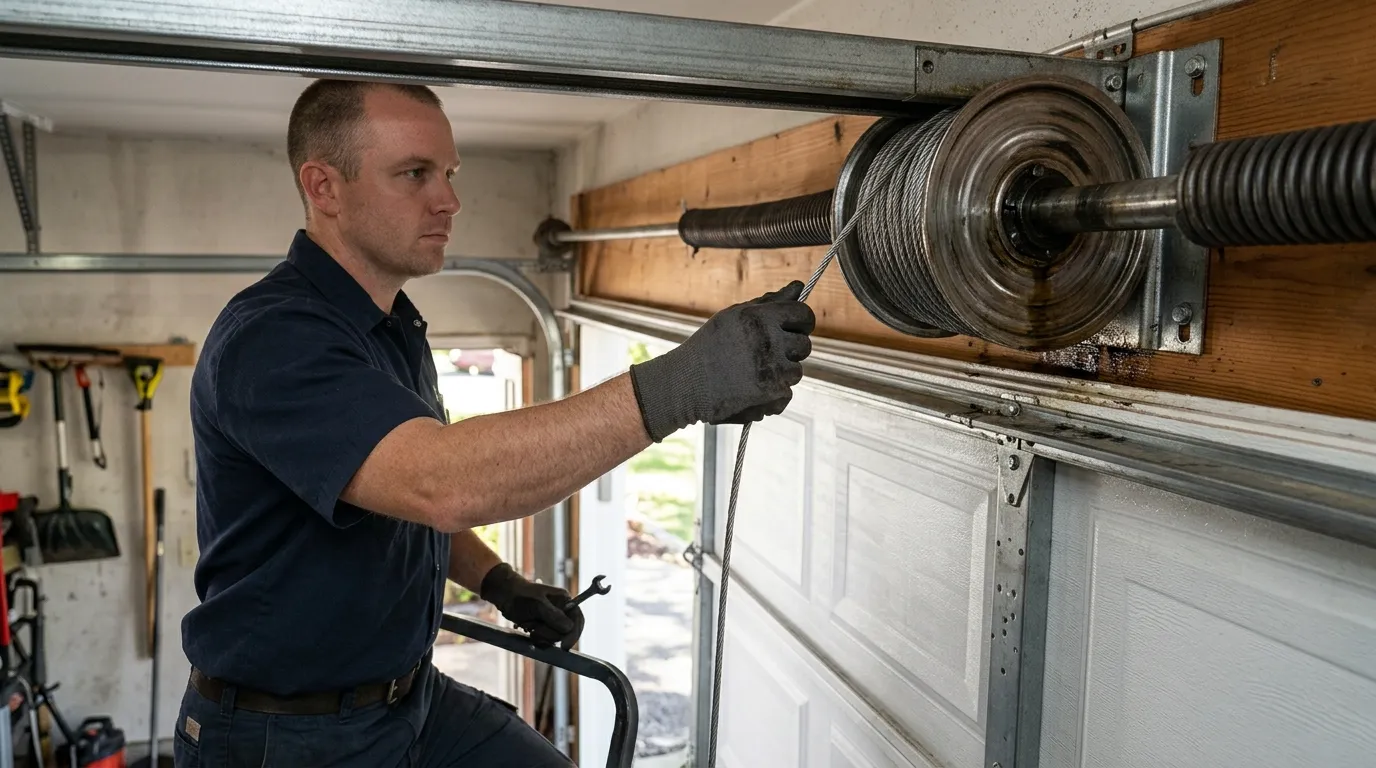
We start at the spring, because on a house from the 1980s-90s stock that's common here, the torsion spring is almost always original or one generation removed from original, and it's usually the thing that's actually failing even when the homeowner blames the opener. We check spring winding and cable wear together, since a spring that's lost tension puts extra load on the cables and drums right behind it.
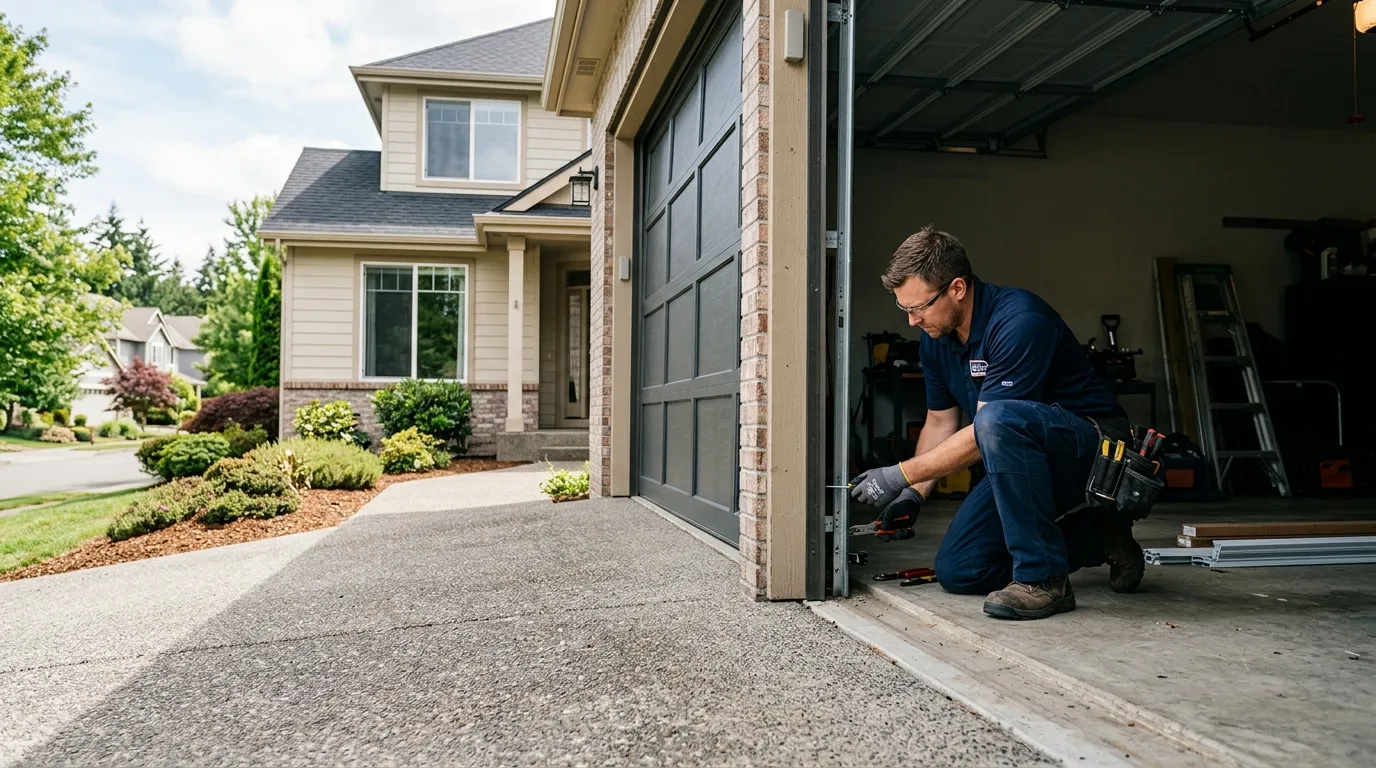
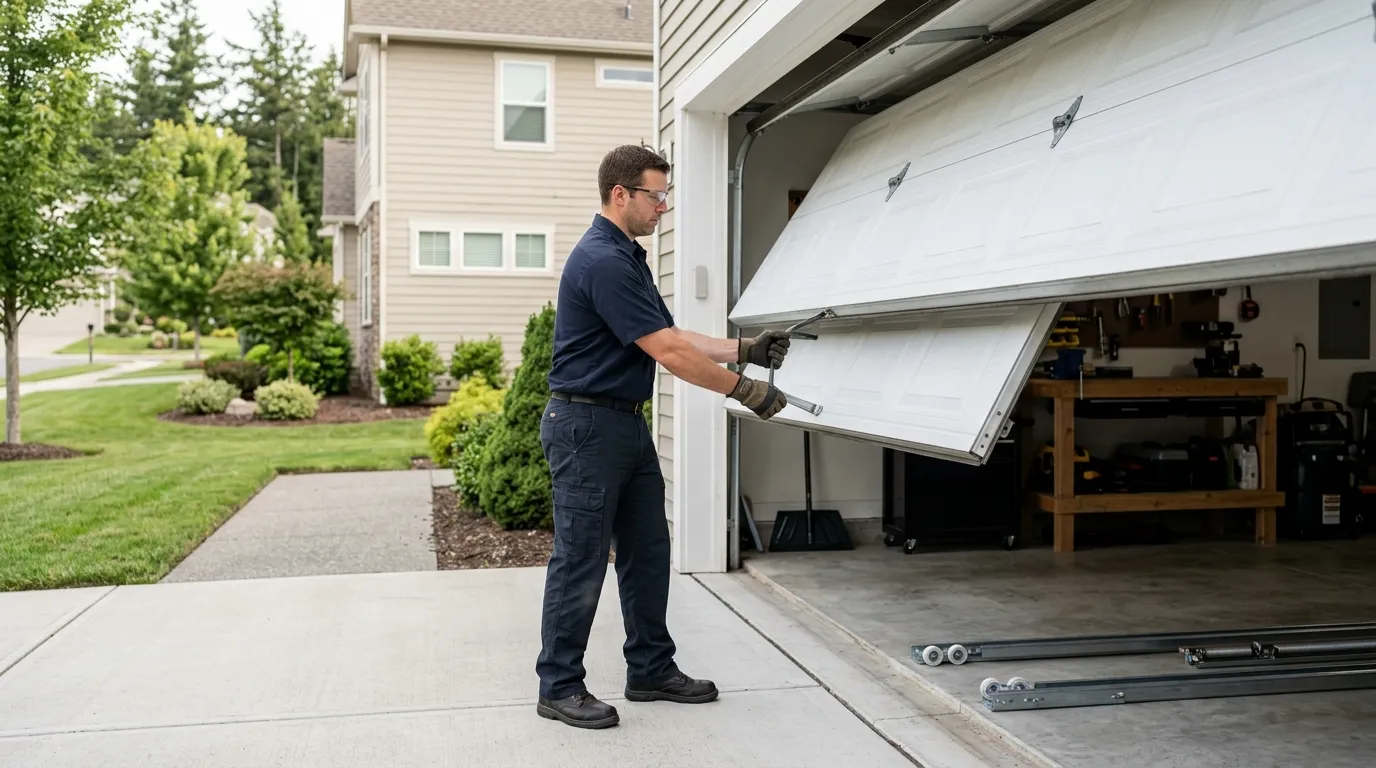
Next is the track and roller alignment. Older track brackets in this area were often fastened with lag screws into jamb wood that's had thirty-plus years to shrink and shift, so we check for play at the brackets before we ever adjust the track itself.
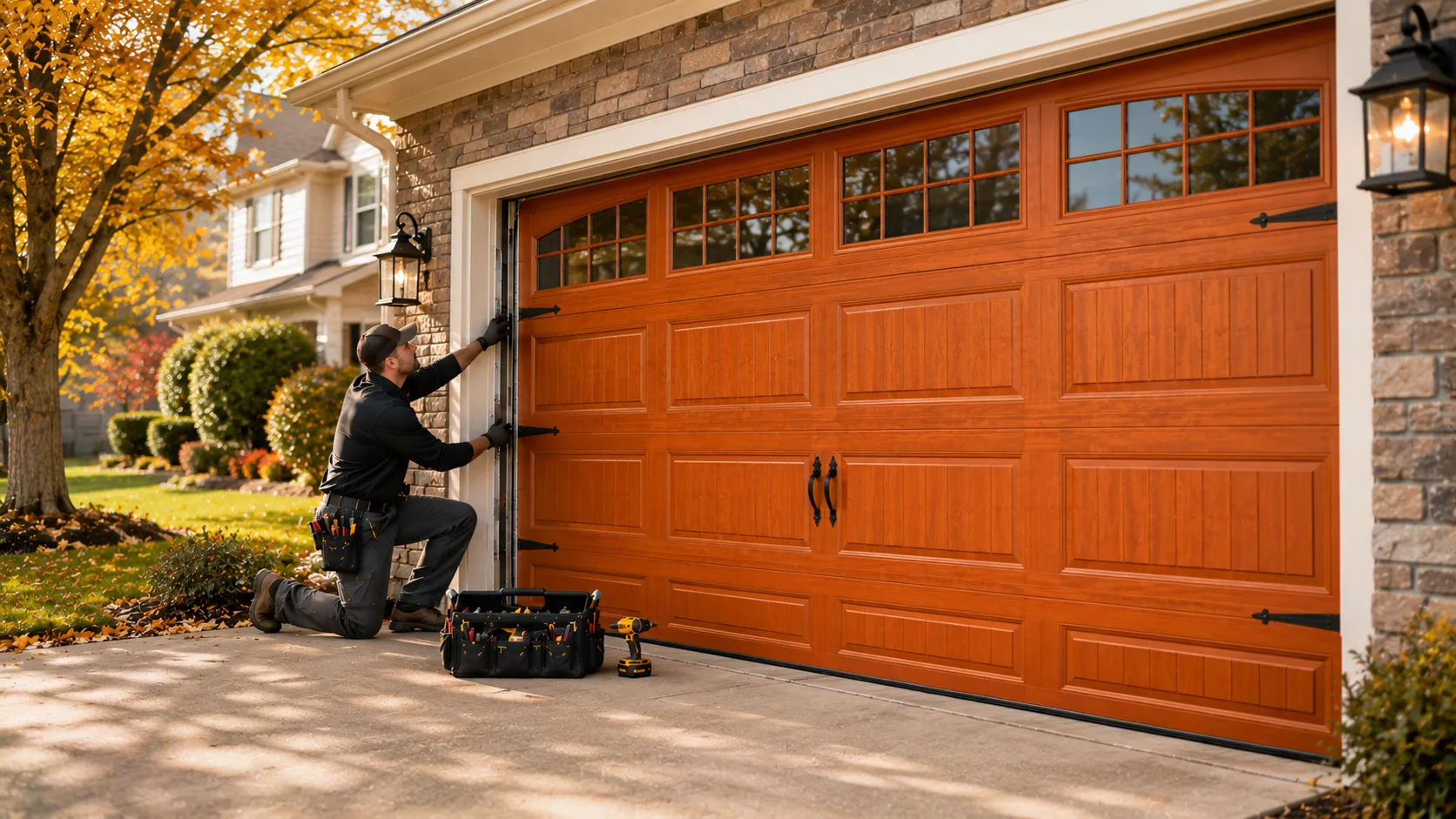
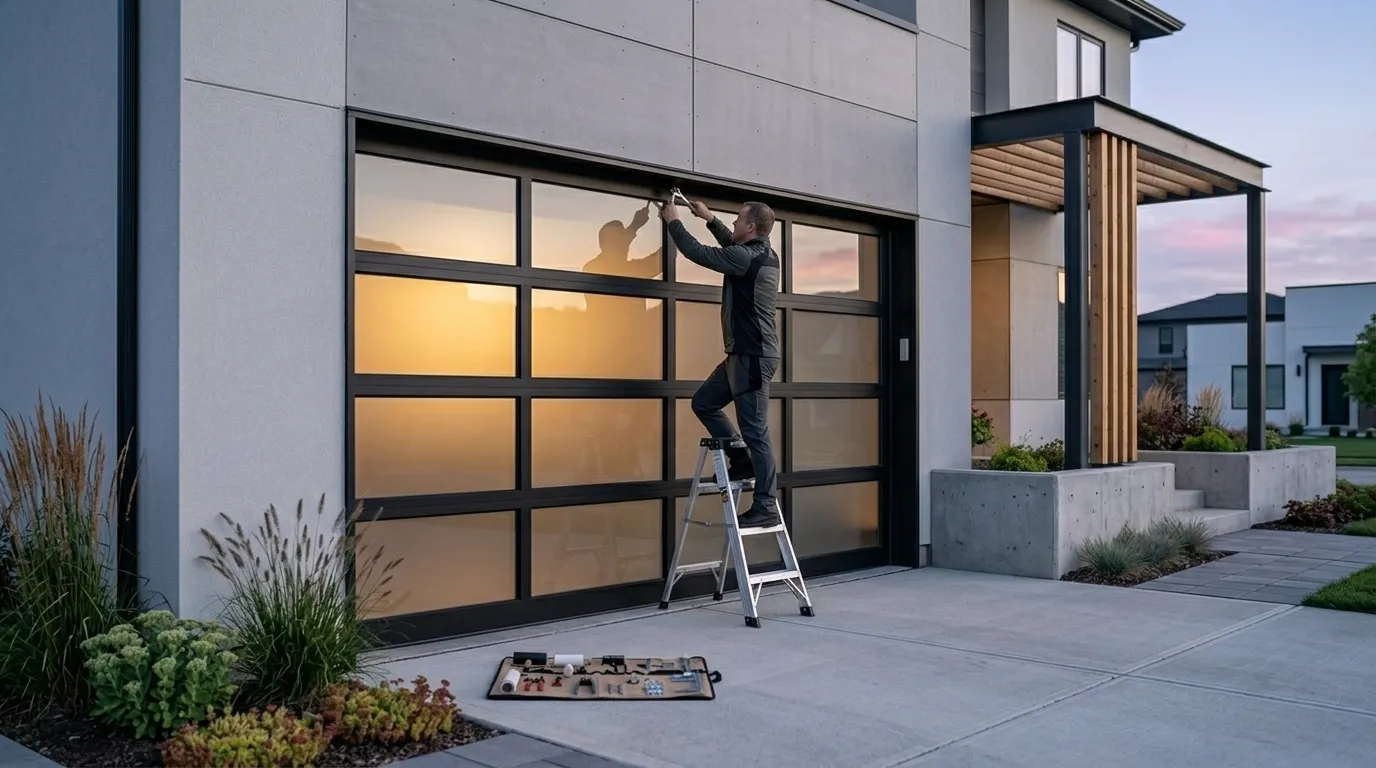
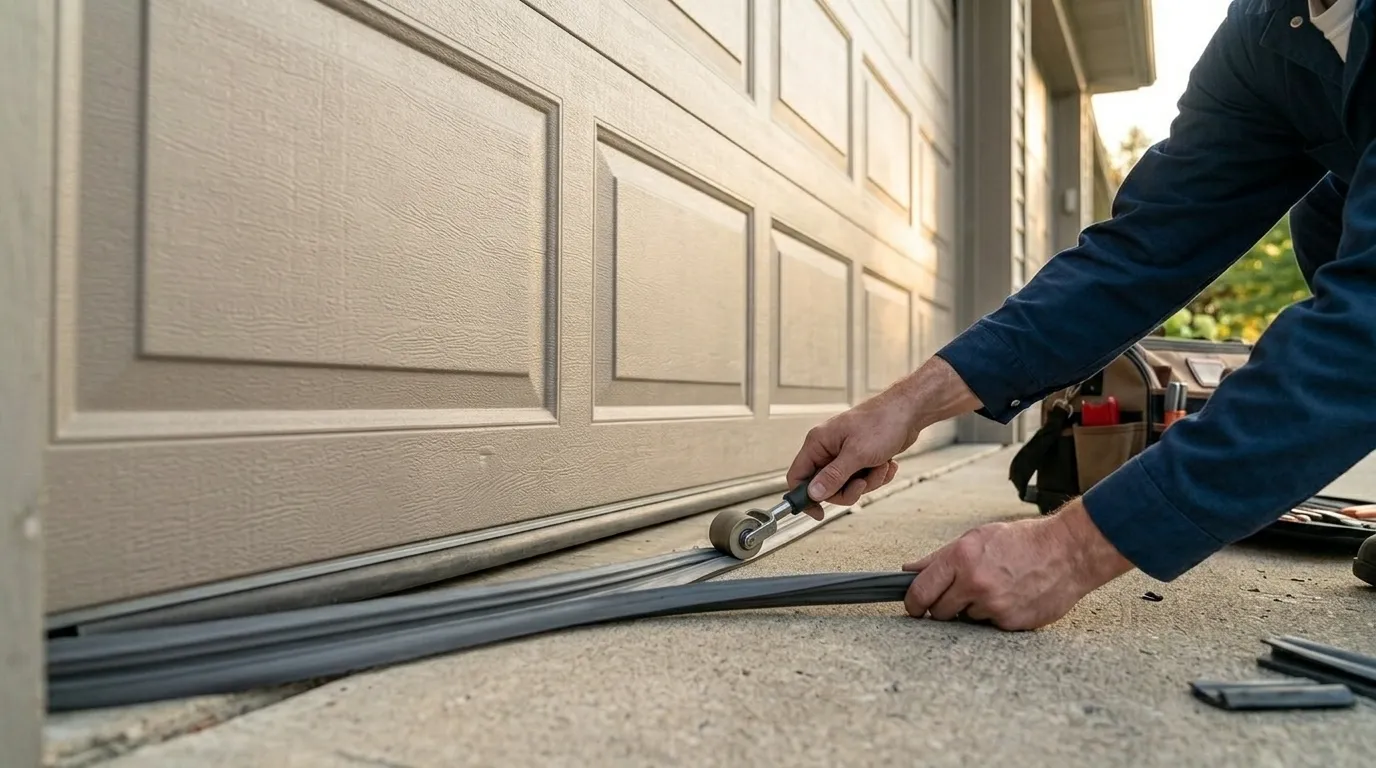
Then the opener - specifically whether the safety reversal and force settings still match the door's actual weight, which drifts as springs age and panels sag. Last is the bottom seal and weatherstripping, because on a door built to 1980s-90s spec, the seal is usually the first thing to go brittle and let air and moisture through underneath.
One limitation worth saying plainly: if the spring, track, and opener are all original from that era and all showing wear at once, we'll often tell a homeowner that replacement makes more financial sense than repair. We won't string together three patch fixes just to avoid saying that.
What Changes With the Season
Vernon Hills sits in a cold, moderate climate band, and that shows up directly in what breaks and when. Torsion springs lose a measurable amount of lift as steel contracts in cold temperatures, so a spring that was marginal in September can fail outright on a January morning. That's why our checks lean harder on spring tension and cable condition heading into winter than they do in warmer months.
Opener force settings drift with the seasons too. A door that closes fine in summer can start binding partway down once cold weather tightens the track alignment and stiffens the rollers, especially on the older roller hardware still common in the 1980s-90s housing stock across this area. We check and reset force limits as part of any cold-season call rather than assuming last year's settings still hold.
Spring and fall are when we catch the most seal and hinge issues, since that's when temperature swings are widest day to night and hardware expands and contracts the most within a single 24-hour period.
What the Weather Here Does to It
The cold, moderate band this area sits in doesn't produce the kind of extreme cold-snap failures you'd see further north, but it does mean steady freeze-thaw cycling on the door and its hardware most of the winter. That cycling is what we check for first on any door built during the 1938-2009 span typical here - not one big failure event, but metal fatigue built up over repeated small temperature swings.
Galvanized track and torsion hardware installed in the 1980s and 90s wasn't built with the coatings some newer components use, so we check those pieces for surface corrosion at fastener points where condensation collects overnight and evaporates by afternoon. On insulated steel panels, we also check the seams for panel flex, since repeated contraction can loosen seam fasteners over years faster than a straight visual check would suggest.
We don't treat every door as heading for the same fate. A door on a well-sealed garage weathers this cycling very differently than one that's had a gap at the bottom seal for years, so that seal check earlier in the visit isn't just routine - it's often the reason the rest of the hardware held up or didn't.
How it works
From “it’s stuck” to “it’s fixed”
1
Tell us what’s wrong
Describe the symptom - won’t open, loud bang, opener runs but the door won’t move.
2
On-site diagnosis
A technician tests the door under power and by hand and finds what actually failed.
3
Clear, up-front plan
You get the fix that’s needed and what drives the cost - before any work starts.
4
Repaired & tested
The repair is done, the door is set true and tested, and the work area left clean.
Serving Vernon Hills, IL - tell us what your door’s doing and we’ll take it from there.
Straight answers about garage door repair in Vernon Hills. Still unsure? Ask us directly.
Why does my garage door spring fail in winter specifically?
Torsion springs lose lift as steel contracts in cold temperatures. In this area's cold, moderate climate, a spring that was already worn from years of use often has just enough reserve to work in warm months but not enough once temperatures drop, which is why winter is when marginal springs finally give out.
Is my door's age a problem even if it still opens fine?
Not necessarily, but housing in this area runs from 1938 to 2009 with most stock from the 1980s and 90s, so a door that opens fine can still have original hardware nearing the end of its service life. We check tension and wear rather than assuming a working door has no issues building underneath.
Should I fix or replace an old opener?
If the spring, track, and opener are all original and all showing wear at the same time, replacement is usually the better financial call. We'll say so directly rather than doing three separate patch repairs on hardware that's past its practical life.