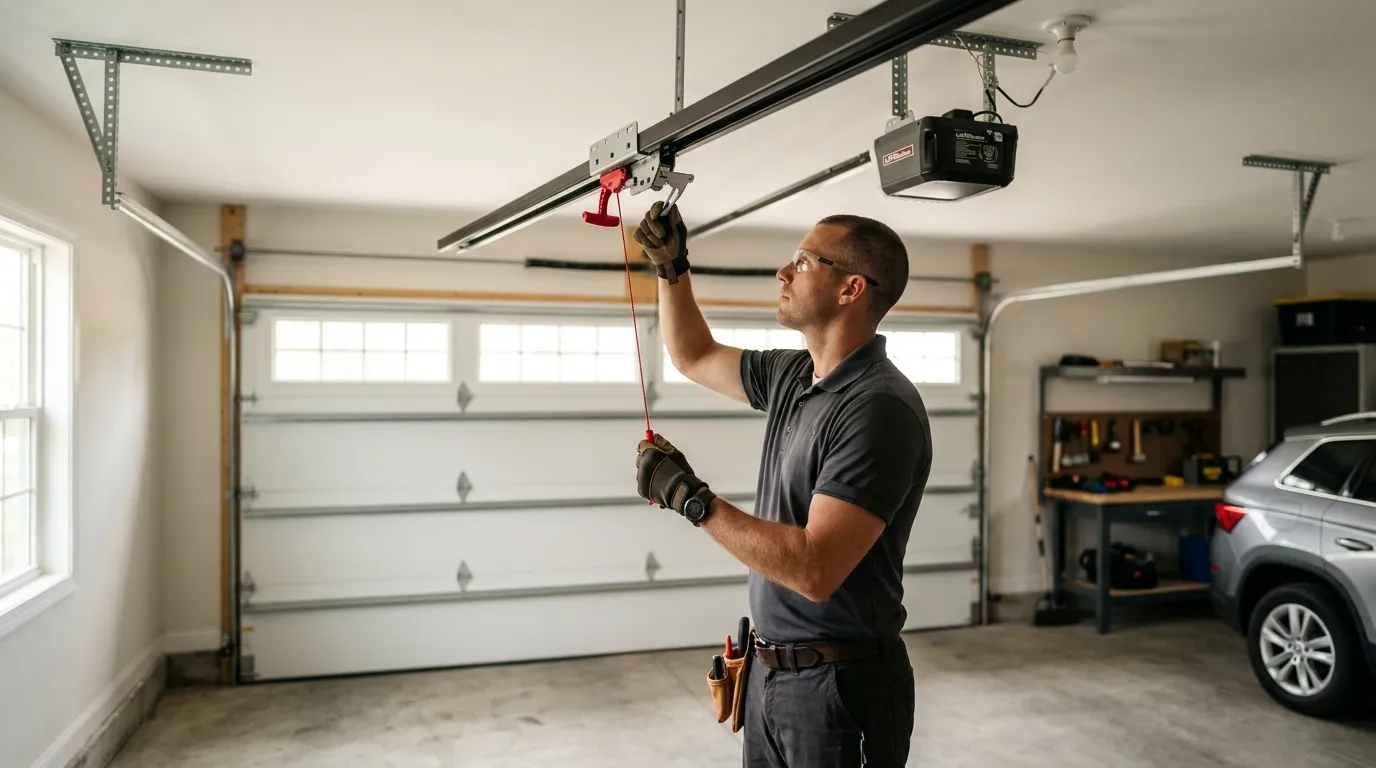
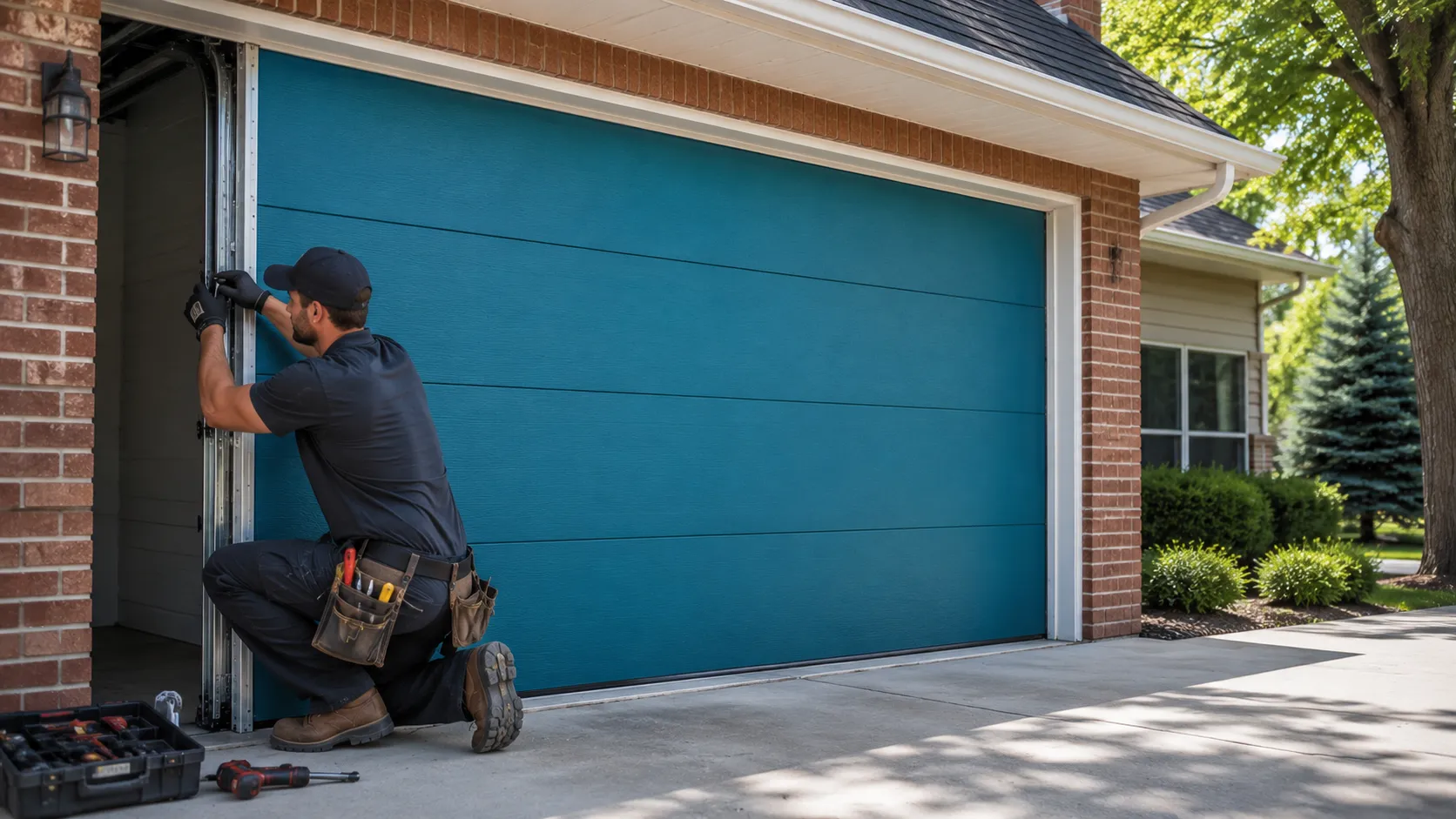
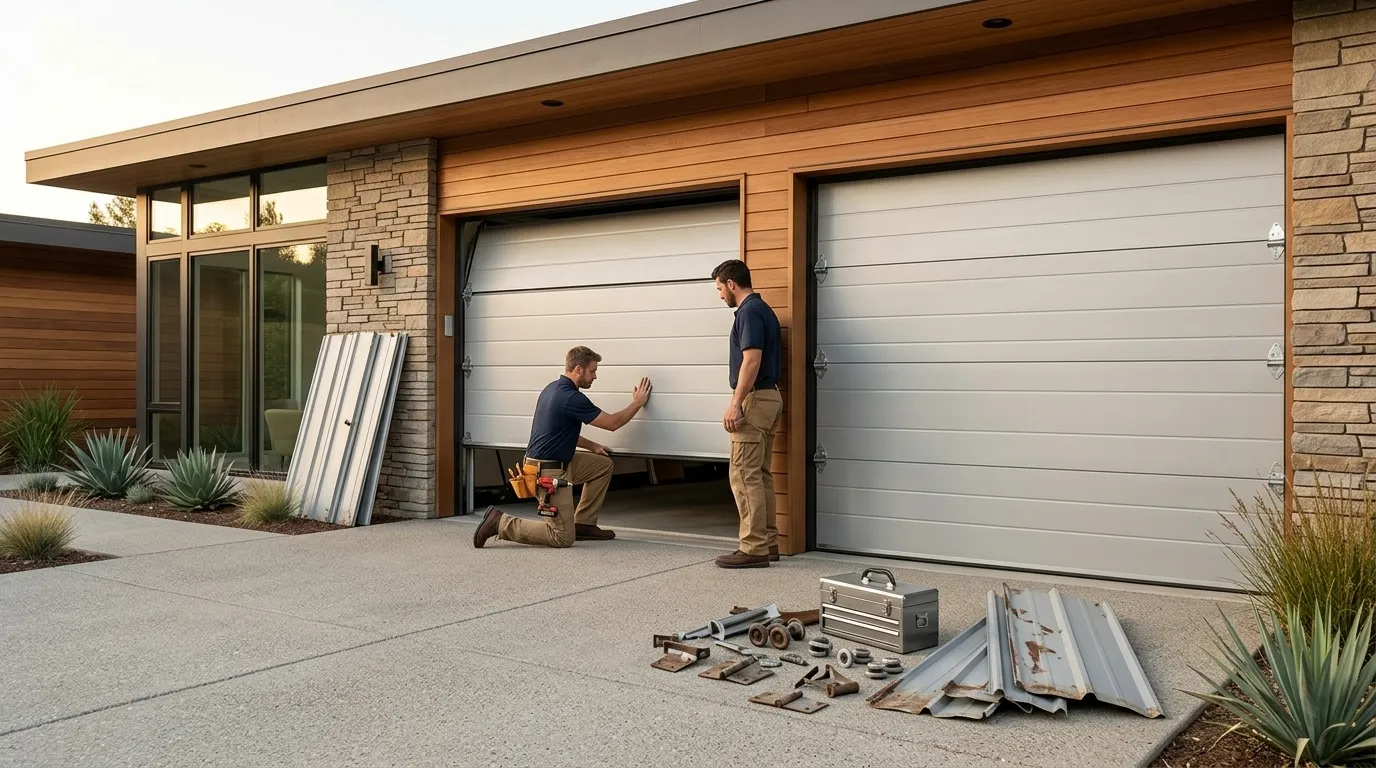
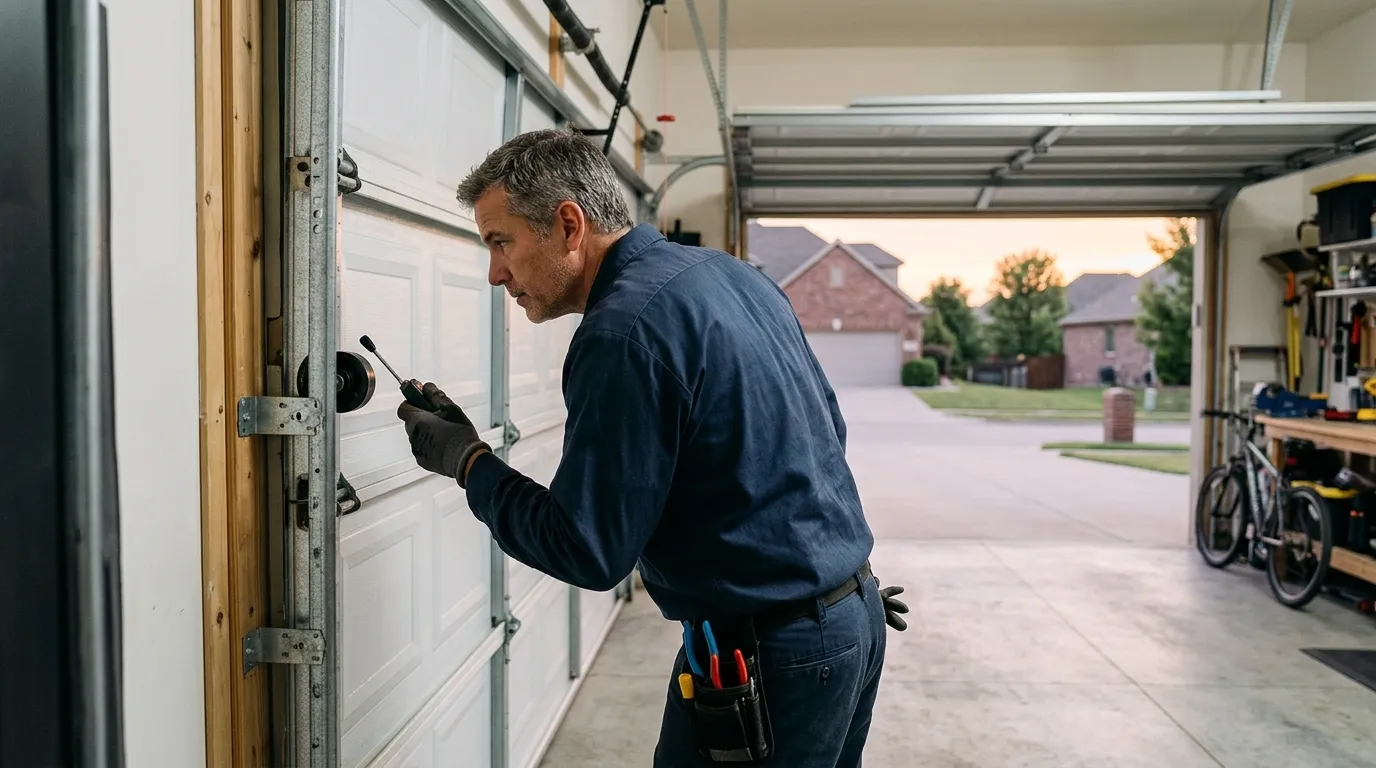
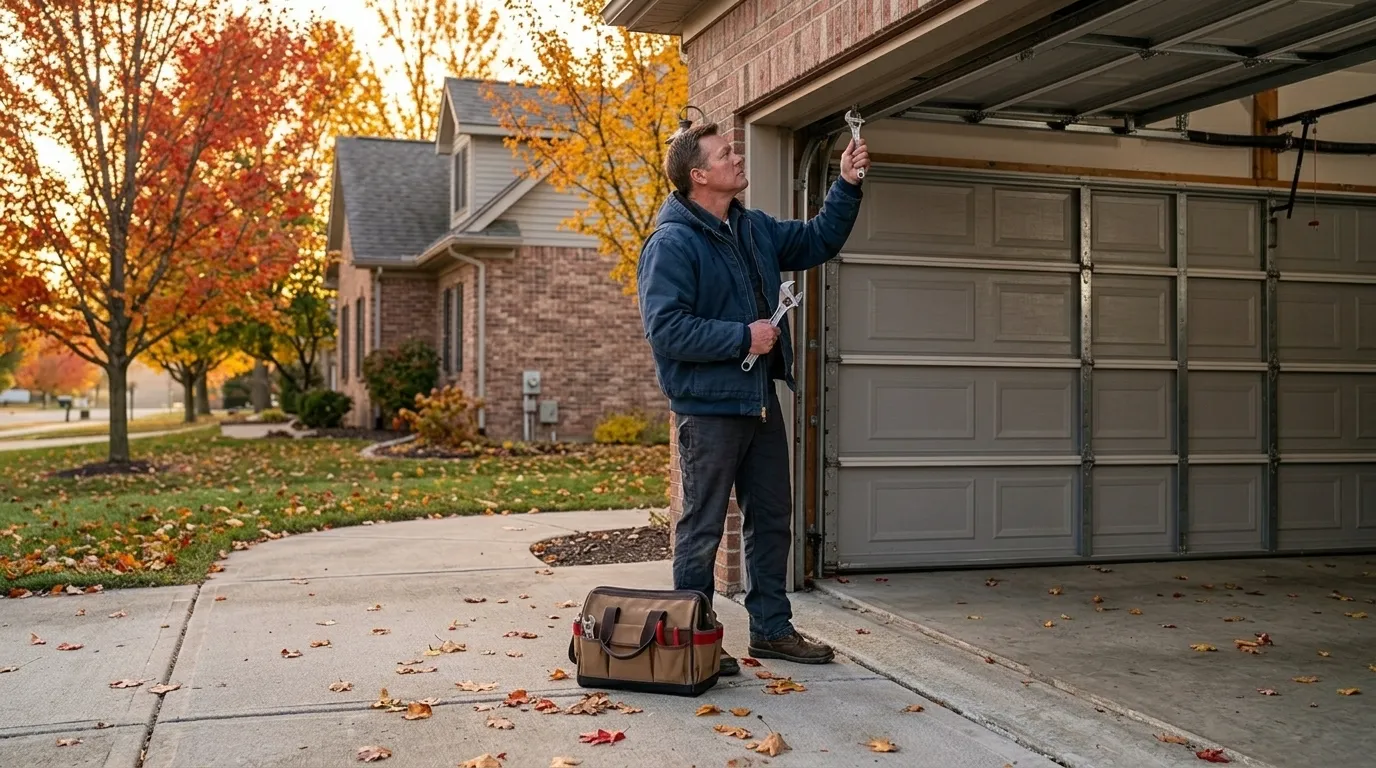
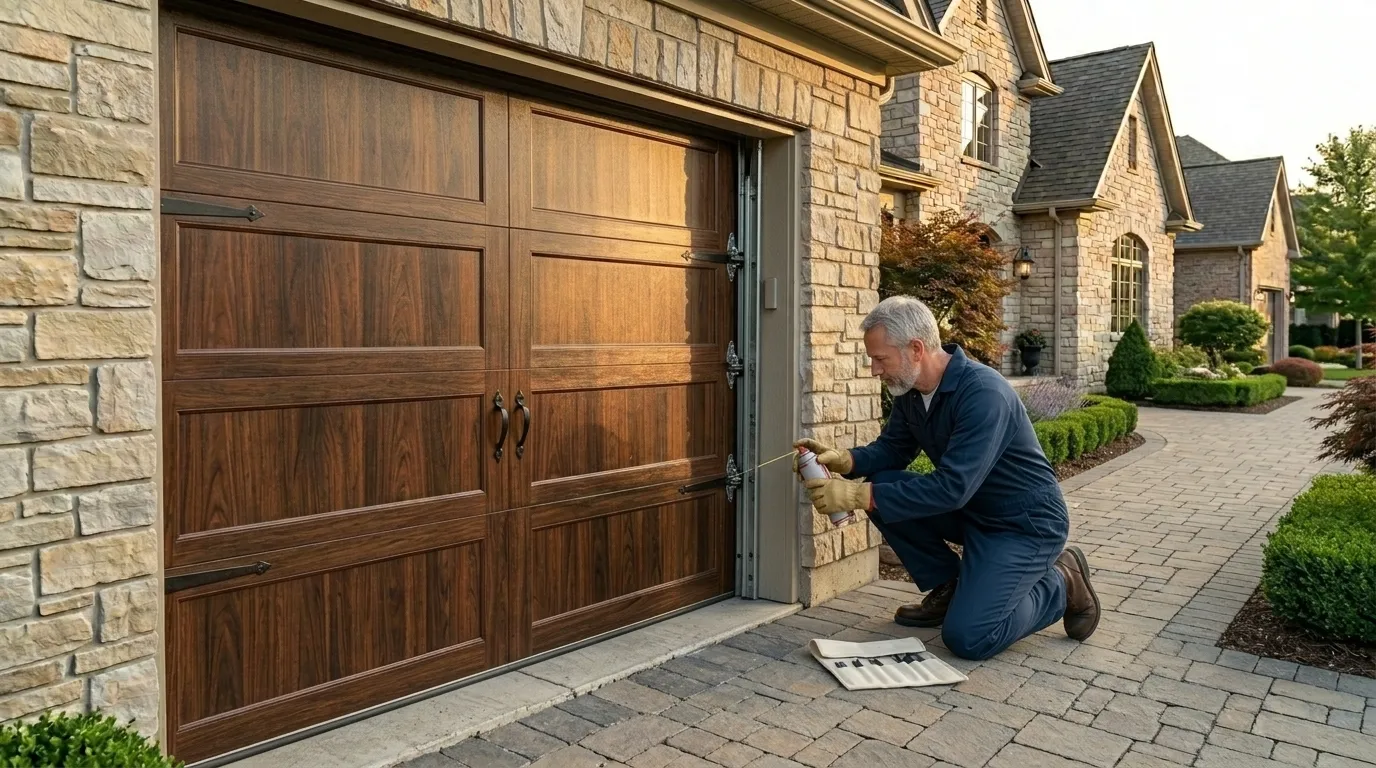
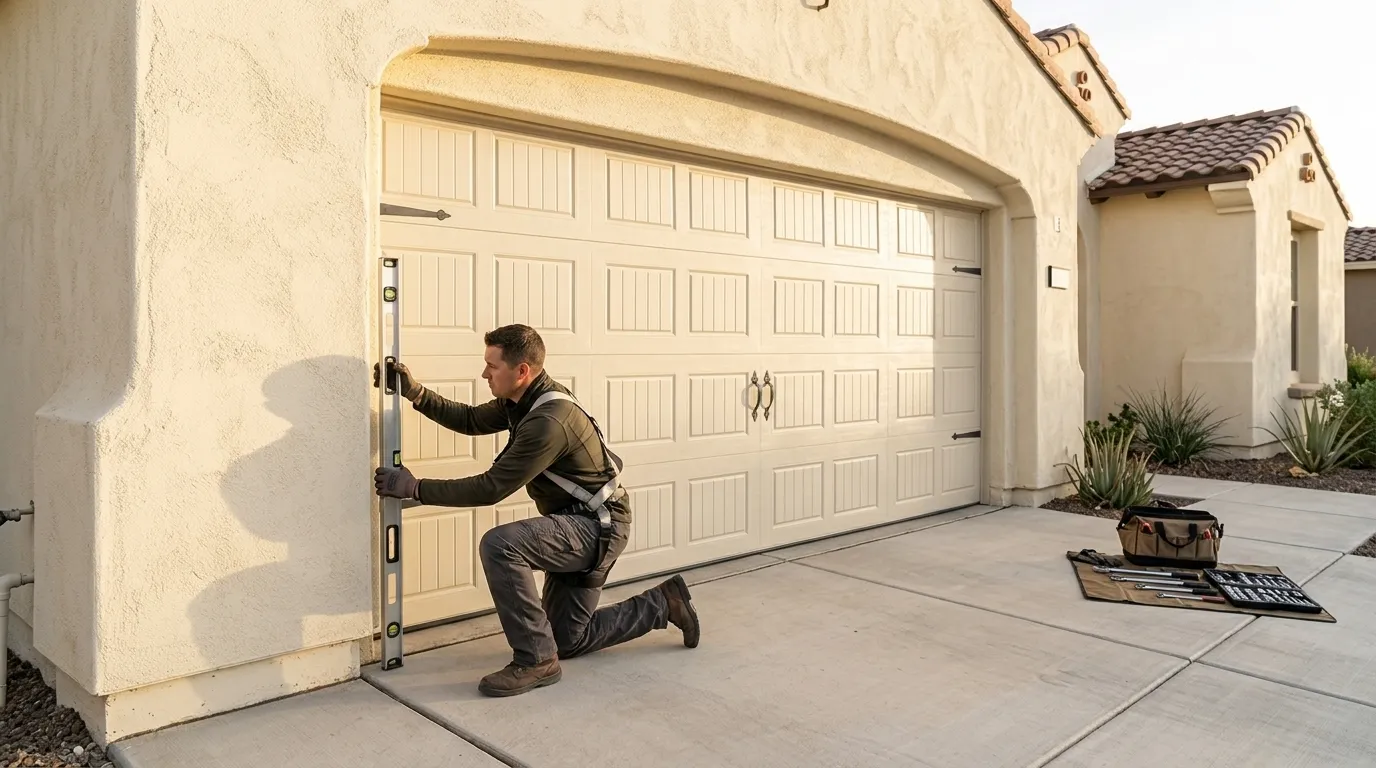
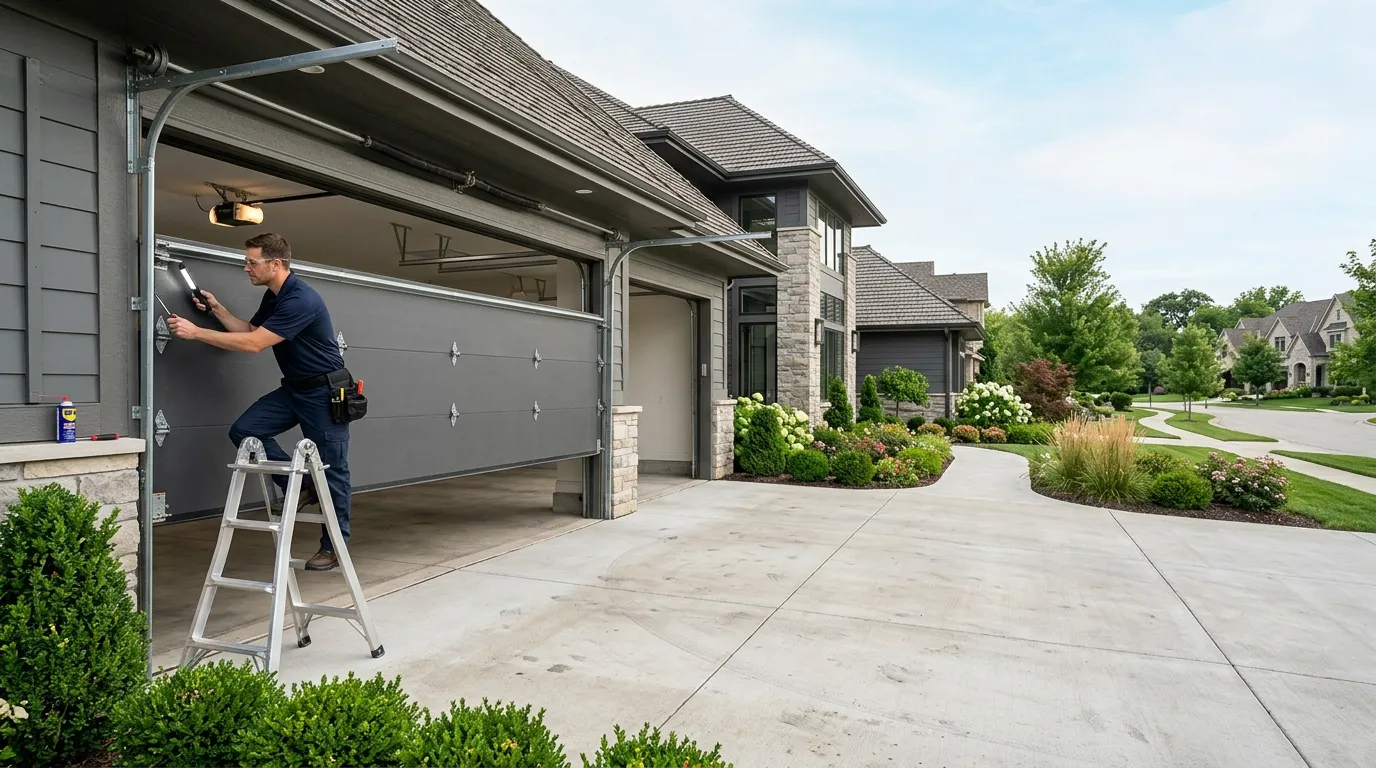
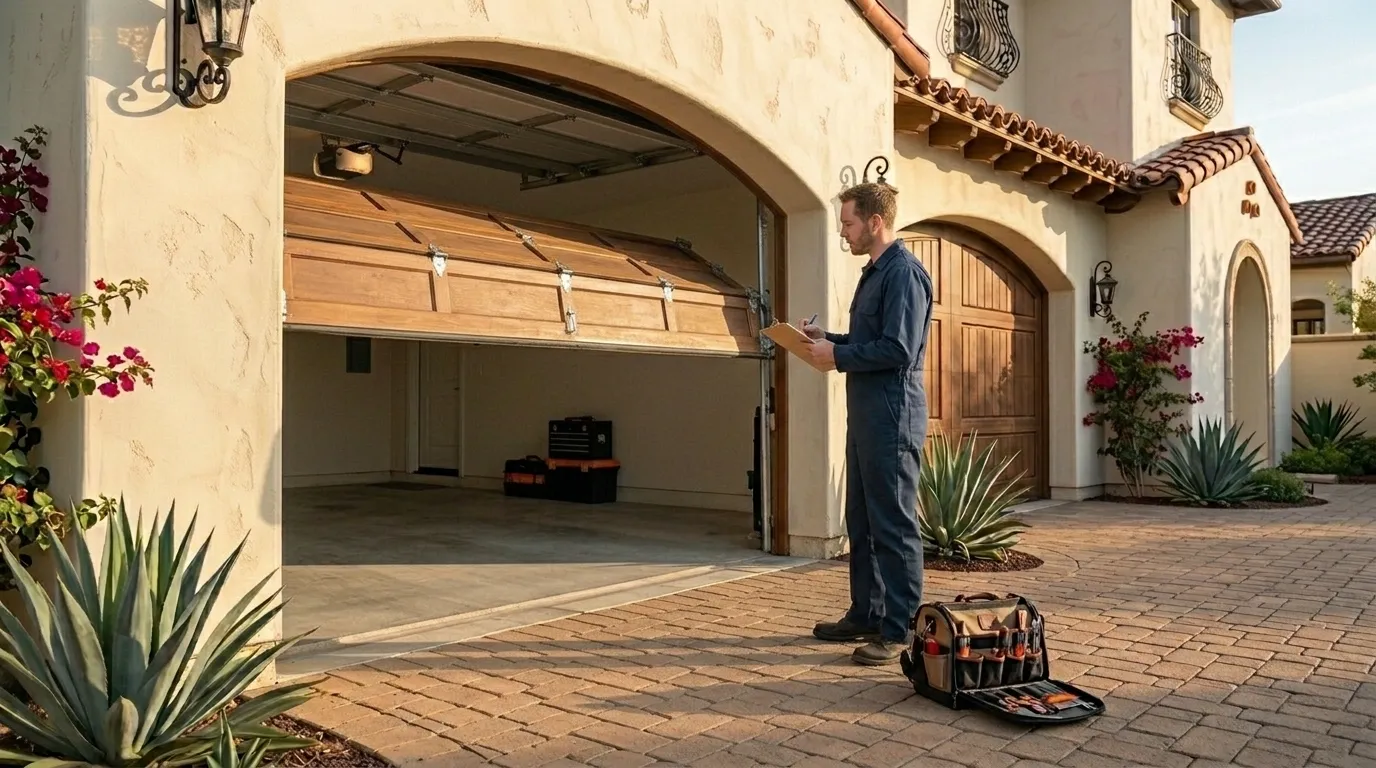
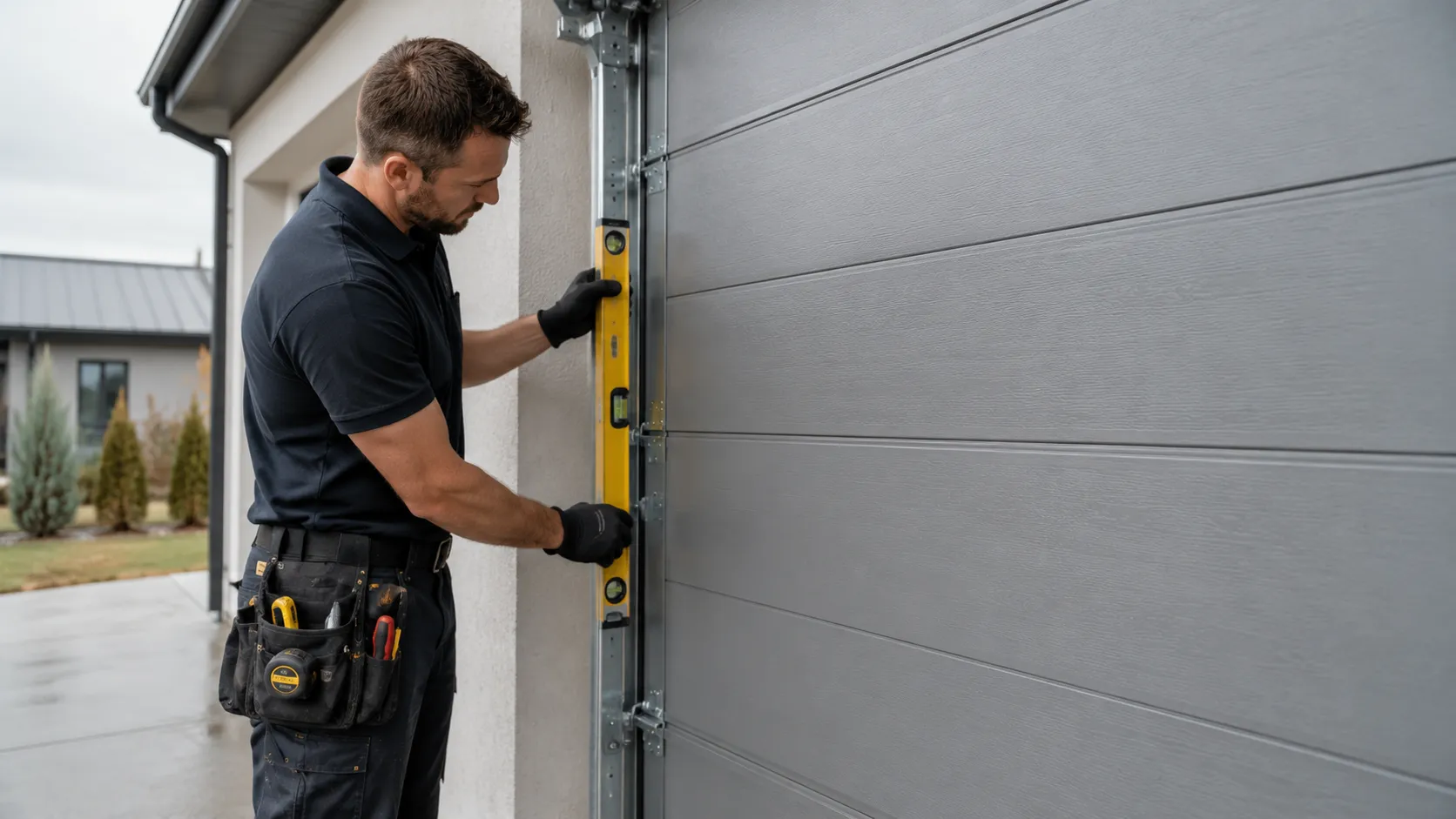
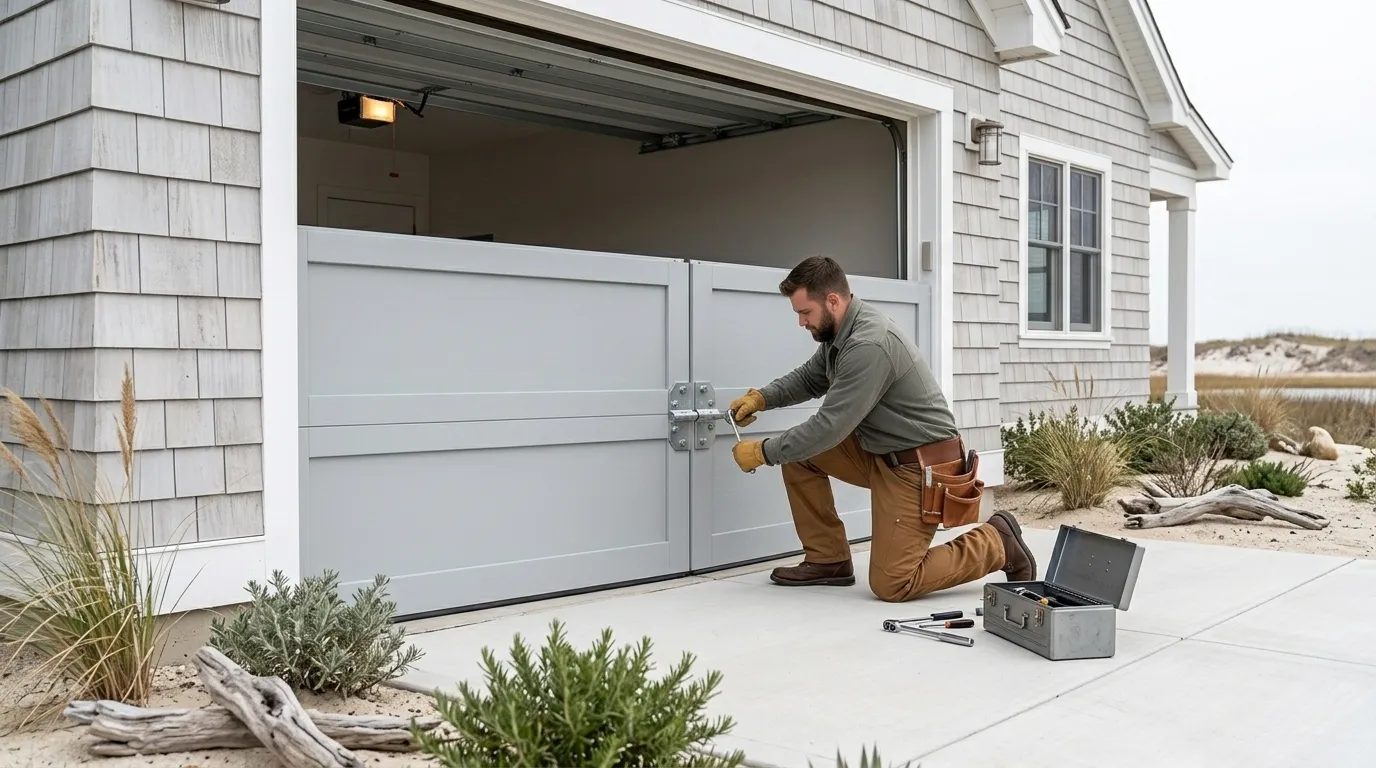
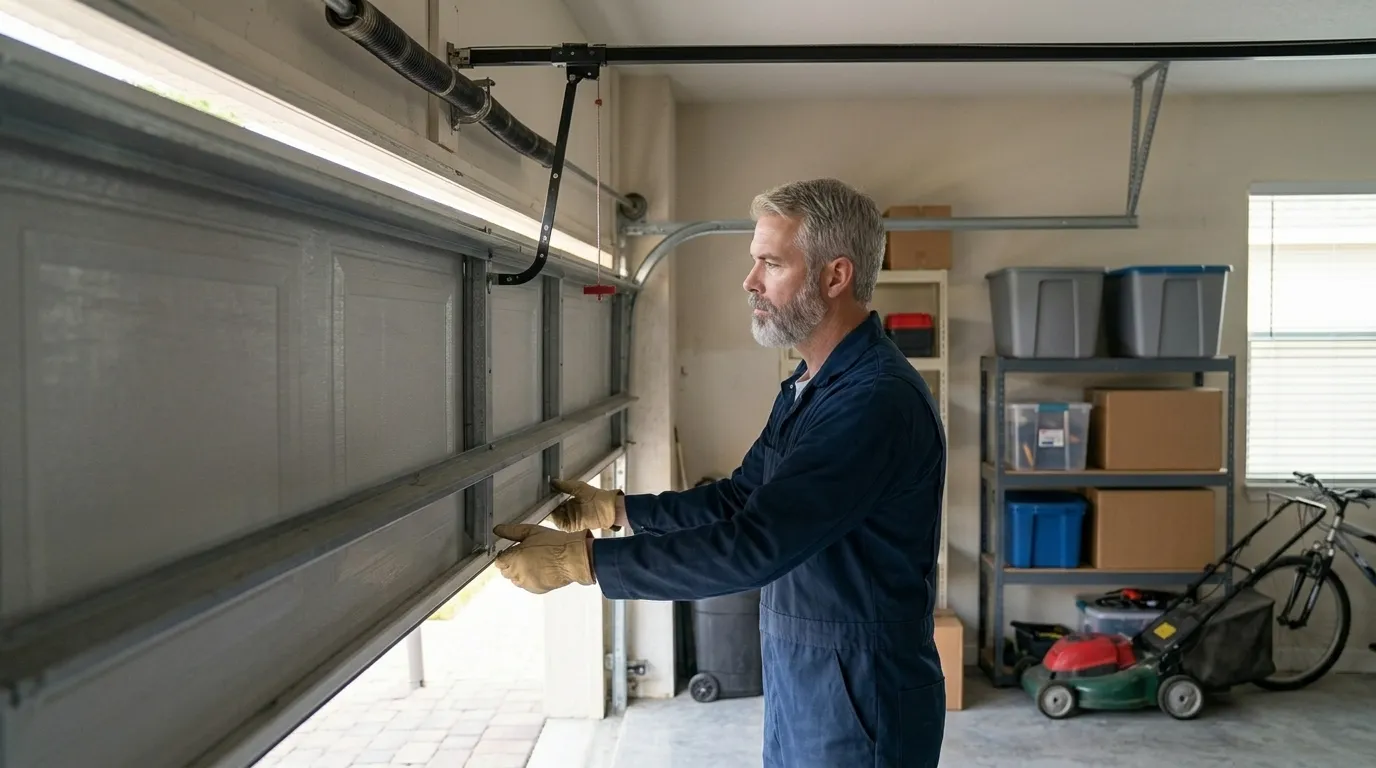
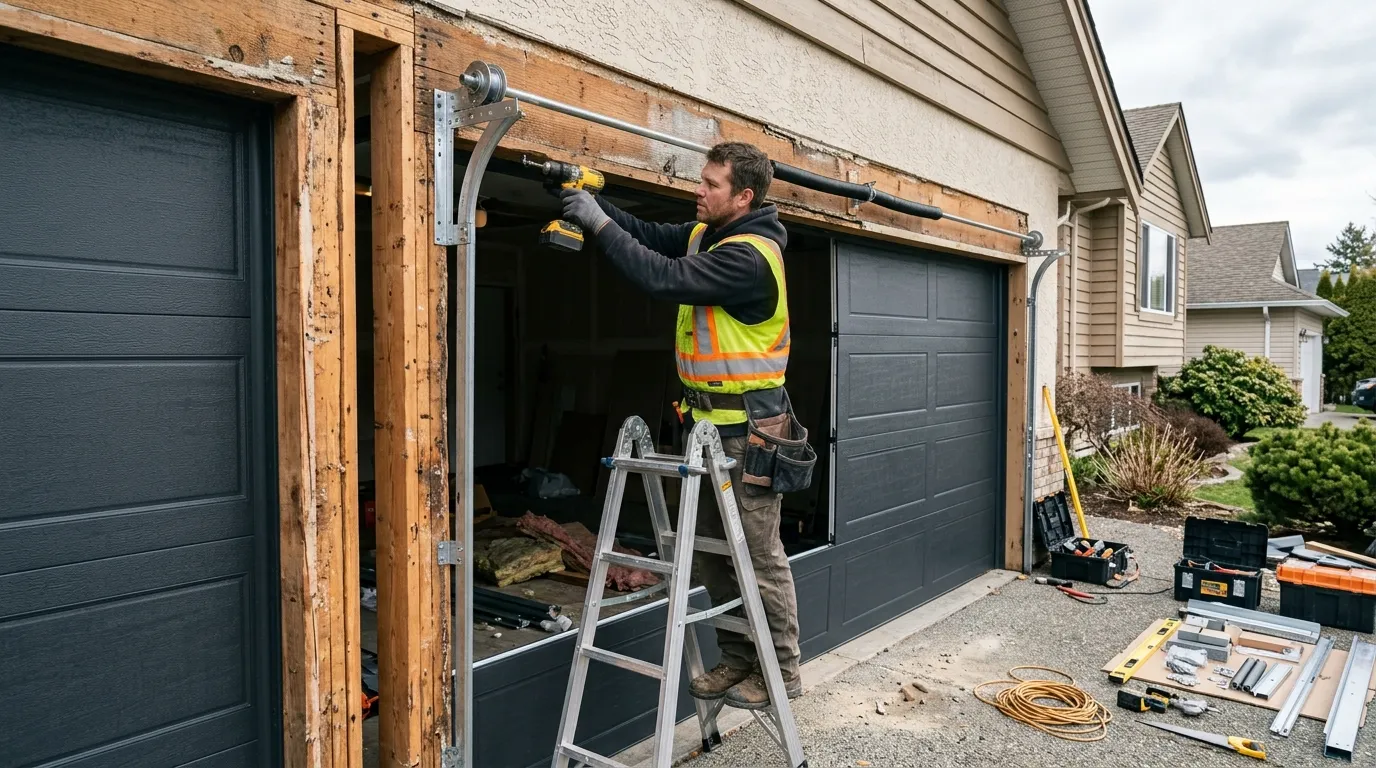
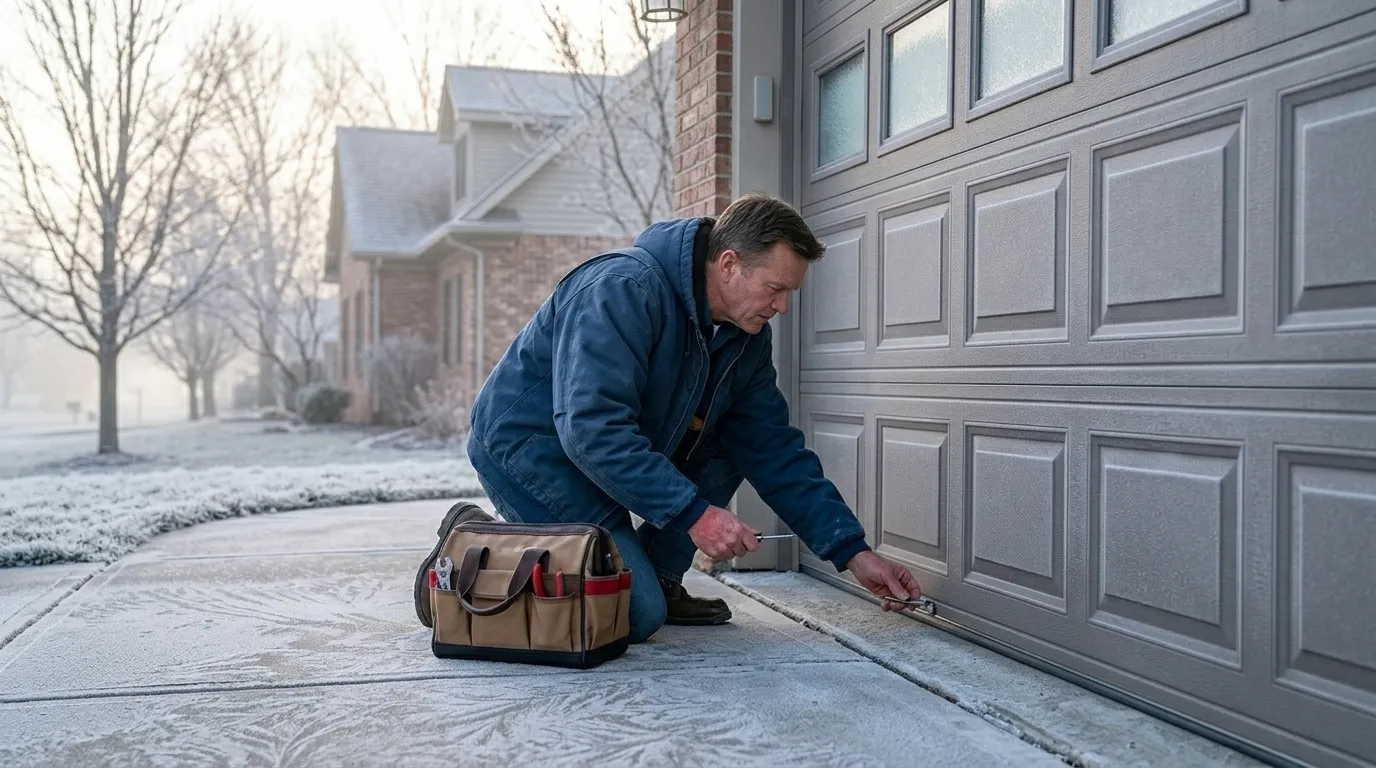
North Chicago's housing stock centers on 1972, which puts it earlier than the wider service area's 1984 median. That ten-plus year gap matters more than it sounds. Houses built in the early 1970s were still getting single-layer steel or wood doors as the standard build, often paired with extension springs mounted along the horizontal track rather than the torsion setups that became common through the 80s and 90s. If your door hasn't been replaced since the house was built, you're likely dealing with hardware that predates the torsion spring becoming the default choice in this region. Extension spring systems have different failure patterns than torsion ones - the cables and pulleys wear differently, and the safety cables that should be threaded through them get skipped more often on older installs. We also see more original wood-panel doors here that have taken on moisture over the decades, warping at the bottom panel where it meets the slab. None of this is a problem on its own, but it means a tech pulling up to a North Chicago address should expect older hardware, not assume it's the same torsion-and-steel setup you'd find on a house built in 1990.
What We Do Not Do
We don't stock every obsolete extension spring size on the truck. Some of the older hardware still running in North Chicago homes was discontinued by the manufacturer years ago, and if your track or spring is a nonstandard length, we may need to order the part before we can finish the job. We're upfront about that at the time we look at it - we're not going to jury-rig a fix and call it done. We also don't do full structural framing work if a door opening has shifted or rotted; that's carpentry, not garage door repair, and we'll tell you when a job needs that instead of a spring or panel swap. If a door is far enough gone that patching it means throwing money at a system that'll fail again in a year, we'll say so instead of running up a repair bill.
How Soon We Can Come Out
We run out of Vernon Hills, about 8 miles from North Chicago, so we're not sitting in the neighborhood waiting for a call - we're driving in. That's a straightforward trip up the corridor, not a long haul, and it doesn't change how we price or handle the job once we're there. What it does mean is we schedule the visit rather than promise an exact minute we'll show up; if your spring snaps on a Tuesday afternoon, we can usually work you into the same day's route, but we won't pretend to a response time we haven't verified for your specific call.
This Area's Housing
With roughly 7,300 households in North Chicago and a median income of $56,815, this is a different market than the newer subdivisions closer to Vernon Hills. Lower household income combined with older housing stock (median build year 1972) usually means owners are more likely to repair an aging door than replace it outright, and that's the call we're set up to make with them - fix what's fixable, and only recommend replacement when the repair costs start closing in on what a new door would run. The area sits in the same cold-climate band as the rest of our coverage, so winter is still the season when a marginal spring or a dried-out roller finally gives out, regardless of the house's age. Older doors here tend to need weatherstrip and bottom seal replacement more often too, since original doors from the early 70s weren't built with the same insulation standards as later stock.
How it works
From “it’s stuck” to “it’s fixed”
1
Tell us what’s wrong
Describe the symptom - won’t open, loud bang, opener runs but the door won’t move.
2
On-site diagnosis
A technician tests the door under power and by hand and finds what actually failed.
3
Clear, up-front plan
You get the fix that’s needed and what drives the cost - before any work starts.
4
Repaired & tested
The repair is done, the door is set true and tested, and the work area left clean.
Serving Vernon Hills, IL - tell us what your door’s doing and we’ll take it from there.
Straight answers about garage door repair in Vernon Hills. Still unsure? Ask us directly.
Is my house's original garage door hardware still available?
It depends on the specific door. North Chicago's housing centers on 1972, and some extension spring lengths and track hardware from that era have been discontinued. We check the make and size on site - if it's obsolete, we order the closest match or discuss a full hardware upgrade instead of forcing an odd-sized part to fit.
Do you have a location in North Chicago?
No. We're based in Vernon Hills and drive out to North Chicago, about 8 miles away, for service calls. We don't keep a depot or staff stationed in the area, so we schedule visits rather than offer a guaranteed same-hour arrival.
Why does my extension spring keep failing?
Extension spring systems, common on houses built in the early 1970s like much of North Chicago, wear differently than torsion springs. Cables and pulleys take more direct stress, and if the safety cable was never installed through the spring, a snap can whip the coil loose. Replacing it correctly means adding that safety cable if it's missing, not just swapping the spring.
Should I repair or replace an old wood panel door?
If the door is original to a house built around 1972, check for warping at the bottom panel where moisture collects over the decades. A single warped panel can sometimes be replaced on its own, but if multiple panels are affected or the frame has shifted, replacement usually costs less over time than repeated patch repairs.